
Historical · U.S. Senate · Pennsylvania
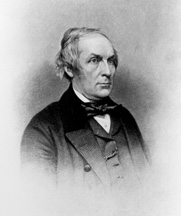
James Cooper
Former U.S. Senator from Pennsylvania · 1849–1855 · Whig · Class 3
James Cooper represented Pennsylvania in the United States Senate (1849–1855) for the Whig party. The page below collects sourced biographical facts, term history, committee roles, and provenance for Cooper.
Bioguide ID: C000753
Key facts
- Full name
- James Cooper
- State
- Pennsylvania
- Party
- Whig
- Senate class
- Class III
- Senate service
- 1849–1855
- First Senate term
- 1849
- Status
- Left office
- Current term ends
- —
- Born
- 1810
- Bioguide ID
- C000753
- Committee assignments
- —
- Dataset version
- 1.20260602
Biographical narrative
836 words · sourced from the Wikipedia REST extract
James Cooper was an American lawyer, soldier, and politician who served as a U.S. Senator from Pennsylvania. A member of the Whig Party, Cooper's political career included terms in both the U.S. House of Representatives and the Senate, along with significant roles in state government. His tenure in the Senate lasted from 1849 until 1855, during which he contributed to various legislative efforts before returning to military service during the American Civil War.
Early life and career
James Cooper was born on May 8, 1810, in Frederick County, Maryland. His early education began at Mount St. Mary's University, but he later transferred to Washington College, which is now known as Washington & Jefferson College. He completed his studies there and graduated in 1832. Following his graduation, Cooper pursued a career in law, gaining admission to the bar in 1834 after completing his legal studies.
Cooper began his legal practice in Gettysburg, Pennsylvania, where he worked in the office of Thaddeus Stevens, a prominent political figure and fellow Whig. His legal career laid the groundwork for his entry into politics. In 1839, he was elected as a member of the U.S. House of Representatives, representing Pennsylvania's congressional district. He served in the 26th and 27th Congresses, from March 4, 1839, to March 3, 1843. During his time in the House, he held the position of chairman of the Indian Affairs Committee, where he was involved in legislative discussions related to Native American issues.
After his initial congressional service, Cooper returned to Pennsylvania politics. He served in the Pennsylvania House of Representatives from 1843 to 1844 and again in 1846 and 1848. His leadership abilities were recognized when he was elected Speaker of the House for one term in 1847. In 1848, he was appointed as the Attorney General of Pennsylvania, further solidifying his role in state governance.
Senate tenure
Cooper's political career reached a significant milestone when he was elected to the United States Senate. He took office on March 4, 1849, representing Pennsylvania as a member of the Whig Party. His Senate term was part of a tumultuous period in American history, marked by increasing sectional tensions that would eventually lead to the Civil War. Cooper served in the Senate until March 3, 1855, during which time he participated in various legislative discussions and decisions that shaped the direction of the nation.
As a senator, Cooper was involved in the broader debates of his time, including issues related to slavery, states' rights, and the expansion of the United States. His tenure coincided with significant national events, including the Compromise of 1850 and the Kansas-Nebraska Act, which were pivotal in the lead-up to the Civil War. Although specific legislative achievements during his Senate term are not detailed, his participation in these discussions reflected the complexities of governance during a period of national strife.
After completing his Senate term, Cooper returned to Pennsylvania, where he continued to engage in public service and legal practice. His political career was marked by a commitment to the principles of the Whig Party, which focused on promoting economic development and opposing the expansion of slavery.
Legislative focus and committees
During his time in the U.S. Senate, James Cooper's legislative focus was shaped by the political landscape of the era. As a member of the Whig Party, he aligned with the party's platform, which emphasized modernization, infrastructure development, and a cautious approach to the issue of slavery. While specific bills and legislative actions from his Senate tenure are not detailed, his involvement in the Senate during a critical period in American history suggests that he engaged with the pressing issues of his time.
Cooper's earlier experience as chairman of the Indian Affairs Committee in the House of Representatives likely influenced his perspective on governance and policy-making. His role in this committee would have provided him with insights into the complexities of federal relations with Native American tribes, an issue that remained significant throughout his political career.
In addition to his legislative responsibilities, Cooper's service in the Senate was characterized by his participation in various committees, which played a crucial role in shaping policy and legislation. While the specific committees he served on during his Senate term are not enumerated, it is common for senators to engage in committee work that aligns with their interests and the needs of their constituents.
After his Senate career, Cooper's commitment to public service continued, particularly during the American Civil War. He raised a brigade of volunteers in Maryland and was appointed as a brigadier general of volunteers in May 1861. His military service during this period reflected a dedication to his country and a willingness to contribute to the war effort.
James Cooper passed away on March 28, 1863, in Columbus, Ohio, where he was staying at the American Hotel. His remains were interred at Mount Olivet Cemetery in Frederick, Maryland. His life and career exemplify the multifaceted roles that individuals played in shaping American governance during a time of significant change and conflict.
Notable legislation
Sponsored and co-sponsored legislation for James Cooper is pending operator curation. The biographical narrative above carries the same provenance trail until per-bill rows are written.
Sources
- [1]https://en.wikipedia.org/wiki/James_Cooper_(Pennsylvania_politician)Wikipedia · retrieved 2026-06-02
Notable quotes
Sourced quotes for James Cooper are pending operator curation. Narrative-scope provenance remains attached below.
Sources
- [1]https://en.wikipedia.org/wiki/James_Cooper_(Pennsylvania_politician)Wikipedia · retrieved 2026-06-02
Key positions
Curated policy positions for James Cooper are pending operator review. The biographical narrative above carries the same provenance trail until per-topic positions are written.
Sources
- [1]https://en.wikipedia.org/wiki/James_Cooper_(Pennsylvania_politician)Wikipedia · retrieved 2026-06-02
Terms served
- 1839–1841U.S. House · District 12 · Term 1 · Whig
- 1841–1843U.S. House · District 12 · Term 2 · Whig
- 1849–1855U.S. Senate · Term 3 · Whig · Class III
Sources & provenance
Every attributable claim above carries a per-section [N] marker that resolves to the corresponding URL below. Each entry records the upstream provider, the canonical URL, and the timestamp at which the source was retrieved by the ingest pipeline.
Key facts
- https://bioguide.congress.gov/search/bio/C000753bioguide · retrieved 2026-06-02
- https://www.govtrack.us/congress/members/402874govtrack · retrieved 2026-06-02
Biographical narrative
- https://en.wikipedia.org/wiki/James_Cooper_(Pennsylvania_politician)wikipedia · retrieved 2026-06-02
Find your senator
Every U.S. state elects two senators. Browse Pennsylvania’s delegation, the full former-senator roster, or explore the role and term length.
Related on The Candidate
- Preceded by James BuchananEarlier holder of the Pennsylvania Class III Senate seat · Democratic.Open
- Succeeded by William BiglerLater holder of the Pennsylvania Class III Senate seat · Democratic.Open
- Abner LacockFormer U.S. Senator from Pennsylvania · RepublicanOpen
- Andrew GreggFormer U.S. Senator from Pennsylvania · RepublicanOpen
- Arlen SpecterFormer U.S. Senator from Pennsylvania · DemocraticOpen
- Bob Casey Jr.Former U.S. Senator from Pennsylvania · DemocraticOpen