
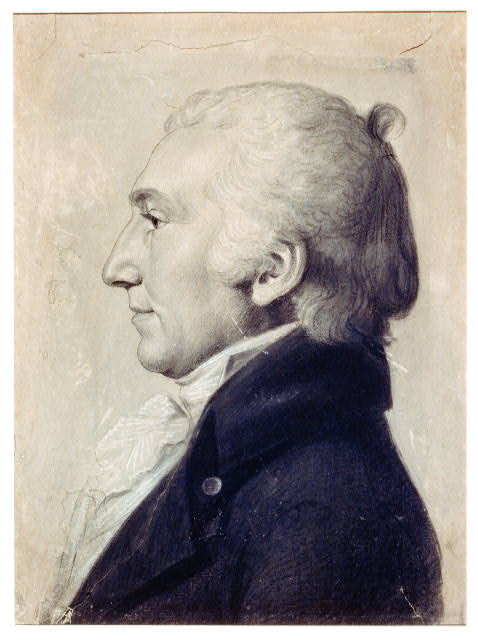
Historical · U.S. Senate · Pennsylvania
Michael Leib
Former U.S. Senator from Pennsylvania · 1809–1815 · Republican · Class 1
Michael Leib represented Pennsylvania in the United States Senate (1809–1815) for the Republican party. The page below collects sourced biographical facts, term history, committee roles, and provenance for Leib.
Bioguide ID: L000229
Key facts
- Full name
- Michael Leib
- State
- Pennsylvania
- Party
- Republican
- Senate class
- Class I
- Senate service
- 1809–1815
- First Senate term
- 1809
- Status
- Left office
- Current term ends
- —
- Born
- 1760
- Bioguide ID
- L000229
- Committee assignments
- —
- Dataset version
- 1.20260602
Biographical narrative
982 words · sourced from the Wikipedia REST extract
Michael Leib was a prominent American physician and politician from Pennsylvania, who served as a U.S. Senator from 1809 to 1814. A member of the Republican Party, Leib's political career spanned several decades, during which he held various positions, including serving in the Pennsylvania House of Representatives and the United States House of Representatives. His contributions to the political landscape of Pennsylvania were significant, particularly in representing the interests of the German immigrant community in Philadelphia.
Early life and career
Michael Leib was born on January 8, 1760, in Philadelphia, Pennsylvania, to George and Dorothea Leib. He pursued a career in medicine, studying and practicing in his hometown. His medical career was interrupted by the American Revolutionary War, during which he received a commission as a surgeon in the Philadelphia Militia in 1780. Leib's military service during this critical period in American history laid the foundation for his later involvement in public service.
After the war, Leib returned to Philadelphia, where he continued to practice medicine. He became associated with several hospitals in the city and was active in the community, notably serving on the committee of correspondence in 1793. His commitment to public service extended beyond medicine; he was one of the founders of the German Republican Society in Philadelphia, which aimed to address the needs and interests of the large German immigrant population in the area. Leib's involvement in this organization highlighted his dedication to representing the voices of his constituents.
Leib's political career began in earnest when he was elected to the Pennsylvania House of Representatives. He served three non-consecutive terms between 1795 and 1818, demonstrating his sustained engagement in state politics. His first term lasted from 1795 to 1798, followed by a return from 1806 to 1808, and a final term from 1817 to 1818. In addition to his service in the state legislature, Leib was elected to the United States House of Representatives, where he served from 1799 to 1803 for Pennsylvania's 2nd congressional district and then from 1803 to 1806 for Pennsylvania's 1st congressional district. His tenure in the House of Representatives allowed him to further influence national policy and advocate for his constituents' interests.
During his time in the Pennsylvania House, Leib was involved in significant political events, including the Chesapeake–Leopard affair in 1807, where he served on the committee of correspondence. This incident, which involved a confrontation between British naval forces and the American ship USS Chesapeake, was a pivotal moment in U.S. history, contributing to rising tensions that would eventually lead to the War of 1812.
Senate tenure
Leib's political ascent continued when he was elected to the United States Senate by the Pennsylvania state legislature in December 1808. His term began on March 4, 1809, although he assumed office earlier on January 9, 1809, following the resignation of Samuel Maclay. As a Democratic-Republican senator, Leib represented Pennsylvania during a time of significant political and social change in the United States.
During his time in the Senate, which lasted until February 14, 1814, Leib was involved in various legislative activities and discussions pertinent to the era. His political career in the Senate was characterized by his alignment with the Democratic-Republican Party, which was focused on agrarian interests and opposed the Federalist policies that were prevalent at the time. Leib's background as a physician and his experience in local politics provided him with a unique perspective on the issues facing the nation.
After resigning from the Senate in 1814, Leib transitioned to the role of postmaster of Philadelphia, a position he held until 1815. This role allowed him to maintain his influence in the community and continue serving the public in a different capacity. Following his tenure as postmaster, Leib returned to the Pennsylvania House of Representatives for a third time, serving from 1817 to 1818. His political journey culminated in his election to the Pennsylvania State Senate for the 1st district, where he served from 1818 until 1821.
Legislative focus and committees
Throughout his political career, Michael Leib was known for his engagement with issues that affected his constituents, particularly those related to the German immigrant community in Philadelphia. His involvement in the German Republican Society indicated his commitment to addressing the needs of this demographic, which was significant in the city at the time. Leib's efforts to represent the interests of German immigrants were crucial in fostering a sense of community and political representation for this group.
In addition to his advocacy for the German community, Leib was active in broader political discussions, particularly those concerning trade, banking, and shipping. His alignment with other political figures, such as William J. Duane, reflected a power struggle within the Pennsylvania Republican Party during the 1800s. This struggle was characterized by differing interests between urban and rural constituents, with Leib and Duane advocating for the economic interests of Philadelphia, while their opponents, like Simon Snyder, represented rural landowners.
Leib's involvement in military affairs also played a role in his political life. In 1807, he was elected Brigadier-General of the Second Brigade of the Philadelphia Militia, a position that underscored his commitment to public service and community safety. His military background, combined with his medical expertise, positioned him as a respected figure in both the political and civic spheres.
In summary, Michael Leib's career was marked by a dedication to public service, beginning with his medical practice and extending into various political roles. His tenure as a U.S. Senator, along with his service in the Pennsylvania House of Representatives and the Pennsylvania State Senate, showcased his commitment to representing the interests of his constituents. Leib's legacy is reflected in his contributions to the political landscape of Pennsylvania and his efforts to advocate for the needs of the German immigrant community in Philadelphia. He passed away on December 22, 1822, leaving behind a complex legacy intertwined with the early history of the United States.
Notable legislation
Sponsored and co-sponsored legislation for Michael Leib is pending operator curation. The biographical narrative above carries the same provenance trail until per-bill rows are written.
Sources
- [1]https://en.wikipedia.org/wiki/Michael_LeibWikipedia · retrieved 2026-06-02
Notable quotes
Sourced quotes for Michael Leib are pending operator curation. Narrative-scope provenance remains attached below.
Sources
- [1]https://en.wikipedia.org/wiki/Michael_LeibWikipedia · retrieved 2026-06-02
Key positions
Curated policy positions for Michael Leib are pending operator review. The biographical narrative above carries the same provenance trail until per-topic positions are written.
Sources
- [1]https://en.wikipedia.org/wiki/Michael_LeibWikipedia · retrieved 2026-06-02
Terms served
- 1799–1801U.S. House · District 2 · Term 1 · Republican
- 1801–1803U.S. House · District 2 · Term 2 · Republican
- 1803–1805U.S. House · District 1 · Term 3 · Republican
- 1805–1807U.S. House · District 1 · Term 4 · Republican
- 1809–1815U.S. Senate · Term 5 · Republican · Class I
Sources & provenance
Every attributable claim above carries a per-section [N] marker that resolves to the corresponding URL below. Each entry records the upstream provider, the canonical URL, and the timestamp at which the source was retrieved by the ingest pipeline.
Key facts
- https://bioguide.congress.gov/search/bio/L000229bioguide · retrieved 2026-06-02
- https://www.govtrack.us/congress/members/406733govtrack · retrieved 2026-06-02
Biographical narrative
- https://en.wikipedia.org/wiki/Michael_Leibwikipedia · retrieved 2026-06-02
Find your senator
Every U.S. state elects two senators. Browse Pennsylvania’s delegation, the full former-senator roster, or explore the role and term length.
Related on The Candidate
- Preceded by Samuel MaclayEarlier holder of the Pennsylvania Class I Senate seat · Republican.Open
- Succeeded by William FindlayLater holder of the Pennsylvania Class I Senate seat · Jackson.Open
- Abner LacockFormer U.S. Senator from Pennsylvania · RepublicanOpen
- Andrew GreggFormer U.S. Senator from Pennsylvania · RepublicanOpen
- Arlen SpecterFormer U.S. Senator from Pennsylvania · DemocraticOpen
- Bob Casey Jr.Former U.S. Senator from Pennsylvania · DemocraticOpen