
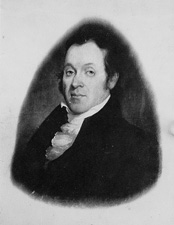
Historical · U.S. Senate · Pennsylvania
William Marks
Former U.S. Senator from Pennsylvania · 1825–1831 · Adams · Class 3
William Marks represented Pennsylvania in the United States Senate (1825–1831) for the Adams party. The page below collects sourced biographical facts, term history, committee roles, and provenance for Marks.
Bioguide ID: M000137
Key facts
- Full name
- William Marks
- State
- Pennsylvania
- Party
- Adams
- Senate class
- Class III
- Senate service
- 1825–1831
- First Senate term
- 1825
- Status
- Left office
- Current term ends
- —
- Born
- 1778
- Bioguide ID
- M000137
- Committee assignments
- —
- Dataset version
- 1.20260602
Biographical narrative
825 words · sourced from the Wikipedia REST extract
William Marks was an American lawyer and politician who served as a U.S. Senator from Pennsylvania. A member of the Adams Party, he held office in the Senate from 1825 until 1831. Prior to his tenure in the Senate, Marks had an extensive career in state politics, including serving as Speaker of the Pennsylvania House of Representatives. His professional background was rooted in law, and he was actively involved in local governance throughout his life. Marks was born in 1778 and passed away in 1858.
Early life and career
William Marks was born on October 13, 1778, in Chester County, Pennsylvania. His early years were spent in Allegheny County, where he moved with his father during his childhood. Marks received limited formal education, which was not uncommon for that era. Instead of pursuing a traditional academic path, he trained in the trade of leather tanning, which was a prevalent occupation at the time.
Despite his initial foray into a trade, Marks shifted his focus to the legal profession. He studied law and eventually gained admission to the bar, allowing him to practice law in Pittsburgh. His legal career provided a foundation for his future political endeavors. In addition to his legal practice, Marks held several local offices, which included serving as the coroner of Allegheny County. His involvement in local governance laid the groundwork for his entry into state politics.
Marks's political career began in earnest when he was elected to the Pennsylvania House of Representatives. He served in this capacity from 1810 to 1819, during which time he gained significant experience in legislative processes. His leadership abilities were recognized when he was elected Speaker of the House, a position he held from 1813 to 1819. In this role, he was responsible for overseeing legislative sessions and facilitating discussions among representatives.
In 1814, Marks also took on a military role as the commander of the Pennsylvania Militia, reflecting his commitment to public service during a time when military leadership was often intertwined with political responsibilities. Following his tenure in the House, he was elected to the Pennsylvania Senate in 1820, where he served until 1825. This period further solidified his reputation as a dedicated public servant and a prominent figure in Pennsylvania politics.
Senate tenure
William Marks's entry into the United States Senate came after he was elected as a National Republican in 1824. He officially began his Senate term in March 1825. As a member of the Senate, Marks participated in various legislative activities and took on leadership roles within the Senate committees. He served as chairman of both the Committee on Engrossed Bills and the Committee on Agriculture during his time in office. These positions allowed him to influence the legislative process and contribute to discussions on significant national issues.
Marks's Senate tenure was marked by his involvement in the political dynamics of the time, which were characterized by the shifting alliances and emerging political parties in the early 19th century. However, his time in the Senate was relatively brief, as he faced challenges in seeking reelection. Ultimately, he was unsuccessful in his bid for a second term, and his Senate service concluded on March 3, 1831.
Despite the end of his Senate career, Marks's contributions to Pennsylvania and the nation were significant. His experience in both state and federal legislatures provided him with a comprehensive understanding of governance and policy-making.
Legislative focus and committees
During his time in the Senate, William Marks was involved in various legislative matters, particularly through his roles on key committees. As chairman of the Committee on Engrossed Bills, he oversaw the final stages of legislative bills before they were presented for voting, ensuring that they met the necessary legal and procedural standards. This role was crucial in maintaining the integrity of the legislative process and facilitating the smooth passage of bills.
Additionally, Marks's chairmanship of the Committee on Agriculture reflected his interest in agricultural issues, which were vital to the economy and society of the time. Agriculture was a significant sector in Pennsylvania, and Marks's work on this committee likely involved discussions on policies affecting farmers, land use, and agricultural practices. His involvement in these committees allowed him to advocate for the interests of his constituents and contribute to the development of policies that would impact the agricultural landscape of the nation.
After leaving the Senate, Marks returned to his legal practice in Pittsburgh, where he continued to engage with the community and contribute to local governance. In 1850, he moved to Beaver, Pennsylvania, where he eventually retired from public life. His later years were spent away from the political spotlight, and he passed away on April 10, 1858, in Beaver. Marks was interred in the old Buffalo Street cemetery, leaving behind a legacy of public service that spanned both state and national levels. His career reflects the complexities of early American politics and the evolving role of legislators in shaping the nation’s policies.
Notable legislation
Sponsored and co-sponsored legislation for William Marks is pending operator curation. The biographical narrative above carries the same provenance trail until per-bill rows are written.
Sources
- [1]https://en.wikipedia.org/wiki/William_Marks_(politician)Wikipedia · retrieved 2026-06-02
Notable quotes
Sourced quotes for William Marks are pending operator curation. Narrative-scope provenance remains attached below.
Sources
- [1]https://en.wikipedia.org/wiki/William_Marks_(politician)Wikipedia · retrieved 2026-06-02
Key positions
Curated policy positions for William Marks are pending operator review. The biographical narrative above carries the same provenance trail until per-topic positions are written.
Sources
- [1]https://en.wikipedia.org/wiki/William_Marks_(politician)Wikipedia · retrieved 2026-06-02
Terms served
- 1825–1831U.S. Senate · Term 1 · Adams · Class III
Sources & provenance
Every attributable claim above carries a per-section [N] marker that resolves to the corresponding URL below. Each entry records the upstream provider, the canonical URL, and the timestamp at which the source was retrieved by the ingest pipeline.
Key facts
- https://bioguide.congress.gov/search/bio/M000137bioguide · retrieved 2026-06-02
- https://www.govtrack.us/congress/members/407160govtrack · retrieved 2026-06-02
Biographical narrative
- https://en.wikipedia.org/wiki/William_Marks_(politician)wikipedia · retrieved 2026-06-02
Find your senator
Every U.S. state elects two senators. Browse Pennsylvania’s delegation, the full former-senator roster, or explore the role and term length.
Related on The Candidate
- Preceded by Walter LowrieEarlier holder of the Pennsylvania Class III Senate seat · Republican.Open
- Succeeded by William WilkinsLater holder of the Pennsylvania Class III Senate seat · Jackson.Open
- Abner LacockFormer U.S. Senator from Pennsylvania · RepublicanOpen
- Andrew GreggFormer U.S. Senator from Pennsylvania · RepublicanOpen
- Arlen SpecterFormer U.S. Senator from Pennsylvania · DemocraticOpen
- Bob Casey Jr.Former U.S. Senator from Pennsylvania · DemocraticOpen