
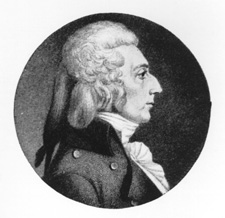
Historical · U.S. Senate · Rhode Island
Christopher Champlin
Former U.S. Senator from Rhode Island · 1809–1811 · Federalist · Class 1
Christopher Champlin represented Rhode Island in the United States Senate (1809–1811) for the Federalist party. The page below collects sourced biographical facts, term history, committee roles, and provenance for Champlin.
Bioguide ID: C000289
Key facts
- Full name
- Christopher Champlin
- State
- Rhode Island
- Party
- Federalist
- Senate class
- Class I
- Senate service
- 1809–1811
- First Senate term
- 1809
- Status
- Left office
- Current term ends
- —
- Born
- 1768
- Bioguide ID
- C000289
- Committee assignments
- —
- Dataset version
- 1.20260602
Biographical narrative
868 words · sourced from the Wikipedia REST extract
Christopher Champlin was a prominent political figure in early American history, serving as a U.S. Senator from Rhode Island. A member of the Federalist Party, he held office during a formative period in the United States' development. Champlin's career spanned various roles, including that of a congressman and a senator, and he was involved in mercantile activities and local military leadership. His tenure in the Senate lasted from 1809 until his resignation in 1811, marking a significant chapter in his life that reflected the complexities of early American politics and society.
Early life and career
Christopher Champlin was born on April 12, 1768, in Newport, Rhode Island, during the colonial period. He was the eldest child and only son of Christopher Champlin Sr., a merchant ship owner and slave trader who was also notable for being the first Grand Master of Freemasons in Rhode Island from 1791 to 1794. Champlin's family background was deeply intertwined with the mercantile and slave trading activities that characterized Rhode Island's economy at the time. His uncle, George Champlin, was involved in the Rhode Island Legislature and financed slave voyages to Africa, further embedding the family in the region's controversial economic practices.
Champlin received his early education through preparatory studies before attending Harvard College, where he graduated in 1786. Following his time at Harvard, he continued his education at the College of St. Omer in France. Upon returning to the United States, he settled in New York, where he faced financial difficulties after engaging in stock market speculation, which resulted in significant losses. This venture was funded by profits from his family's mercantile and slave trading businesses.
After returning to Newport, Champlin resumed his involvement in the shipping industry, collaborating with his father and uncle on various ventures, including at least one slave voyage aboard the Brig Elizabeth. In 1793, he married Martha Redwood Ellery, and the couple had one son, who unfortunately died at a young age. For several years after his marriage, Champlin worked closely with his father in the family business, which was deeply rooted in the maritime trade.
In 1796, Champlin sought a political career by running for a seat in Congress. To enhance his chances of election, he publicly declared that he had not engaged in speculation involving southern real estate and would not use his congressional position for personal gain. However, it was later revealed that he had misrepresented his involvement in southern land investments, specifically in the Tennessee Company, which he had speculated in alongside a college friend. Despite these controversies, Champlin was elected as a Federalist to the Fifth and Sixth Congresses, serving from March 4, 1797, until March 3, 1801.
Senate tenure
Champlin's tenure in the U.S. Senate began on June 26, 1809, when he was elected to fill the vacancy left by the death of Senator Francis Malbone. His time in the Senate was marked by the political dynamics of the early 19th century, a period characterized by the Federalist Party's decline and the rise of the Democratic-Republican Party. Champlin served in the Senate until October 2, 1811, when he resigned from his position and returned to Rhode Island. His resignation was part of a broader trend during this time, as many Federalists faced challenges in maintaining their political power amid shifting public sentiments.
During his time in the Senate, Champlin participated in various legislative discussions and decisions, contributing to the development of policies that would shape the nation. However, specific details regarding his legislative initiatives or positions on key issues during his Senate tenure are not extensively documented. His resignation marked the end of his formal political career in the Senate, but he remained active in other capacities within his community.
Legislative focus and committees
While specific legislative accomplishments during Champlin's Senate term are not detailed in the available records, his broader political career reflects the interests and priorities of the Federalist Party during a time of significant change in the United States. The Federalists were known for their support of a strong central government, a robust financial system, and policies that favored commerce and trade, which aligned with Champlin's background in mercantile activities.
In addition to his political career, Champlin was involved in various civic and community activities. After his Senate term, he became a member of the American Antiquarian Society in 1814, indicating his interest in history and the preservation of cultural heritage. Furthermore, Champlin served as the commanding officer of the Newport Artillery Company from 1815 to 1818, holding the rank of colonel. His leadership was particularly noted during the response to the Great Gale of 1815, a devastating hurricane that impacted New England. The Newport town council expressed gratitude for his efforts in organizing the company to protect property during the disaster.
Champlin's later years included a role as president of the Rhode Island Bank, a position he held until shortly before his death on March 18, 1840, in Newport. His contributions to both the political landscape and local community reflect the multifaceted nature of his life and career. He was interred in the Common Burial Ground in Newport, leaving behind a legacy intertwined with the early history of Rhode Island and the United States.
Notable legislation
Sponsored and co-sponsored legislation for Christopher Champlin is pending operator curation. The biographical narrative above carries the same provenance trail until per-bill rows are written.
Sources
- [1]https://en.wikipedia.org/wiki/Christopher_G._ChamplinWikipedia · retrieved 2026-06-02
Notable quotes
Sourced quotes for Christopher Champlin are pending operator curation. Narrative-scope provenance remains attached below.
Sources
- [1]https://en.wikipedia.org/wiki/Christopher_G._ChamplinWikipedia · retrieved 2026-06-02
Key positions
Curated policy positions for Christopher Champlin are pending operator review. The biographical narrative above carries the same provenance trail until per-topic positions are written.
Sources
- [1]https://en.wikipedia.org/wiki/Christopher_G._ChamplinWikipedia · retrieved 2026-06-02
Terms served
- 1797–1799U.S. House · District -1 · Term 1 · Federalist
- 1799–1801U.S. House · District -1 · Term 2 · Federalist
- 1809–1811U.S. Senate · Term 3 · Federalist · Class I
Sources & provenance
Every attributable claim above carries a per-section [N] marker that resolves to the corresponding URL below. Each entry records the upstream provider, the canonical URL, and the timestamp at which the source was retrieved by the ingest pipeline.
Key facts
- https://bioguide.congress.gov/search/bio/C000289bioguide · retrieved 2026-06-02
- https://www.govtrack.us/congress/members/402431govtrack · retrieved 2026-06-02
Biographical narrative
- https://en.wikipedia.org/wiki/Christopher_G._Champlinwikipedia · retrieved 2026-06-02
Find your senator
Every U.S. state elects two senators. Browse Rhode Island’s delegation, the full former-senator roster, or explore the role and term length.
Related on The Candidate
- Preceded by Benjamin HowlandEarlier holder of the Rhode Island Class I Senate seat · Republican.Open
- Succeeded by William HunterLater holder of the Rhode Island Class I Senate seat · Federalist.Open
- Albert GreeneFormer U.S. Senator from Rhode Island · WhigOpen
- Ambrose BurnsideFormer U.S. Senator from Rhode Island · RepublicanOpen
- Asher RobbinsFormer U.S. Senator from Rhode Island · WhigOpen
- Senators from Rhode IslandEvery former U.S. Senator who has represented Rhode Island.Open