
Historical · U.S. Senate · Rhode Island
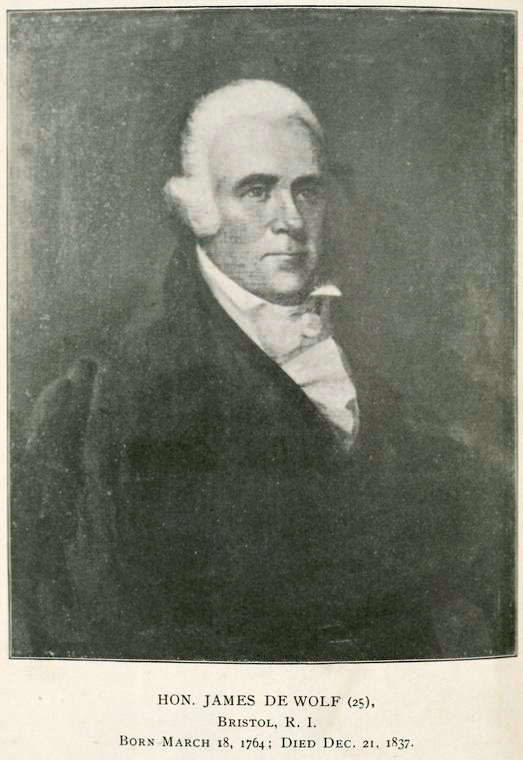
James De Wolf
Former U.S. Senator from Rhode Island · 1821–1825 · Republican · Class 1
James De Wolf represented Rhode Island in the United States Senate (1821–1825) for the Republican party. The page below collects sourced biographical facts, term history, committee roles, and provenance for Wolf.
Bioguide ID: D000295
Key facts
- Full name
- James De Wolf
- State
- Rhode Island
- Party
- Republican
- Senate class
- Class I
- Senate service
- 1821–1825
- First Senate term
- 1821
- Status
- Left office
- Current term ends
- —
- Born
- 1764
- Bioguide ID
- D000295
- Committee assignments
- —
- Dataset version
- 1.20260602
Biographical narrative
948 words · sourced from the Wikipedia REST extract
James DeWolf was a prominent American politician and slave trader who served as a United States Senator from Rhode Island in the early 19th century. Born on March 18, 1764, DeWolf became one of the wealthiest individuals in the United States through his involvement in the slave trade and various commercial ventures, including sugar and coffee plantations in Cuba. His political career spanned several decades, during which he held various positions, including a lengthy tenure in the Rhode Island House of Representatives and a single term in the U.S. Senate. DeWolf's legacy is complex, marked by significant wealth and influence, as well as a controversial involvement in the transatlantic slave trade.
Early life and career
James DeWolf was born in Bristol, Rhode Island, to Mark Anthony DeWolf and Abigail Hazel Potter. He was the youngest of nine children, growing up in a family that would later become notorious for its involvement in the slave trade. DeWolf's early life was shaped by the maritime culture of New England, and he went to sea at a young age. During the latter part of the American Revolutionary War, he served as a sailor on American privateers, engaging in naval battles and enduring capture by British forces on two occasions.
After the war, DeWolf transitioned to a career in commercial shipping. In his twenties, he was appointed captain of a ship, which marked the beginning of his ventures into various commercial enterprises. One of the most significant and controversial aspects of his career was his involvement in the slave trade. Despite Rhode Island's prohibition of slave trading in 1787, DeWolf and his family continued to engage in this practice, purchasing enslaved individuals from ports in the West Indies and transporting them primarily to southern markets in the United States.
DeWolf's early career was marred by legal troubles, including an indictment for murder in 1791 related to the death of an enslaved woman aboard his ship. Although he faced serious allegations, the case was ultimately dismissed, allowing him to continue his commercial activities. Over the years, he financed numerous slaving voyages, often collaborating with family members, and is believed to have transported over 11,000 enslaved individuals to the United States before the African slave trade was officially banned in 1808.
In addition to his slave trading activities, DeWolf established a rum distillery for trade in West Africa and co-founded the Bank of Bristol and an insurance company that financed and insured slave ships. His wealth from these ventures allowed him to invest in sugar and coffee plantations in Cuba, further entrenching his financial interests in the slave economy.
Senate tenure
DeWolf's political career began in the Rhode Island House of Representatives, where he served multiple terms from 1798 to 1837. He was first elected in 1798 and held various leadership roles, including Speaker of the House from 1819 to 1821. His influence in state politics laid the groundwork for his advancement to national office.
In 1821, DeWolf was elected to the United States Senate by the Rhode Island state legislature, a common practice at the time before the ratification of the 17th Amendment, which established the direct election of senators. He served in the Senate until his resignation in 1825. During his tenure, DeWolf was involved in various legislative discussions and decisions, although specific details regarding his contributions during this period are limited.
DeWolf's time in the Senate coincided with a period of significant political change in the United States, including debates over slavery and states' rights. However, his resignation in 1825 marked the end of his formal legislative career at the national level. Following his departure from the Senate, he continued to engage in state politics and remained active in various business ventures.
Legislative focus and committees
Throughout his political career, James DeWolf's legislative focus and committee work reflected the interests of his time, particularly in relation to commerce and economic development. While specific committee assignments during his Senate tenure are not detailed, it is likely that his background in trade and finance influenced his legislative priorities.
DeWolf's extensive experience in the Rhode Island House of Representatives provided him with a deep understanding of state and national issues, particularly those related to economic growth and the burgeoning industrial landscape of early 19th-century America. His involvement in the cotton textile industry, through the founding of the Arkwright Manufacturing Company, positioned him as a key player in the economic transformation occurring in New England.
Despite the lack of detailed records regarding specific legislative initiatives he championed in the Senate, DeWolf's business acumen and wealth likely allowed him to exert influence on economic policies that aligned with his interests. His connections to the slave trade and plantation economy also suggest that he may have been involved in discussions surrounding the economic implications of slavery, although the extent of his influence in these matters remains unclear.
DeWolf's legacy is complicated by his significant wealth, which was largely derived from the slave trade and plantation economy, and his political career, which intersected with the contentious issues of his time. After his resignation from the Senate, he continued to be active in state politics until his death in 1837.
James DeWolf passed away in New York City on December 21, 1837, at the age of 73. At the time of his death, he was considered one of the wealthiest men in the United States, with an estate that included properties in multiple states. His body was returned to Rhode Island for burial in the DeWolf family cemetery in Bristol. The complexities of his life and career continue to be subjects of historical interest, reflecting the broader themes of wealth, power, and morality in American history.
Notable legislation
Sponsored and co-sponsored legislation for James De Wolf is pending operator curation. The biographical narrative above carries the same provenance trail until per-bill rows are written.
Sources
- [1]https://en.wikipedia.org/wiki/James_DeWolfWikipedia · retrieved 2026-06-02
Notable quotes
Sourced quotes for James De Wolf are pending operator curation. Narrative-scope provenance remains attached below.
Sources
- [1]https://en.wikipedia.org/wiki/James_DeWolfWikipedia · retrieved 2026-06-02
Key positions
Curated policy positions for James De Wolf are pending operator review. The biographical narrative above carries the same provenance trail until per-topic positions are written.
Sources
- [1]https://en.wikipedia.org/wiki/James_DeWolfWikipedia · retrieved 2026-06-02
Terms served
- 1821–1825U.S. Senate · Term 1 · Republican · Class I
Sources & provenance
Every attributable claim above carries a per-section [N] marker that resolves to the corresponding URL below. Each entry records the upstream provider, the canonical URL, and the timestamp at which the source was retrieved by the ingest pipeline.
Key facts
- https://bioguide.congress.gov/search/bio/D000295bioguide · retrieved 2026-06-02
- https://www.govtrack.us/congress/members/403330govtrack · retrieved 2026-06-02
Biographical narrative
- https://en.wikipedia.org/wiki/James_DeWolfwikipedia · retrieved 2026-06-02
Find your senator
Every U.S. state elects two senators. Browse Rhode Island’s delegation, the full former-senator roster, or explore the role and term length.
Related on The Candidate
- Preceded by William HunterEarlier holder of the Rhode Island Class I Senate seat · Federalist.Open
- Succeeded by Asher RobbinsLater holder of the Rhode Island Class I Senate seat · Whig.Open
- Albert GreeneFormer U.S. Senator from Rhode Island · WhigOpen
- Ambrose BurnsideFormer U.S. Senator from Rhode Island · RepublicanOpen
- Benjamin HowlandFormer U.S. Senator from Rhode Island · RepublicanOpen
- Republican PartyFederal candidates and office holders on the Republican line.Open