
Historical · U.S. Senate · Rhode Island
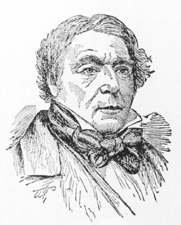
John Clarke
Former U.S. Senator from Rhode Island · 1847–1853 · Whig · Class 2
John Clarke represented Rhode Island in the United States Senate (1847–1853) for the Whig party. The page below collects sourced biographical facts, term history, committee roles, and provenance for Clarke.
Bioguide ID: C000466
Key facts
- Full name
- John Clarke
- State
- Rhode Island
- Party
- Whig
- Senate class
- Class II
- Senate service
- 1847–1853
- First Senate term
- 1847
- Status
- Left office
- Current term ends
- —
- Born
- 1789
- Bioguide ID
- C000466
- Committee assignments
- —
- Dataset version
- 1.20260602
Biographical narrative
828 words · sourced from the Wikipedia REST extract
John Clarke was a prominent American politician who served as a United States Senator from Rhode Island during the mid-19th century. A member of the Whig Party, he held office from 1847 until 1853. His career spanned various fields, including law, manufacturing, and politics, reflecting the diverse interests and capabilities he possessed. Clarke's contributions to the political landscape of Rhode Island and his involvement in the Senate are notable aspects of his legacy.
Early life and career
John Clarke was born on April 1, 1789, in Elizabeth, New Jersey. His early education took place under the guidance of a private tutor, which laid the foundation for his later academic pursuits. In 1809, he graduated from Brown University, an institution known for its rigorous academic standards and commitment to liberal education. Following his graduation, Clarke turned his attention to the field of law. He studied diligently and was eventually admitted to the bar, allowing him to begin his legal practice in Providence, Rhode Island, in 1812.
Clarke's career in law was complemented by his involvement in various local enterprises. In 1813, he took on the role of clerk for the Supreme Court of Providence County, a position that likely provided him with valuable insights into the judicial system and furthered his understanding of legal matters. His entrepreneurial spirit was evident as he ventured into the manufacturing sector, initially operating a distillery in Cranston until 1824. After this period, he transitioned to cotton manufacturing, establishing himself in Providence, Pontiac, and Woonsocket. This shift not only showcased his adaptability but also reflected the economic changes occurring in the region during that time.
In addition to his business endeavors, Clarke was active in local politics. He served as a member of the Rhode Island House of Representatives for two non-consecutive terms, first from 1836 to 1842 and then from 1845 to 1847. His experiences in the state legislature likely prepared him for the challenges he would face on a national level as a U.S. Senator.
Senate tenure
Clarke's political career reached a significant milestone when he was elected to the United States Senate as a member of the Whig Party. His Senate term commenced on March 4, 1847, and he served until March 3, 1853. During his time in the Senate, Clarke was involved in various legislative discussions and decisions that shaped the direction of the nation. The Whig Party, which was active during this period, was known for its opposition to the policies of the Democratic Party and its advocacy for economic modernization and infrastructure development.
While specific details of Clarke's Senate activities are not extensively documented, his tenure coincided with a period of significant national debate over issues such as slavery, westward expansion, and economic policy. The political landscape of the United States was marked by tensions that would eventually lead to the Civil War. As a senator, Clarke would have been part of the discussions surrounding these critical issues, although the specifics of his positions and actions in the Senate are not detailed in available records.
After completing his Senate term, Clarke returned to his previous pursuits in manufacturing. This transition reflects a common practice among politicians of the era, who often returned to their business interests after serving in public office. Clarke's decision to resume his manufacturing activities indicates his commitment to the economic development of Rhode Island and his belief in the importance of industry in the region.
Legislative focus and committees
While specific legislative initiatives and committee assignments during Clarke's Senate tenure are not extensively documented, it can be inferred that his background in law and manufacturing informed his legislative focus. As a member of the Whig Party, he likely supported policies that promoted economic growth, infrastructure development, and modernization efforts, which were central to the party's platform at the time.
The Whig Party was known for advocating for a strong federal government that could facilitate economic progress through internal improvements, such as transportation infrastructure and communication systems. Given Clarke's experience in manufacturing, it is plausible that he would have been interested in legislation that supported industrial development and trade.
Clarke's involvement in the Rhode Island House of Representatives prior to his Senate career suggests that he had a strong understanding of state-level issues, which may have influenced his approach to national legislation. His experiences in local governance would have provided him with insights into the needs and concerns of his constituents in Rhode Island, which he could have brought to the national stage during his time in the Senate.
After leaving the Senate in 1853, Clarke continued to engage in manufacturing until his death on November 23, 1870, in Providence, Rhode Island. His interment took place at the North Burial Ground, a cemetery that holds historical significance in the region. Clarke's life reflects the multifaceted nature of public service in the 19th century, encompassing law, business, and politics, and he remains a notable figure in the history of Rhode Island's political landscape.
Notable legislation
Sponsored and co-sponsored legislation for John Clarke is pending operator curation. The biographical narrative above carries the same provenance trail until per-bill rows are written.
Sources
- [1]https://en.wikipedia.org/wiki/John_Hopkins_ClarkeWikipedia · retrieved 2026-06-02
Notable quotes
Sourced quotes for John Clarke are pending operator curation. Narrative-scope provenance remains attached below.
Sources
- [1]https://en.wikipedia.org/wiki/John_Hopkins_ClarkeWikipedia · retrieved 2026-06-02
Key positions
Curated policy positions for John Clarke are pending operator review. The biographical narrative above carries the same provenance trail until per-topic positions are written.
Sources
- [1]https://en.wikipedia.org/wiki/John_Hopkins_ClarkeWikipedia · retrieved 2026-06-02
Terms served
- 1847–1853U.S. Senate · Term 1 · Whig · Class II
Sources & provenance
Every attributable claim above carries a per-section [N] marker that resolves to the corresponding URL below. Each entry records the upstream provider, the canonical URL, and the timestamp at which the source was retrieved by the ingest pipeline.
Key facts
- https://bioguide.congress.gov/search/bio/C000466bioguide · retrieved 2026-06-02
- https://www.govtrack.us/congress/members/402604govtrack · retrieved 2026-06-02
Biographical narrative
- https://en.wikipedia.org/wiki/John_Hopkins_Clarkewikipedia · retrieved 2026-06-02
Find your senator
Every U.S. state elects two senators. Browse Rhode Island’s delegation, the full former-senator roster, or explore the role and term length.
Related on The Candidate
- Preceded by Nehemiah KnightEarlier holder of the Rhode Island Class II Senate seat · Whig.Open
- Succeeded by Philip AllenLater holder of the Rhode Island Class II Senate seat · Democratic.Open
- Albert GreeneFormer U.S. Senator from Rhode Island · WhigOpen
- Ambrose BurnsideFormer U.S. Senator from Rhode Island · RepublicanOpen
- Asher RobbinsFormer U.S. Senator from Rhode Island · WhigOpen
- Benjamin HowlandFormer U.S. Senator from Rhode Island · RepublicanOpen