
Historical · U.S. Senate · Rhode Island
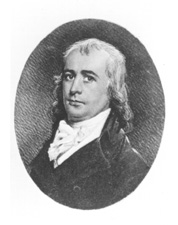
Ray Greene
Former U.S. Senator from Rhode Island · 1797–1801 · Federalist · Class 2
Ray Greene represented Rhode Island in the United States Senate (1797–1801) for the Federalist party. The page below collects sourced biographical facts, term history, committee roles, and provenance for Greene.
Bioguide ID: G000427
Key facts
- Full name
- Ray Greene
- State
- Rhode Island
- Party
- Federalist
- Senate class
- Class II
- Senate service
- 1797–1801
- First Senate term
- 1797
- Status
- Left office
- Current term ends
- —
- Born
- 1765
- Bioguide ID
- G000427
- Committee assignments
- —
- Dataset version
- 1.20260602
Biographical narrative
833 words · sourced from the Wikipedia REST extract
Ray Greene was a prominent political figure in early American history, serving as a United States Senator from Rhode Island. A member of the Federalist Party, Greene's tenure in the Senate spanned from 1797 to 1801, during which he played a role in the formative years of the nation. His background as an attorney and his connections to influential figures of his time contributed to his political career and legacy.
Early life and career
Ray Greene was born on February 2, 1765, in Warwick, Rhode Island. He was the son of William Greene Jr. and Catharine Ray. His father held significant political office as the governor of Rhode Island during the American Revolutionary War, which likely influenced Greene's early exposure to governance and public service. His mother, a correspondent of Benjamin Franklin, was also part of a family with deep roots in Rhode Island's colonial history. Greene's ancestry includes notable figures such as his grandfather, William Greene Sr., a colonial governor, and early settlers like John Greene Sr., Samuel Gorton, and Roger Williams.
Greene pursued a classical education, graduating from Yale College in 1784. Following his graduation, he studied law and was subsequently admitted to the bar, beginning his legal practice in Providence, Rhode Island. His legal career was marked by his appointment as the Attorney General of Rhode Island, a position he held from 1794 until 1797. This role provided him with valuable experience in legal and governmental affairs, setting the stage for his entry into the U.S. Senate.
In 1797, Greene was elected to the United States Senate to fill a vacancy left by the resignation of William Bradford. His election marked the beginning of his first term in the Senate, where he represented the interests of Rhode Island as a member of the Federalist Party. Greene's political career was characterized by his commitment to the principles of federalism, which emphasized a strong national government.
Senate tenure
Ray Greene's Senate career began on November 13, 1797, and lasted until March 5, 1801. During this period, he was involved in various legislative activities and discussions that shaped the early years of the United States government. Greene was reelected in 1799, reflecting the confidence his constituents had in his leadership and representation.
Throughout his time in the Senate, Greene participated in the deliberations and decisions that were crucial to the development of federal policies and laws. His tenure coincided with a formative period in American history, as the nation was establishing its identity and governance structures following independence. Greene's role as a senator allowed him to contribute to the dialogue surrounding the emerging political landscape, including issues related to state and federal powers, economic policy, and national security.
In 1801, Greene resigned from the Senate after being nominated for a judicial position. He was designated as a district judge of Rhode Island by President John Adams; however, due to a technicality, he was not appointed to the position. This transition marked the end of his formal legislative career, but his contributions to the Senate and the state of Rhode Island remained significant.
Legislative focus and committees
While specific details regarding Greene's legislative focus and committee assignments during his Senate tenure are not extensively documented, it is understood that he operated within the context of the Federalist Party's priorities. The Federalists were known for advocating a strong central government, a national banking system, and policies that favored commerce and trade. Greene's legal background and experience as Attorney General likely informed his perspectives on various legislative matters.
During the late 18th century, the Senate was involved in critical discussions regarding the establishment of federal institutions, the interpretation of the Constitution, and the balance of power between the federal and state governments. Greene's participation in these discussions would have contributed to shaping the legal and political frameworks that would govern the nation.
As a senator, Greene would have been expected to engage with a range of issues pertinent to Rhode Island and the broader national interest. This included matters related to trade, navigation, and the rights of states within the federal system. His legal expertise would have been an asset in navigating the complexities of legislation during a time of rapid change and development in the United States.
In summary, Ray Greene's career as a U.S. Senator from Rhode Island reflects the early political landscape of the United States. His background, education, and legal experience positioned him as a significant figure in the Senate during a pivotal era. Although his time in office was relatively brief, Greene's contributions to the legislative process and his representation of Rhode Island's interests were part of the foundation upon which the nation was built. After his resignation from the Senate, Greene continued to be recognized for his public service, leaving a legacy that connects him to the early governance of the United States. He passed away on January 11, 1849, leaving behind a family that included notable descendants, further extending his influence in Rhode Island's political history.
Notable legislation
Sponsored and co-sponsored legislation for Ray Greene is pending operator curation. The biographical narrative above carries the same provenance trail until per-bill rows are written.
Sources
- [1]https://en.wikipedia.org/wiki/Ray_Greene_(politician)Wikipedia · retrieved 2026-06-02
Notable quotes
Sourced quotes for Ray Greene are pending operator curation. Narrative-scope provenance remains attached below.
Sources
- [1]https://en.wikipedia.org/wiki/Ray_Greene_(politician)Wikipedia · retrieved 2026-06-02
Key positions
Curated policy positions for Ray Greene are pending operator review. The biographical narrative above carries the same provenance trail until per-topic positions are written.
Sources
- [1]https://en.wikipedia.org/wiki/Ray_Greene_(politician)Wikipedia · retrieved 2026-06-02
Terms served
- 1797–1799U.S. Senate · Term 1 · Federalist · Class II
- 1799–1801U.S. Senate · Term 2 · Federalist · Class II
Sources & provenance
Every attributable claim above carries a per-section [N] marker that resolves to the corresponding URL below. Each entry records the upstream provider, the canonical URL, and the timestamp at which the source was retrieved by the ingest pipeline.
Key facts
- https://bioguide.congress.gov/search/bio/G000427bioguide · retrieved 2026-06-02
- https://www.govtrack.us/congress/members/404775govtrack · retrieved 2026-06-02
Biographical narrative
- https://en.wikipedia.org/wiki/Ray_Greene_(politician)wikipedia · retrieved 2026-06-02
Find your senator
Every U.S. state elects two senators. Browse Rhode Island’s delegation, the full former-senator roster, or explore the role and term length.
Related on The Candidate
- Preceded by William BradfordEarlier holder of the Rhode Island Class II Senate seat · Federalist.Open
- Succeeded by Christopher ElleryLater holder of the Rhode Island Class II Senate seat · Republican.Open
- Albert GreeneFormer U.S. Senator from Rhode Island · WhigOpen
- Ambrose BurnsideFormer U.S. Senator from Rhode Island · RepublicanOpen
- Asher RobbinsFormer U.S. Senator from Rhode Island · WhigOpen
- Benjamin HowlandFormer U.S. Senator from Rhode Island · RepublicanOpen