
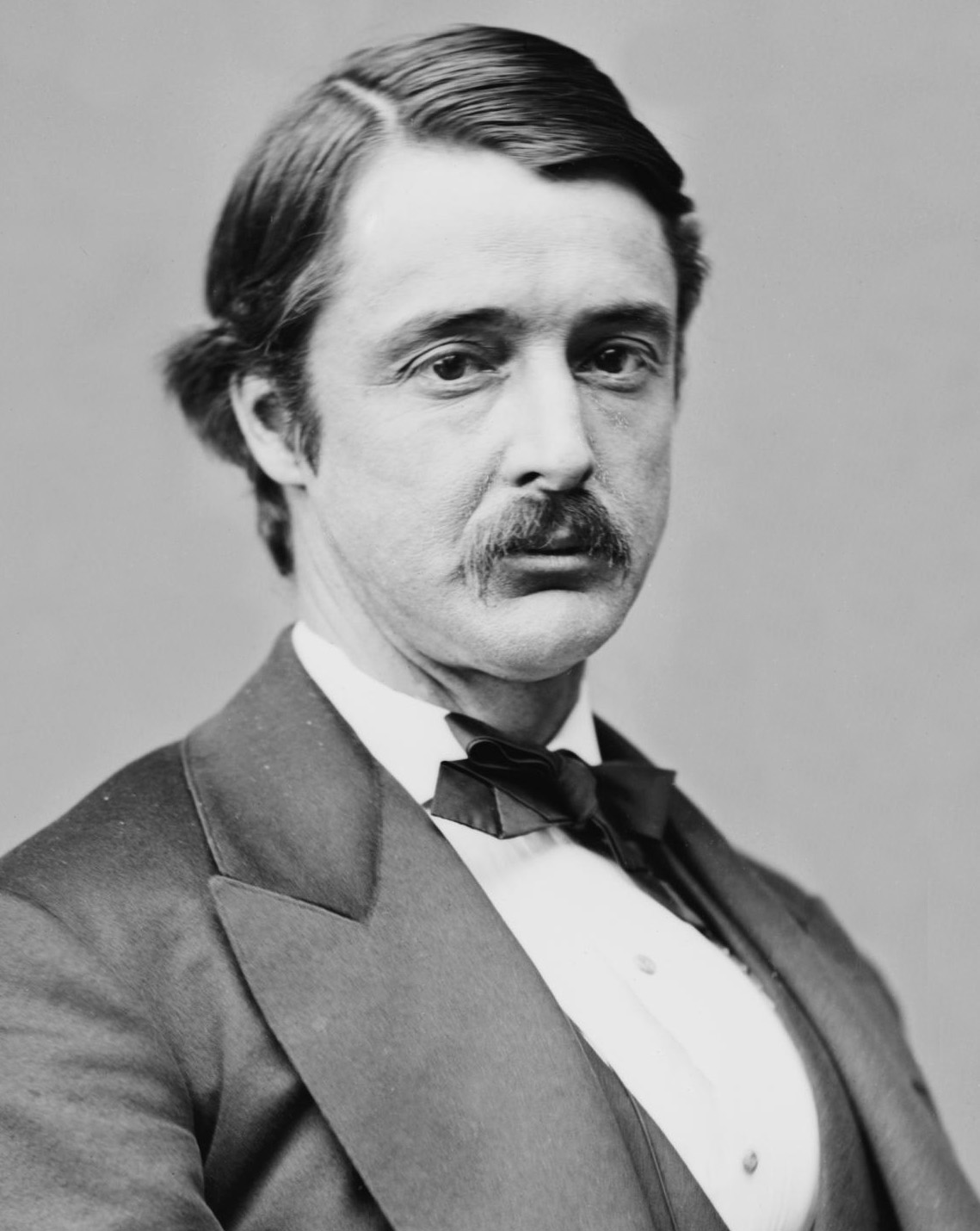
Historical · U.S. Senate · Rhode Island
William Sprague
Former U.S. Senator from Rhode Island · 1863–1875 · Liberal Republican · Class 1
William Sprague represented Rhode Island in the United States Senate (1863–1875) for the Liberal Republican party. The page below collects sourced biographical facts, term history, committee roles, and provenance for Sprague.
Bioguide ID: S000747
Key facts
- Full name
- William Sprague
- State
- Rhode Island
- Party
- Liberal Republican
- Senate class
- Class I
- Senate service
- 1863–1875
- First Senate term
- 1863
- Status
- Left office
- Current term ends
- —
- Born
- 1830
- Bioguide ID
- S000747
- Committee assignments
- —
- Dataset version
- 1.20260602
Biographical narrative
895 words · sourced from the Wikipedia REST extract
William Sprague IV was an American politician who served as a U.S. Senator from Rhode Island and held the position of the 27th governor of the state. A member of the Liberal Republican Party, Sprague's political career spanned from the early 1860s to the mid-1870s. His tenure in the Senate lasted from 1863 until 1875, during which he played a significant role in various legislative committees and was involved in the political landscape of the Civil War era.
Early life and career
William Sprague was born on September 12, 1830, in Cranston, Rhode Island, within the confines of the Gov. William Sprague Mansion. He was the youngest son of Amasa and Fanny Morgan Sprague. His family had notable political connections; his uncle, William Sprague III, had served as both a governor and a U.S. Senator, as well as a U.S. Representative from Rhode Island. The Sprague family spent a portion of their time in Thorsby, Alabama, before returning to Rhode Island, where William and his brother Amasa attended the Irving Institute in Tarrytown, New York. Their education was abruptly interrupted by a tragic event: the murder of their father on New Year's Eve in 1843, an incident that garnered significant public attention and was marked by a trial that reflected the social tensions of the time.
Following this family tragedy, both William and Amasa were called to work in the family business, the A. & W. Sprague Manufacturing Company, which was the largest employer in Rhode Island at that time. After the death of their uncle in 1856, William and Amasa, along with their cousin Col. Byron Sprague and their mother, became partners in the company. Under their management, the company expanded significantly, becoming the largest calico printing textile mill in the world. The firm operated five weaving mills in New England, connected by the Hartford, Providence and Fishkill Railroad, which had been controlled by their uncle.
In addition to his business pursuits, Sprague showed an early interest in military service. At the age of 18, he joined the Providence Marine Corps of Artillery, a unit of the Rhode Island Militia. He began his service as a private but quickly rose through the ranks, eventually commanding the unit as a colonel. His commitment to the military was evident as he personally financed the unit's expenses, including uniforms and equipment.
Senate tenure
Sprague's political career began in earnest when he was elected as the governor of Rhode Island in 1860. His tenure as governor lasted until 1863, during which he was a prominent figure in the state’s political landscape. Following his governorship, he was elected to the U.S. Senate, taking office on March 4, 1863. He served in this capacity until March 3, 1875, completing two full terms in the Senate.
During his time in the Senate, Sprague was actively involved in various legislative committees. He served as the chairman of the committees on public lands and on manufactures, and he was also a member of the committees on commerce and military affairs. His involvement in these committees allowed him to influence legislation related to land use, manufacturing practices, and military matters, particularly during a period marked by the Civil War and its aftermath.
Sprague's political affiliations shifted over time. Initially elected as a Conservative candidate, he later aligned himself with the Republican Party, influenced by his connections with notable figures such as Kate Chase, the daughter of U.S. Treasury Secretary Salmon P. Chase. This transformation reflected broader political trends of the time, as many politicians navigated the complexities of the Civil War and its implications for national unity and governance.
Legislative focus and committees
Throughout his Senate tenure, Sprague's legislative focus encompassed a range of issues pertinent to the era. As chairman of the committee on public lands, he was involved in discussions and decisions regarding land policy, which were crucial during a time of westward expansion and settlement. His leadership in this area was significant, given the increasing demand for land as the nation grew.
In his role as chairman of the committee on manufactures, Sprague played a key part in shaping policies that affected the industrial sector, particularly in relation to textile manufacturing, an industry in which he had considerable experience due to his family's business background. His insights into manufacturing processes and innovations were informed by his practical knowledge and involvement in the textile industry.
Additionally, Sprague's membership on the committees on commerce and military affairs positioned him to address issues related to trade and national defense. The Civil War had a profound impact on both commerce and military policy, and Sprague's contributions in these areas were reflective of the urgent needs of the nation during and after the conflict.
After leaving the Senate, Sprague returned to his manufacturing enterprises, where he continued to innovate. He operated the first rotary machine for making horseshoes and improved various processes in calico printing. His post-Senate career was marked by a commitment to advancing manufacturing techniques and exploring new technologies.
William Sprague IV passed away on September 11, 1915, leaving behind a legacy intertwined with the political and industrial history of Rhode Island and the broader United States during a transformative period. His contributions as a governor and senator, along with his involvement in manufacturing, illustrate the multifaceted nature of his career and the impact he had on his state and nation.
Notable legislation
Sponsored and co-sponsored legislation for William Sprague is pending operator curation. The biographical narrative above carries the same provenance trail until per-bill rows are written.
Sources
- [1]https://en.wikipedia.org/wiki/William_Sprague_IVWikipedia · retrieved 2026-06-02
Notable quotes
Sourced quotes for William Sprague are pending operator curation. Narrative-scope provenance remains attached below.
Sources
- [1]https://en.wikipedia.org/wiki/William_Sprague_IVWikipedia · retrieved 2026-06-02
Key positions
Curated policy positions for William Sprague are pending operator review. The biographical narrative above carries the same provenance trail until per-topic positions are written.
Sources
- [1]https://en.wikipedia.org/wiki/William_Sprague_IVWikipedia · retrieved 2026-06-02
Terms served
- 1863–1869U.S. Senate · Term 1 · Republican · Class I
- 1869–1875U.S. Senate · Term 2 · Liberal Republican · Class I
Sources & provenance
Every attributable claim above carries a per-section [N] marker that resolves to the corresponding URL below. Each entry records the upstream provider, the canonical URL, and the timestamp at which the source was retrieved by the ingest pipeline.
Key facts
- https://bioguide.congress.gov/search/bio/S000747bioguide · retrieved 2026-06-02
- https://www.govtrack.us/congress/members/410216govtrack · retrieved 2026-06-02
Biographical narrative
- https://en.wikipedia.org/wiki/William_Sprague_IVwikipedia · retrieved 2026-06-02
Find your senator
Every U.S. state elects two senators. Browse Rhode Island’s delegation, the full former-senator roster, or explore the role and term length.
Related on The Candidate
- Preceded by James SimmonsEarlier holder of the Rhode Island Class I Senate seat · Republican.Open
- Succeeded by Ambrose BurnsideLater holder of the Rhode Island Class I Senate seat · Republican.Open
- Albert GreeneFormer U.S. Senator from Rhode Island · WhigOpen
- Asher RobbinsFormer U.S. Senator from Rhode Island · WhigOpen
- Benjamin HowlandFormer U.S. Senator from Rhode Island · RepublicanOpen
- Senators from Rhode IslandEvery former U.S. Senator who has represented Rhode Island.Open