
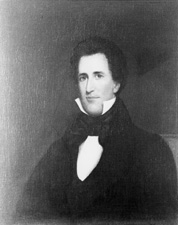
Historical · U.S. Senate · South Carolina
Franklin Elmore
Former U.S. Senator from South Carolina · 1850–1851 · Democratic · Class 2
Franklin Elmore represented South Carolina in the United States Senate (1850–1851) for the Democratic party. The page below collects sourced biographical facts, term history, committee roles, and provenance for Elmore.
Bioguide ID: E000158
Key facts
- Full name
- Franklin Elmore
- State
- South Carolina
- Party
- Democratic
- Senate class
- Class II
- Senate service
- 1850–1851
- First Senate term
- 1850
- Status
- Left office
- Current term ends
- —
- Born
- 1799
- Bioguide ID
- E000158
- Committee assignments
- —
- Dataset version
- 1.20260602
Biographical narrative
877 words · sourced from the Wikipedia REST extract
Franklin Elmore was a prominent political figure in the 19th century, serving as a U.S. Senator from South Carolina. A member of the Democratic Party, he held office during a period marked by significant political and social changes in the United States. Elmore's career in public service included roles in both the House of Representatives and the Senate, where he contributed to the legislative process until his untimely death in 1850.
Early life and career
Franklin Elmore was born on October 15, 1799, in the Laurens District of South Carolina. He was the son of John Archer Elmore, and his early education culminated in his graduation from South Carolina College in Columbia in 1819. Following his graduation, Elmore pursued a career in law, studying the discipline and gaining admission to the bar in 1821. He began his legal practice in Walterboro, South Carolina, where he established himself in the legal community.
Elmore's early career included several significant roles in public service. From 1822 to 1836, he served as the solicitor for the southern circuit, a position that involved overseeing legal proceedings and representing the state in various legal matters. His commitment to public service was further demonstrated by his appointment as a colonel on the staff of the state governor from 1824 to 1826. This role allowed him to gain experience in military and civil affairs, contributing to his understanding of governance.
In 1836, Elmore entered the national political arena when he was elected as a State Rights Democrat to the 24th United States Congress. He filled the vacancy left by the resignation of James H. Hammond, marking the beginning of his congressional career. Elmore was subsequently reelected to the 25th Congress, where he served from December 10, 1836, until March 4, 1839. His time in the House of Representatives provided him with valuable legislative experience and insight into the workings of the federal government.
After his tenure in the House, Elmore transitioned to a significant role in the banking sector. From 1839 until 1850, he served as the president of the Bank of the State of South Carolina. This position allowed him to influence economic policy and financial practices in the state. Despite his growing prominence, Elmore declined an appointment by President James Polk to serve as Minister to Great Britain, choosing instead to focus on his commitments within South Carolina.
Senate tenure
Elmore's Senate career began in 1850 when he was appointed as a Democrat to the U.S. Senate to fill the vacancy created by the death of the influential Senator John C. Calhoun. His appointment took place on April 11, 1850, and he served in the Senate until his death later that same year. During this brief tenure, Elmore was part of a critical period in American history, as the nation grappled with issues related to states' rights, slavery, and sectional tensions.
Although his time in the Senate was short, Elmore's presence was felt during a pivotal moment in the legislative landscape. The Senate was a battleground for debates over the future of the Union, and Elmore's role as a senator placed him at the center of these discussions. His political affiliations and beliefs aligned with the Democratic Party, which was a dominant force in Southern politics during this era.
Elmore's Senate career was cut short by his untimely death on May 29, 1850, in Washington, D.C. His passing marked the end of a significant chapter in his political journey, as he had only begun to make his mark in the Senate. Following his death, he was interred in the First Presbyterian Churchyard in Columbia, South Carolina, where he was remembered for his contributions to the state and the nation.
Legislative focus and committees
During his time in Congress, Franklin Elmore's legislative focus reflected the priorities and concerns of his era. As a member of the Democratic Party, he was aligned with the interests of Southern states and their economic and social structures. His experience as a solicitor and bank president likely informed his perspectives on issues related to finance, commerce, and legal affairs.
While specific details regarding the legislation he supported or the committees he served on during his Senate tenure are not extensively documented, it can be inferred that his background in law and banking would have influenced his contributions to discussions on economic policy and legal reform. The political climate of the time was characterized by intense debates over issues such as states' rights and the expansion of slavery into new territories, which were central to the Democratic Party's platform.
Elmore's prior experience in the House of Representatives and as a state solicitor provided him with a foundation for understanding the complexities of federal legislation. His role as president of the Bank of the State of South Carolina also positioned him as a knowledgeable figure in financial matters, which would have been relevant to his work in the Senate.
In summary, Franklin Elmore's career spanned various roles in public service, from local legal practice to national politics. His tenure as a U.S. Senator, although brief, occurred during a critical juncture in American history. His contributions to the legislative process and the political landscape of South Carolina were shaped by his experiences and the prevailing issues of his time.
Notable legislation
Sponsored and co-sponsored legislation for Franklin Elmore is pending operator curation. The biographical narrative above carries the same provenance trail until per-bill rows are written.
Sources
- [1]https://en.wikipedia.org/wiki/Franklin_H._ElmoreWikipedia · retrieved 2026-06-02
Notable quotes
Sourced quotes for Franklin Elmore are pending operator curation. Narrative-scope provenance remains attached below.
Sources
- [1]https://en.wikipedia.org/wiki/Franklin_H._ElmoreWikipedia · retrieved 2026-06-02
Key positions
Curated policy positions for Franklin Elmore are pending operator review. The biographical narrative above carries the same provenance trail until per-topic positions are written.
Sources
- [1]https://en.wikipedia.org/wiki/Franklin_H._ElmoreWikipedia · retrieved 2026-06-02
Terms served
- 1835–1837U.S. House · District 4 · Term 1 · Nullifier
- 1837–1839U.S. House · District 4 · Term 2 · Nullifier
- 1850–1851U.S. Senate · Term 3 · Democratic · Class II
Sources & provenance
Every attributable claim above carries a per-section [N] marker that resolves to the corresponding URL below. Each entry records the upstream provider, the canonical URL, and the timestamp at which the source was retrieved by the ingest pipeline.
Key facts
- https://bioguide.congress.gov/search/bio/E000158bioguide · retrieved 2026-06-02
- https://www.govtrack.us/congress/members/403849govtrack · retrieved 2026-06-02
Biographical narrative
- https://en.wikipedia.org/wiki/Franklin_H._Elmorewikipedia · retrieved 2026-06-02
Find your senator
Every U.S. state elects two senators. Browse South Carolina’s delegation, the full former-senator roster, or explore the role and term length.
Related on The Candidate
- Preceded by Daniel HugerEarlier holder of the South Carolina Class II Senate seat · Democratic.Open
- Succeeded by William De SaussureLater holder of the South Carolina Class II Senate seat · Democratic.Open
- Alva LumpkinFormer U.S. Senator from South Carolina · DemocraticOpen
- Andrew ButlerFormer U.S. Senator from South Carolina · DemocraticOpen
- Arthur HayneFormer U.S. Senator from South Carolina · DemocraticOpen
- Asbury LatimerFormer U.S. Senator from South Carolina · DemocraticOpen