
Historical · U.S. Senate · South Carolina
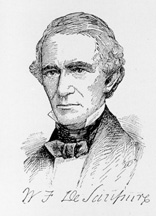
William De Saussure
Former U.S. Senator from South Carolina · 1852–1853 · Democratic · Class 2
William De Saussure represented South Carolina in the United States Senate (1852–1853) for the Democratic party. The page below collects sourced biographical facts, term history, committee roles, and provenance for Saussure.
Bioguide ID: D000270
Key facts
- Full name
- William De Saussure
- State
- South Carolina
- Party
- Democratic
- Senate class
- Class II
- Senate service
- 1852–1853
- First Senate term
- 1852
- Status
- Left office
- Current term ends
- —
- Born
- 1792
- Bioguide ID
- D000270
- Committee assignments
- —
- Dataset version
- 1.20260602
Biographical narrative
1,010 words · sourced from the Wikipedia REST extract
William De Saussure was a prominent political figure in the early to mid-19th century, serving as a United States Senator from South Carolina. A member of the Democratic Party, he held office during a tumultuous period in American history, marked by debates over slavery and states' rights. His tenure in the Senate was relatively brief, but it occurred during a time when the nation was grappling with significant social and political changes. Born in Charleston, South Carolina, in 1792, De Saussure's life and career were deeply intertwined with the legal and political developments of his time.
Early life and career
William De Saussure was born on February 22, 1792, in Charleston, South Carolina, into a family with a notable lineage. He was the son of Henry William de Saussure and Elizabeth Ford De Saussure, which positioned him within the social elite of the region. His early education culminated in his graduation from Harvard University in 1810, where he received a rigorous academic foundation that would later support his legal career.
Following his graduation, De Saussure pursued the study of law, which was a common path for many young men of his social standing during that era. He was admitted to the bar and began practicing law in both Charleston and Columbia, South Carolina. His legal career was marked by a commitment to the law and an engagement with the political issues of his time. In the 1820s, he took on a significant role in local governance, serving two terms as Intendent, or Mayor, of the City of Columbia. This position allowed him to influence municipal policies and engage with the community on various issues.
In addition to his role as mayor, De Saussure's political aspirations led him to the South Carolina House of Representatives in 1846. His legislative experience further solidified his standing in the political landscape of South Carolina. The following year, in 1847, he was appointed as a judge of the chancery court, a position that underscored his legal expertise and commitment to public service. His involvement in the judiciary allowed him to shape legal precedents and contribute to the administration of justice in the state.
De Saussure's political activities also included a notable stance on the issue of slavery. In 1847, he was a signatory to a letter advocating for the establishment of a pro-slavery media outlet in Washington, D.C. This letter, which was later republished in the abolitionist newspaper The Liberator, sought to promote Southern views on slavery and to counteract the growing abolitionist sentiment in the North. This involvement highlighted the contentious debates surrounding slavery during this period and positioned De Saussure as a defender of Southern interests.
Senate tenure
William De Saussure's entry into the United States Senate was marked by his appointment on May 10, 1852, to fill a vacancy created by the resignation of Senator R. Barnwell Rhett. Shortly after his appointment, he was elected to the Senate on November 29, 1852, as a member of the Democratic Party. His Senate term began in a politically charged environment, as the nation was increasingly divided over the issue of slavery and its implications for the Union.
De Saussure served in the Senate until March 4, 1853. During this brief tenure, he participated in discussions and debates that were critical to the political landscape of the time. While specific details of his legislative activities are not extensively documented, it is clear that he was part of a Senate that was grappling with the tensions between Northern and Southern states. The issues of states' rights and the expansion of slavery into new territories were at the forefront of national discourse, and De Saussure's alignment with the Democratic Party placed him firmly in the camp advocating for Southern interests.
After concluding his Senate term, De Saussure returned to his legal practice in Columbia. His experience in the Senate and his previous roles in public service contributed to his reputation as a knowledgeable and influential figure in South Carolina's legal and political circles. He also took on a role as a trustee of South Carolina College, now known as the University of South Carolina, where he contributed to the governance of the institution and its educational mission.
Legislative focus and committees
While specific details regarding De Saussure's committee assignments and legislative initiatives during his time in the Senate are not extensively recorded, his political activities prior to and following his Senate tenure provide insight into his legislative focus. As a member of the Democratic Party, he was likely aligned with the party's platform, which at the time included support for states' rights and the protection of slavery as an institution. His earlier advocacy for a pro-slavery media outlet indicates a commitment to promoting Southern perspectives on contentious issues.
De Saussure's involvement in the South Carolina legislature and his role as a judge also suggest that he was engaged with matters of law and governance that were significant to his constituents. His legal background would have informed his approach to legislative issues, particularly those related to civil rights, property rights, and the legal frameworks surrounding slavery.
In December 1860, De Saussure was a delegate to South Carolina's Secession Convention, where he became a signer of the Ordinance of Secession. This act was a pivotal moment in American history, as it marked South Carolina's decision to secede from the Union, setting the stage for the Civil War. His participation in this convention underscores his deep commitment to the principles he believed were vital to Southern society and governance.
William De Saussure passed away on March 13, 1870, in Columbia, South Carolina. He was interred in the First Presbyterian Churchyard, leaving behind a legacy intertwined with the complex history of the antebellum South and the Civil War. His descendants include Arthur Ravenel, Jr., who served as a member of the United States Congress, further extending the family's political legacy. De Saussure's life and career reflect the intricate dynamics of a nation on the brink of profound change, shaped by the enduring issues of slavery and states' rights.
Notable legislation
Sponsored and co-sponsored legislation for William De Saussure is pending operator curation. The biographical narrative above carries the same provenance trail until per-bill rows are written.
Sources
- [1]https://en.wikipedia.org/wiki/William_F._De_SaussureWikipedia · retrieved 2026-06-02
Notable quotes
Sourced quotes for William De Saussure are pending operator curation. Narrative-scope provenance remains attached below.
Sources
- [1]https://en.wikipedia.org/wiki/William_F._De_SaussureWikipedia · retrieved 2026-06-02
Key positions
Curated policy positions for William De Saussure are pending operator review. The biographical narrative above carries the same provenance trail until per-topic positions are written.
Sources
- [1]https://en.wikipedia.org/wiki/William_F._De_SaussureWikipedia · retrieved 2026-06-02
Terms served
- 1852–1853U.S. Senate · Term 1 · Democratic · Class II
Sources & provenance
Every attributable claim above carries a per-section [N] marker that resolves to the corresponding URL below. Each entry records the upstream provider, the canonical URL, and the timestamp at which the source was retrieved by the ingest pipeline.
Key facts
- https://bioguide.congress.gov/search/bio/D000270bioguide · retrieved 2026-06-02
- https://www.govtrack.us/congress/members/403321govtrack · retrieved 2026-06-02
Biographical narrative
- https://en.wikipedia.org/wiki/William_F._De_Saussurewikipedia · retrieved 2026-06-02
Find your senator
Every U.S. state elects two senators. Browse South Carolina’s delegation, the full former-senator roster, or explore the role and term length.
Related on The Candidate
- Preceded by Franklin ElmoreEarlier holder of the South Carolina Class II Senate seat · Democratic.Open
- Succeeded by Josiah EvansLater holder of the South Carolina Class II Senate seat · Democratic.Open
- Alva LumpkinFormer U.S. Senator from South Carolina · DemocraticOpen
- Andrew ButlerFormer U.S. Senator from South Carolina · DemocraticOpen
- Arthur HayneFormer U.S. Senator from South Carolina · DemocraticOpen
- Asbury LatimerFormer U.S. Senator from South Carolina · DemocraticOpen