
Historical · U.S. Senate · South Carolina
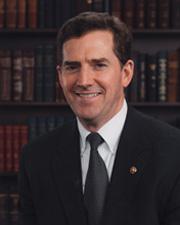
Jim DeMint
Former U.S. Senator from South Carolina · 2005–2013 · Republican · Class 3
Jim DeMint represented South Carolina in the United States Senate (2005–2013) for the Republican party. The page below collects sourced biographical facts, term history, committee roles, and provenance for DeMint.
Bioguide ID: D000595
Key facts
- Full name
- Jim DeMint
- State
- South Carolina
- Party
- Republican
- Senate class
- Class III
- Senate service
- 2005–2013
- First Senate term
- 2005
- Status
- Left office
- Current term ends
- —
- Born
- 1951
- Bioguide ID
- D000595
- Committee assignments
- —
- Dataset version
- 1.20260601-3
Biographical narrative
937 words · sourced from the Wikipedia REST extract
James Warren DeMint is a former United States Senator from South Carolina, known for his affiliation with the Republican Party and his significant role in the Tea Party movement. He served in the U.S. Senate from 2005 until 2013, after which he transitioned to a leadership position at The Heritage Foundation. DeMint's political career also includes a tenure in the U.S. House of Representatives, where he represented South Carolina's 4th congressional district from 1999 to 2005. Throughout his political journey, he has been recognized for his conservative stances and advocacy for limited government.
Early life and career
Jim DeMint was born on September 2, 1951, in Greenville, South Carolina, as one of four children in his family. His parents, Betty W. and Thomas Eugene DeMint, divorced when he was five years old. Following the divorce, his mother operated a dance studio from their home, which contributed to DeMint's early exposure to entrepreneurship and business. He attended Christ Church Episcopal School and later graduated from Wade Hampton High School. During his high school years, he was involved in music, playing drums for a cover band named Salt & Pepper.
DeMint pursued higher education at the University of Tennessee, where he earned a bachelor's degree in 1973. He later obtained a Master of Business Administration (MBA) from Clemson University in 1981. His early career began in the advertising sector when he joined his father-in-law's firm in Greenville, focusing on market research. In 1983, he founded The DeMint Group, a research firm that provided services to various clients, including businesses, schools, colleges, and hospitals.
DeMint's initial foray into politics occurred in 1992 when he was hired by Republican Representative Bob Inglis to assist with his campaign for South Carolina's 4th congressional district. Following Inglis's successful election, DeMint continued to work with him through subsequent campaigns, honing his political skills and understanding of electoral strategies.
Senate tenure
DeMint's political career advanced significantly when he decided to run for the U.S. House of Representatives in 1998, seeking to fill the seat vacated by Inglis, who opted to run for the U.S. Senate. DeMint faced a competitive Republican primary, ultimately finishing second but securing victory in the runoff against State Senator Michael Fair. He won the general election against Democratic State Senator Glenn Reese, marking the beginning of his congressional career.
During his time in the House, DeMint was elected president of the freshman class of House Republicans and pledged to serve only three terms. He became known for his conservative positions, often breaking ranks with party leadership on key issues. Notably, he opposed President George W. Bush's No Child Left Behind initiative and Medicare Part D, advocating instead for state-based education funding and privatization of Social Security.
In 2004, DeMint announced his candidacy for the U.S. Senate following the retirement of Senator Ernest Hollings. He faced a challenging primary but ultimately secured the Republican nomination. In the general election, he defeated Democratic candidate Inez Tenenbaum by a margin of 9.6 percentage points, making history as South Carolina's first Republican senator alongside another Republican, a notable shift in the state's political landscape.
DeMint was re-elected to the Senate in 2010, where he continued to champion conservative policies and align himself with the Tea Party movement. His tenure in the Senate was marked by a commitment to reducing government spending and promoting free-market principles. He was known for his outspoken views on various social issues, which sometimes sparked controversy, such as his comments regarding the suitability of openly gay individuals and single mothers as public school teachers.
DeMint's Senate career concluded on January 1, 2013, when he resigned to assume the presidency of The Heritage Foundation, a prominent conservative think tank. His departure from the Senate was seen as a transition to a new phase in his career, focusing on influencing conservative policy and thought through his leadership at Heritage.
Legislative focus and committees
Throughout his time in Congress, Jim DeMint was recognized for his strong conservative ideology and commitment to limited government. His legislative focus included issues such as education reform, social security privatization, and free trade. DeMint's opposition to major legislation like No Child Left Behind and Medicare Part D underscored his belief in state control over education and healthcare, as well as his advocacy for individual choice in social security.
In the Senate, DeMint served on various committees, where he worked on legislation that aligned with his conservative principles. He was particularly active in promoting free-market policies and reducing government intervention in the economy. His efforts included advocating for tax cuts, regulatory reform, and measures aimed at curbing federal spending.
DeMint's influence extended beyond his legislative work as he became a prominent figure in the Tea Party movement, which sought to promote fiscal conservatism and limited government. He founded the Senate Conservatives Fund, which aimed to support conservative candidates in elections, further solidifying his role as a leader within the Republican Party.
After leaving the Senate, DeMint continued to engage in political discourse and activism. He became a senior advisor to Citizens for Self-Governance and took on the role of founding chairman of the Conservative Partnership Institute. His post-Senate career reflects his ongoing commitment to conservative principles and his desire to shape the future of the Republican Party.
In summary, Jim DeMint's political career has been characterized by his staunch conservative beliefs, significant contributions to the Republican Party, and active involvement in shaping policy through various leadership roles. His tenure in both the U.S. House of Representatives and the Senate highlights his dedication to advocating for limited government and free-market principles, leaving a lasting impact on American politics.
Notable legislation
Sponsored and co-sponsored legislation for Jim DeMint is pending operator curation. The biographical narrative above carries the same provenance trail until per-bill rows are written.
Sources
- [1]https://en.wikipedia.org/wiki/Jim_DeMintWikipedia · retrieved 2026-06-01
Notable quotes
Sourced quotes for Jim DeMint are pending operator curation. Narrative-scope provenance remains attached below.
Sources
- [1]https://en.wikipedia.org/wiki/Jim_DeMintWikipedia · retrieved 2026-06-01
Key positions
Curated policy positions for Jim DeMint are pending operator review. The biographical narrative above carries the same provenance trail until per-topic positions are written.
Sources
- [1]https://en.wikipedia.org/wiki/Jim_DeMintWikipedia · retrieved 2026-06-01
Terms served
- 1999–2001U.S. House · District 4 · Term 1 · Republican
- 2001–2003U.S. House · District 4 · Term 2 · Republican
- 2003–2005U.S. House · District 4 · Term 3 · Republican
- 2005–2011U.S. Senate · Term 4 · Republican · Class III
- 2011–2013U.S. Senate · Term 5 · Republican · Class III
Sources & provenance
Every attributable claim above carries a per-section [N] marker that resolves to the corresponding URL below. Each entry records the upstream provider, the canonical URL, and the timestamp at which the source was retrieved by the ingest pipeline.
Key facts
- https://bioguide.congress.gov/search/bio/D000595bioguide · retrieved 2026-06-01
- http://demint.senate.govsenate.gov · retrieved 2026-06-01
Biographical narrative
- https://en.wikipedia.org/wiki/Jim_DeMintwikipedia · retrieved 2026-06-01
Find your senator
Every U.S. state elects two senators. Browse South Carolina’s delegation, the full former-senator roster, or explore the role and term length.
Related on The Candidate
- Preceded by Fritz HollingsEarlier holder of the South Carolina Class III Senate seat · Democratic.Open
- Alva LumpkinFormer U.S. Senator from South Carolina · DemocraticOpen
- Andrew ButlerFormer U.S. Senator from South Carolina · DemocraticOpen
- Arthur HayneFormer U.S. Senator from South Carolina · DemocraticOpen
- Asbury LatimerFormer U.S. Senator from South Carolina · DemocraticOpen
- Republican PartyFederal candidates and office holders on the Republican line.Open