
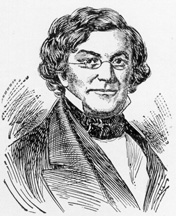
Historical · U.S. Senate · South Carolina
Robert Barnwell
Former U.S. Senator from South Carolina · 1850–1851 · Democratic · Class 2
Robert Barnwell represented South Carolina in the United States Senate (1850–1851) for the Democratic party. The page below collects sourced biographical facts, term history, committee roles, and provenance for Barnwell.
Bioguide ID: B000168
Key facts
- Full name
- Robert Barnwell
- State
- South Carolina
- Party
- Democratic
- Senate class
- Class II
- Senate service
- 1850–1851
- First Senate term
- 1850
- Status
- Left office
- Current term ends
- —
- Born
- 1801
- Bioguide ID
- B000168
- Committee assignments
- —
- Dataset version
- 1.20260602
Biographical narrative
885 words · sourced from the Wikipedia REST extract
Robert Barnwell was a prominent American politician and educator from South Carolina, who served as a U.S. Senator in the early 1850s. A member of the Democratic Party, Barnwell's political career was marked by his staunch support for slavery and secession, which reflected the prevailing attitudes of his time. He was born into a well-established family with a history of public service, and his own career included roles in both the U.S. Senate and the Confederate Senate during the Civil War. His legacy is complex, intertwined with the contentious issues of his era, particularly regarding slavery and states' rights.
Early life and career
Robert Barnwell was born on August 10, 1801, in Beaufort, South Carolina, into a family of considerable influence and wealth. His father, also named Robert Barnwell, had a notable political career, having served in both the Continental Congress and the U.S. Congress. This familial background provided Barnwell with a foundation in public service and a network that would later support his political ambitions. He was also related to Robert Barnwell Rhett, a prominent figure in the pro-slavery movement known as a "fire-eater."
Barnwell began his education at Beaufort College before transferring to Harvard University, where he completed his studies. After graduating, he returned to South Carolina to manage the family plantation, which was a significant source of his wealth. His involvement in plantation management also aligned him with the prevailing economic interests of the southern states, which relied heavily on slave labor.
Barnwell's political career commenced in 1826 when he was elected to the South Carolina House of Representatives, representing Beaufort County. He served in this capacity until 1828, when he transitioned to the national stage by winning a seat in the U.S. Congress. His congressional tenure lasted from 1829 to 1833, during which he became known for his support of the nullification doctrine, a contentious issue that posited that states could invalidate federal laws they deemed unconstitutional. His opposition to President Andrew Jackson's policies, particularly regarding federal enforcement, marked his early political stance.
After declining to seek re-election in 1832, Barnwell took on a significant role in academia. From 1833 to 1841, he served as the president of South Carolina College, now known as the University of South Carolina, in Columbia. His leadership at the college was characterized by a focus on education and the promotion of southern values, which included the defense of slavery.
Senate tenure
Barnwell's time in the U.S. Senate was brief. He was appointed to fill the vacancy left by the death of Senator Franklin H. Elmore on May 29, 1850. His Senate term began in June 1850 and lasted until December of the same year. This period was marked by significant national tension regarding the issue of slavery, particularly with the impending admission of California as a state. Barnwell opposed California's statehood, reflecting his commitment to maintaining the balance of power between free and slave states. Despite his opposition, he played a role in the Senate by introducing and presenting the credentials for one of California's new senators, John C. Frémont.
Barnwell's short tenure in the Senate was emblematic of the political climate of the time, where appointments were often temporary due to the contentious nature of congressional representation from southern states. In December 1850, he was succeeded by Robert Barnwell Rhett, who continued to advocate for southern interests.
Legislative focus and committees
During his time in the Senate, Barnwell's legislative focus was heavily influenced by the prevailing issues of his era, particularly the debate over slavery and states' rights. His opposition to the admission of California as a free state was one of the key highlights of his brief Senate career. This opposition was rooted in his belief that the expansion of free states would undermine the political power of slaveholding states.
Following his Senate term, Barnwell's political involvement continued as he became a delegate to the Confederate States of America Provisional Congress in 1861. He played a significant role in the early days of the Confederacy, including a temporary appointment to preside over the Congress. His participation in this body included casting votes that were pivotal in the election of Jefferson Davis as the first president of the Confederate States and signing the Confederate Constitution. Barnwell served in the Confederate Senate from 1862 until the end of the Civil War in 1865, further solidifying his commitment to the Confederate cause.
After the war, Barnwell returned to Columbia, where he resumed his role in education as an instructor at the university. He was appointed chairman of the faculty at South Carolina College, a position he held until 1873. However, his tenure was marred by controversies related to his perceived resistance to the integration of the college, which ultimately led to his removal from the position.
Barnwell passed away on November 5, 1882, in Columbia, South Carolina. His burial took place in St. Helena's Churchyard in Beaufort, the town of his birth. His legacy remains a subject of discussion, particularly in light of his support for slavery and secession, as well as his contributions to the educational landscape of South Carolina. The University of South Carolina's Barnwell College is named in his honor, although there have been recent discussions regarding the appropriateness of this designation in light of his historical actions and beliefs.
Notable legislation
Sponsored and co-sponsored legislation for Robert Barnwell is pending operator curation. The biographical narrative above carries the same provenance trail until per-bill rows are written.
Sources
- [1]https://en.wikipedia.org/wiki/Robert_Woodward_BarnwellWikipedia · retrieved 2026-06-02
Notable quotes
Sourced quotes for Robert Barnwell are pending operator curation. Narrative-scope provenance remains attached below.
Sources
- [1]https://en.wikipedia.org/wiki/Robert_Woodward_BarnwellWikipedia · retrieved 2026-06-02
Key positions
Curated policy positions for Robert Barnwell are pending operator review. The biographical narrative above carries the same provenance trail until per-topic positions are written.
Sources
- [1]https://en.wikipedia.org/wiki/Robert_Woodward_BarnwellWikipedia · retrieved 2026-06-02
Terms served
- 1829–1831U.S. House · District 2 · Term 1 · Jackson
- 1831–1833U.S. House · District 2 · Term 2 · Nullifier
- 1850–1851U.S. Senate · Term 3 · Democratic · Class II
Sources & provenance
Every attributable claim above carries a per-section [N] marker that resolves to the corresponding URL below. Each entry records the upstream provider, the canonical URL, and the timestamp at which the source was retrieved by the ingest pipeline.
Key facts
- https://bioguide.congress.gov/search/bio/B000168bioguide · retrieved 2026-06-02
- https://www.govtrack.us/congress/members/401170govtrack · retrieved 2026-06-02
Biographical narrative
- https://en.wikipedia.org/wiki/Robert_Woodward_Barnwellwikipedia · retrieved 2026-06-02
Find your senator
Every U.S. state elects two senators. Browse South Carolina’s delegation, the full former-senator roster, or explore the role and term length.
Related on The Candidate
- Preceded by Daniel HugerEarlier holder of the South Carolina Class II Senate seat · Democratic.Open
- Succeeded by William De SaussureLater holder of the South Carolina Class II Senate seat · Democratic.Open
- Alva LumpkinFormer U.S. Senator from South Carolina · DemocraticOpen
- Andrew ButlerFormer U.S. Senator from South Carolina · DemocraticOpen
- Arthur HayneFormer U.S. Senator from South Carolina · DemocraticOpen
- Asbury LatimerFormer U.S. Senator from South Carolina · DemocraticOpen