
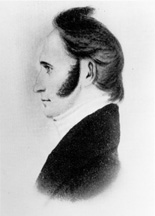
Historical · U.S. Senate · Tennessee
Alexander Anderson
Former U.S. Senator from Tennessee · 1840–1841 · Democratic · Class 2
Alexander Anderson represented Tennessee in the United States Senate (1840–1841) for the Democratic party. The page below collects sourced biographical facts, term history, committee roles, and provenance for Anderson.
Bioguide ID: A000181
Key facts
- Full name
- Alexander Anderson
- State
- Tennessee
- Party
- Democratic
- Senate class
- Class II
- Senate service
- 1840–1841
- First Senate term
- 1840
- Status
- Left office
- Current term ends
- —
- Born
- 1794
- Bioguide ID
- A000181
- Committee assignments
- —
- Dataset version
- 1.20260602
Biographical narrative
863 words · sourced from the Wikipedia REST extract
Alexander Anderson was a U.S. Senator from Tennessee, serving from 1840 to 1841. A member of the Democratic Party, he was also an attorney and held various political positions throughout his career, including roles in the California State Senate and the California Supreme Court. Born into a prominent family, Anderson's life was marked by his legal career, political involvement, and participation in significant historical events.
Early life and career
Alexander Anderson was born on November 10, 1794, at "Soldier's Rest," his father's estate in Jefferson County, Tennessee, which is now part of Hamblen County. He was the son of Patience Outlaw and Joseph Anderson, a notable U.S. Senator. His name was derived from his maternal grandfather, Alexander Outlaw, a frontiersman who lived from 1738 to 1826. Anderson received his early education at Washington College, located near Greeneville, Tennessee, where he graduated before embarking on a career in law.
In 1812, Anderson volunteered for military service during the War of 1812, where he served under General Andrew Jackson. He participated in the Battle of New Orleans in 1815, a pivotal conflict that marked the end of the war. Following his military service, Anderson was admitted to the bar later that same year and began practicing law in Dandridge, Tennessee. His legal career progressed when, in 1821, he was appointed as the United States district attorney for West Florida, a position that came after Andrew Jackson was appointed as the Territorial Governor of Florida.
Anderson's career continued to evolve as he moved to Knoxville, Tennessee, and took on the role of superintendent of the United States General Land Office in Alabama in 1836. His involvement in the Indian removals of 1838 for Alabama and Florida further highlighted his active participation in the political landscape of the time. He held a contract related to these removals that extended until 1848, demonstrating his engagement in the significant issues of land and indigenous affairs during this period.
Senate tenure
In February 1840, Alexander Anderson was elected to the United States Senate by the Tennessee General Assembly. His election filled the vacancy left by the resignation of Senator Hugh Lawson White, whose departure was influenced by Governor James K. Polk's desire to appoint a Democratic senator. Anderson's term in the Senate began on February 26, 1840, and concluded on March 3, 1841, when his term expired.
During his brief time in the Senate, Anderson was involved in the political dynamics of the era, including attending the national Democratic Party convention in Baltimore, Maryland, in May 1840 as a delegate. Despite his active participation, he chose not to seek re-election. Following his departure from the Senate, the seat remained vacant for a time due to a group of Tennessee Democratic legislators known as the "Immortal Thirteen," who refused to convene and provide a quorum necessary for the election of a successor. This group preferred to leave the seat unfilled rather than allow a member of the opposing Whig Party to take office.
After his Senate term, Anderson continued to engage in political discourse. In September 1844, he published a series of letters discussing the admission of Texas as a new state, which were later compiled into a book. His political activities also included supporting Zachary Taylor, a fellow Democrat, as a candidate for the presidency in July 1847.
Legislative focus and committees
Following his Senate tenure, Anderson's career took him westward during the California Gold Rush. In 1849, he led an overland expedition from Independence, Missouri, to California. His political career in California began in 1852 when he was elected to the California State Senate as a Democrat. Although he sought the Democratic nomination for U.S. Senator in February 1852, he was unsuccessful in securing the party's endorsement.
Anderson's legal expertise was recognized when he was appointed by Governor John Bigler as an associate justice of the California Supreme Court. He served in this capacity from April 6, 1852, until January 2, 1853. During his time on the bench, he co-authored a ruling that supported the Fugitive Slave Act, a controversial piece of legislation that mandated the return of escaped slaves to their owners. This ruling reflected the prevailing attitudes of the time regarding slavery and property rights.
After his judicial service, Anderson returned to Tennessee around 1853 or 1854, where he resumed practicing law. His legal career continued through the American Civil War, during which he practiced in Alabama, specifically in Mobile and Camden. Eventually, he returned to Tennessee, where he continued his legal work until his death on May 23, 1869, in Knoxville. He was interred in the Old Gray Cemetery.
Anderson's personal life included two marriages. He first married Maria Hamilton in 1821, but she passed away in 1825. He later remarried Eliza Rosa Deaderick, his cousin, on June 7, 1825. Together, they had eleven children. Eliza died on October 15, 1866, in Knoxville.
Throughout his life, Alexander Anderson was involved in significant political and legal developments in both Tennessee and California, reflecting the complexities of American society during his lifetime. His career spanned various roles, from attorney to senator to judge, marking him as a notable figure in the history of American politics.
Notable legislation
Sponsored and co-sponsored legislation for Alexander Anderson is pending operator curation. The biographical narrative above carries the same provenance trail until per-bill rows are written.
Sources
- [1]https://en.wikipedia.org/wiki/Alexander_O._AndersonWikipedia · retrieved 2026-06-02
Notable quotes
Sourced quotes for Alexander Anderson are pending operator curation. Narrative-scope provenance remains attached below.
Sources
- [1]https://en.wikipedia.org/wiki/Alexander_O._AndersonWikipedia · retrieved 2026-06-02
Key positions
Curated policy positions for Alexander Anderson are pending operator review. The biographical narrative above carries the same provenance trail until per-topic positions are written.
Sources
- [1]https://en.wikipedia.org/wiki/Alexander_O._AndersonWikipedia · retrieved 2026-06-02
Terms served
- 1840–1841U.S. Senate · Term 1 · Democratic · Class II
Sources & provenance
Every attributable claim above carries a per-section [N] marker that resolves to the corresponding URL below. Each entry records the upstream provider, the canonical URL, and the timestamp at which the source was retrieved by the ingest pipeline.
Key facts
- https://bioguide.congress.gov/search/bio/A000181bioguide · retrieved 2026-06-02
- https://www.govtrack.us/congress/members/400836govtrack · retrieved 2026-06-02
Biographical narrative
- https://en.wikipedia.org/wiki/Alexander_O._Andersonwikipedia · retrieved 2026-06-02
Find your senator
Every U.S. state elects two senators. Browse Tennessee’s delegation, the full former-senator roster, or explore the role and term length.
Related on The Candidate
- Preceded by Andrew JacksonEarlier holder of the Tennessee Class II Senate seat · Democratic.Open
- Succeeded by Spencer JarnaginLater holder of the Tennessee Class II Senate seat · Whig.Open
- Albert GoreFormer U.S. Senator from Tennessee · DemocraticOpen
- Albert Gore Jr.Former U.S. Senator from Tennessee · DemocraticOpen
- Alfred NicholsonFormer U.S. Senator from Tennessee · DemocraticOpen
- Democratic PartyFederal candidates and office holders on the Democratic line.Open