
Historical · U.S. Senate · Tennessee
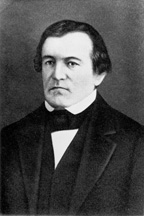
Spencer Jarnagin
Former U.S. Senator from Tennessee · 1843–1847 · Whig · Class 2
Spencer Jarnagin represented Tennessee in the United States Senate (1843–1847) for the Whig party. The page below collects sourced biographical facts, term history, committee roles, and provenance for Jarnagin.
Bioguide ID: J000059
Key facts
- Full name
- Spencer Jarnagin
- State
- Tennessee
- Party
- Whig
- Senate class
- Class II
- Senate service
- 1843–1847
- First Senate term
- 1843
- Status
- Left office
- Current term ends
- —
- Born
- —
- Bioguide ID
- J000059
- Committee assignments
- —
- Dataset version
- 1.20260602
Biographical narrative
856 words · sourced from the Wikipedia REST extract
Spencer Jarnagin was a United States Senator from Tennessee, representing the Whig Party from 1843 until 1847. His political career was marked by his involvement in state and national politics during a time of significant change in the United States. Jarnagin's tenure in the Senate was characterized by his role in various committees and his engagement with the political landscape of his time.
Early life and career
Spencer Jarnagin was born in 1792 in what would later be designated as Grainger County, Tennessee. His early education culminated in his graduation from Greenville College in 1813. Following his academic pursuits, Jarnagin studied law and was admitted to the bar in 1817, allowing him to begin his legal career. His professional journey in law coincided with his growing involvement in public service and politics.
In 1833, Jarnagin was elected to the Tennessee State Senate, where he served until 1835. This experience in the state legislature provided him with valuable insights into governance and the political process. His commitment to education was evident through his long-term service on the Board of Trustees for East Tennessee College, now known as the University of Tennessee, from 1836 until his death in 1851. This role underscored his dedication to the advancement of education in Tennessee.
In addition to his legal and educational endeavors, Jarnagin was politically active in the 1840 United States presidential election, where he served as an elector for the Whig ticket of William Henry Harrison and John Tyler. His political affiliations and activities during this period positioned him as a notable figure within the Whig Party in Tennessee.
Jarnagin's path to the U.S. Senate began in earnest in 1841 when he was nominated by the Whig caucus in the Tennessee General Assembly. However, his election was complicated by the political dynamics of the time. A faction of Democrats in the legislature, known as the "Immortal Thirteen," opposed his candidacy and refused to allow a quorum, effectively stalling the election process. This delay extended for over two and a half years, during which time Jarnagin's eventual election was significantly postponed. He finally assumed office on October 17, 1843, marking the beginning of his term in the U.S. Senate.
Senate tenure
Spencer Jarnagin's Senate career lasted from 1843 to 1847, during which he served as a member of the Whig Party. His time in the Senate was marked by his involvement in various legislative matters and committee work. One of his notable roles was as the Chairman of the Committee on Revolutionary Claims, where he oversaw issues related to claims made by individuals for losses sustained during the American Revolutionary War. This position allowed him to influence discussions and decisions regarding historical claims and compensation.
Despite his active participation in the Senate, Jarnagin's tenure was relatively brief. He was nominated by the Whig Party for a second term in 1847, but he was not re-elected. The political landscape had shifted, and the Democrats were more supportive of John Bell, another Whig candidate, who ultimately succeeded Jarnagin in the Senate. Following his departure from the Senate, Jarnagin sought to continue his public service by running for a position on the Tennessee Supreme Court; however, this attempt was also unsuccessful.
After leaving the Senate, Jarnagin relocated to Memphis, Tennessee, where he continued to practice law, remaining engaged in the legal profession until his death. His move to Memphis marked a new chapter in his life, allowing him to maintain his legal career while remaining connected to the political and social developments in Tennessee.
Legislative focus and committees
During his time in the Senate, Spencer Jarnagin's legislative focus was primarily centered around the issues addressed by the Committee on Revolutionary Claims. This committee dealt with matters related to claims from individuals seeking compensation for losses incurred during the Revolutionary War. Jarnagin's role as Chairman of this committee placed him at the forefront of discussions regarding historical claims, which often involved complex legal and historical considerations.
The Whig Party, to which Jarnagin belonged, was known for its emphasis on modernization, economic development, and a strong legislative role in governance. Jarnagin's alignment with the party's principles likely influenced his legislative priorities and the issues he championed during his time in office. However, specific details about individual pieces of legislation he supported or opposed are not extensively documented.
Jarnagin's Senate career was also shaped by the broader political context of the era, which included debates over issues such as states' rights, economic policies, and the expansion of the United States. The political climate during his tenure was characterized by significant tensions between the Whig and Democratic parties, reflecting the complexities of American politics in the mid-19th century.
Despite the challenges he faced in securing a second term and his subsequent unsuccessful bid for the Tennessee Supreme Court, Jarnagin's contributions to the Senate and his involvement in state politics left a mark on the political landscape of Tennessee. His legal career continued in Memphis until his death from cholera on June 25, 1851. He was interred in Elmwood Cemetery in Memphis, leaving behind a legacy as a dedicated public servant and legal professional in Tennessee.
Notable legislation
Sponsored and co-sponsored legislation for Spencer Jarnagin is pending operator curation. The biographical narrative above carries the same provenance trail until per-bill rows are written.
Sources
- [1]https://en.wikipedia.org/wiki/Spencer_JarnaginWikipedia · retrieved 2026-06-02
Notable quotes
Sourced quotes for Spencer Jarnagin are pending operator curation. Narrative-scope provenance remains attached below.
Sources
- [1]https://en.wikipedia.org/wiki/Spencer_JarnaginWikipedia · retrieved 2026-06-02
Key positions
Curated policy positions for Spencer Jarnagin are pending operator review. The biographical narrative above carries the same provenance trail until per-topic positions are written.
Sources
- [1]https://en.wikipedia.org/wiki/Spencer_JarnaginWikipedia · retrieved 2026-06-02
Terms served
- 1843–1847U.S. Senate · Term 1 · Whig · Class II
Sources & provenance
Every attributable claim above carries a per-section [N] marker that resolves to the corresponding URL below. Each entry records the upstream provider, the canonical URL, and the timestamp at which the source was retrieved by the ingest pipeline.
Key facts
- https://bioguide.congress.gov/search/bio/J000059bioguide · retrieved 2026-06-02
- https://www.govtrack.us/congress/members/405964govtrack · retrieved 2026-06-02
Biographical narrative
- https://en.wikipedia.org/wiki/Spencer_Jarnaginwikipedia · retrieved 2026-06-02
Find your senator
Every U.S. state elects two senators. Browse Tennessee’s delegation, the full former-senator roster, or explore the role and term length.
Related on The Candidate
- Preceded by Alexander AndersonEarlier holder of the Tennessee Class II Senate seat · Democratic.Open
- Succeeded by John BellLater holder of the Tennessee Class II Senate seat · American.Open
- Albert GoreFormer U.S. Senator from Tennessee · DemocraticOpen
- Albert Gore Jr.Former U.S. Senator from Tennessee · DemocraticOpen
- Alfred NicholsonFormer U.S. Senator from Tennessee · DemocraticOpen
- Senators from TennesseeEvery former U.S. Senator who has represented Tennessee.Open