
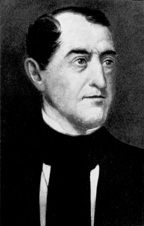
Historical · U.S. Senate · Tennessee
Ephraim Foster
Former U.S. Senator from Tennessee · 1838–1845 · Whig · Class 1
Ephraim Foster represented Tennessee in the United States Senate (1838–1845) for the Whig party. The page below collects sourced biographical facts, term history, committee roles, and provenance for Foster.
Bioguide ID: F000302
Key facts
- Full name
- Ephraim Foster
- State
- Tennessee
- Party
- Whig
- Senate class
- Class I
- Senate service
- 1838–1845
- First Senate term
- 1838
- Status
- Left office
- Current term ends
- —
- Born
- 1794
- Bioguide ID
- F000302
- Committee assignments
- —
- Dataset version
- 1.20260602
Biographical narrative
870 words · sourced from the Wikipedia REST extract
Ephraim Foster was a prominent American politician who served as a United States Senator from Tennessee during the early to mid-19th century. A member of the Whig Party, Foster’s political career was marked by two non-consecutive terms in the Senate, where he engaged in various legislative activities and held significant positions within the Senate committees. His life spanned from September 17, 1794, until September 6, 1854, during which he also contributed to the political landscape of Tennessee through his earlier roles in the state legislature.
Early life and career
Ephraim Foster was born in Nelson County, Kentucky, near Bardstown, to Robert Coleman Foster and Ann Hubbard. In 1797, when he was just three years old, his family relocated to Tennessee, settling in the Nashville area. This move would later influence his political career, as Nashville became a central hub for his activities. Foster pursued his education at Cumberland College, from which he graduated in 1813. Following his graduation, he studied law and was admitted to the bar in 1820, marking the beginning of his legal career.
In addition to his legal pursuits, Foster was involved in military service during the Creek War, where he served under General Andrew Jackson. His connection to Jackson was significant, as he also held the position of private secretary to the general, which likely provided him with valuable insights into military and political affairs. Foster's early political career began in the Tennessee House of Representatives, where he served two non-consecutive terms from 1829 to 1831 and again from 1835 to 1837. During both terms, he was elected Speaker of the House, demonstrating his leadership abilities and political acumen.
Foster's political journey continued to evolve as he transitioned from state to federal politics. His opportunity to serve in the U.S. Senate arose when Felix Grundy resigned from his Senate position to accept an appointment as United States Attorney General. The Tennessee General Assembly elected Foster as his successor, marking the beginning of his first Senate term on September 17, 1838.
Senate tenure
Ephraim Foster's first term in the U.S. Senate lasted until March 3, 1839. During this brief period, he was involved in the legislative process but faced challenges that would shape his political trajectory. After being elected to continue in the Senate for a new term, Foster declined to accept the legislature's instructions on how to vote, a decision that led to controversy. As a result, the legislature turned to Felix Grundy, who was still serving as Attorney General, to take over the Senate seat. This decision was met with mixed reactions, and Grundy’s subsequent death in office about a year later left the seat vacant for a time.
After a period of interim appointments, the Tennessee legislature eventually elected Foster again to the Senate, and he accepted this position. His second term began on October 17, 1843, and concluded on March 3, 1845. During this time, Foster took on a leadership role as the chair of the Senate Committee on Claims. This committee was responsible for reviewing and making recommendations on claims against the federal government, a critical function in the legislative process.
Foster's second Senate term was characterized by his involvement in various legislative discussions and decisions, although specific details about the bills he supported or opposed are not documented in the available records. His tenure in the Senate ended in 1845, after which he sought to further his political career by running for the governorship of Tennessee. He received the nomination from the Whig Party but was ultimately defeated by Aaron V. Brown, a candidate from the Democratic Party.
Legislative focus and committees
During his time in the U.S. Senate, Ephraim Foster's legislative focus included issues pertinent to his constituents in Tennessee and the broader national context of the time. As the chair of the Senate Committee on Claims, he played a significant role in addressing matters related to financial claims against the government, which were essential for ensuring that individuals and entities received compensation for various grievances. This position allowed him to influence decisions that affected many citizens and stakeholders.
Foster's involvement in the Senate coincided with a period of significant political and social change in the United States. The Whig Party, of which he was a member, emerged as a major political force in opposition to the Democratic Party, advocating for various economic and social reforms. While specific legislative initiatives Foster championed during his Senate tenure are not detailed in the available records, his role as a committee chair suggests that he was actively engaged in shaping policies and addressing the needs of his constituents.
After concluding his Senate service, Foster returned to his law practice in Nashville, where he continued to contribute to the legal and political landscape of Tennessee until his death in 1854. His legacy includes not only his contributions to the Senate but also his earlier roles in the state legislature and his involvement in military service. Ephraim Foster's life reflects the complexities of 19th-century American politics and the evolving nature of governance during that era. He is buried in the old City Cemetery in Nashville, marking the final resting place of a figure who played a notable role in Tennessee's political history.
Notable legislation
Sponsored and co-sponsored legislation for Ephraim Foster is pending operator curation. The biographical narrative above carries the same provenance trail until per-bill rows are written.
Sources
- [1]https://en.wikipedia.org/wiki/Ephraim_H._FosterWikipedia · retrieved 2026-06-02
Notable quotes
Sourced quotes for Ephraim Foster are pending operator curation. Narrative-scope provenance remains attached below.
Sources
- [1]https://en.wikipedia.org/wiki/Ephraim_H._FosterWikipedia · retrieved 2026-06-02
Key positions
Curated policy positions for Ephraim Foster are pending operator review. The biographical narrative above carries the same provenance trail until per-topic positions are written.
Sources
- [1]https://en.wikipedia.org/wiki/Ephraim_H._FosterWikipedia · retrieved 2026-06-02
Terms served
- 1838–1839U.S. Senate · Term 1 · Whig · Class I
- 1843–1845U.S. Senate · Term 2 · Whig · Class I
Sources & provenance
Every attributable claim above carries a per-section [N] marker that resolves to the corresponding URL below. Each entry records the upstream provider, the canonical URL, and the timestamp at which the source was retrieved by the ingest pipeline.
Key facts
- https://bioguide.congress.gov/search/bio/F000302bioguide · retrieved 2026-06-02
- https://www.govtrack.us/congress/members/404251govtrack · retrieved 2026-06-02
Biographical narrative
- https://en.wikipedia.org/wiki/Ephraim_H._Fosterwikipedia · retrieved 2026-06-02
Find your senator
Every U.S. state elects two senators. Browse Tennessee’s delegation, the full former-senator roster, or explore the role and term length.
Related on The Candidate
- Preceded by John EatonEarlier holder of the Tennessee Class I Senate seat · Jackson.Open
- Succeeded by Hopkins TurneyLater holder of the Tennessee Class I Senate seat · Democratic.Open
- Albert GoreFormer U.S. Senator from Tennessee · DemocraticOpen
- Albert Gore Jr.Former U.S. Senator from Tennessee · DemocraticOpen
- Alexander AndersonFormer U.S. Senator from Tennessee · DemocraticOpen
- Alfred NicholsonFormer U.S. Senator from Tennessee · DemocraticOpen