
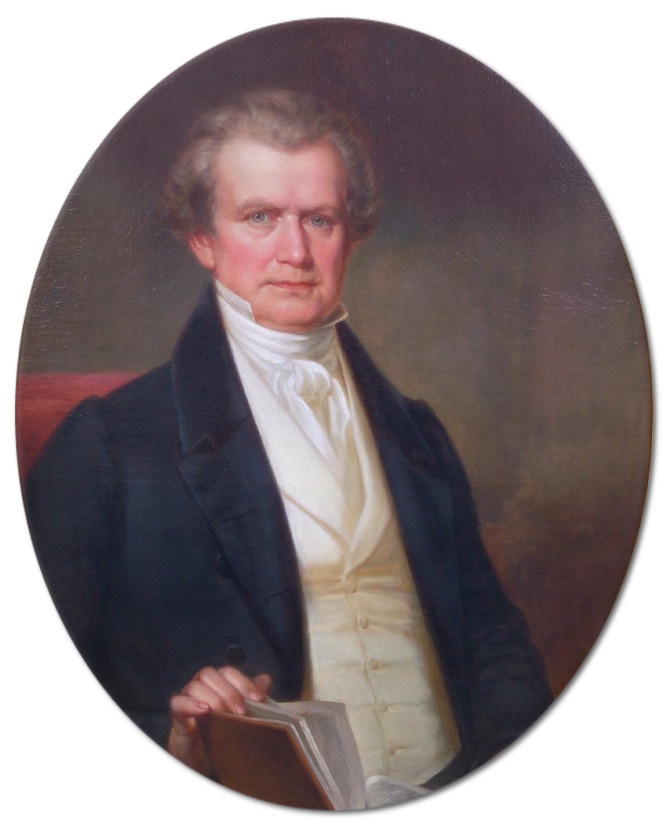
Historical · U.S. Senate · Tennessee
Felix Grundy
Former U.S. Senator from Tennessee · 1829–1841 · Democratic · Class 1
Felix Grundy represented Tennessee in the United States Senate (1829–1841) for the Democratic party. The page below collects sourced biographical facts, term history, committee roles, and provenance for Grundy.
Bioguide ID: G000509
Key facts
- Full name
- Felix Grundy
- State
- Tennessee
- Party
- Democratic
- Senate class
- Class I
- Senate service
- 1829–1841
- First Senate term
- 1829
- Status
- Left office
- Current term ends
- —
- Born
- 1777
- Bioguide ID
- G000509
- Committee assignments
- —
- Dataset version
- 1.20260602
Biographical narrative
930 words · sourced from the Wikipedia REST extract
Felix Grundy was an American attorney and politician who served as a U.S. Senator from Tennessee and held the position of the 13th U.S. Attorney General. His political career spanned several decades, during which he was involved in various legislative roles and was known for his legal expertise, particularly in criminal law. Grundy was a prominent figure in the Democratic Party and played a significant role in the political landscape of his time.
Early life and career
Felix Grundy was born on September 11, 1777, in Berkeley County, Virginia, an area that is now part of West Virginia. He spent his early years in a family that moved frequently, first to Brownsville, Pennsylvania, and then to Kentucky. His education was primarily conducted at home, supplemented by attendance at the Bardstown Academy in Bardstown, Kentucky. Grundy began his legal education as an apprentice in a law firm, which culminated in his admission to the Kentucky bar in 1799. That same year, he commenced his legal practice in Springfield, Kentucky.
Grundy's political career began early when he was selected to represent Washington County at the convention that drafted the second Kentucky Constitution in 1799. Following this, he served in the Kentucky House of Representatives from 1800 to 1802, representing Washington County. After moving to Nelson County, he was elected to the Kentucky House again for a term from 1804 to 1806. His judicial career began when he was appointed as an associate justice of the Kentucky Court of Appeals on December 10, 1806. He quickly rose to the position of Chief Justice on April 11, 1807, a role he held until he resigned later that year.
In 1807, Grundy relocated to Nashville, Tennessee, where he resumed his law practice. His decision to leave Kentucky was influenced by his opposition to the rising political figure Henry Clay, whose interests conflicted with his own. Nashville was emerging as a significant urban center in Tennessee, and Grundy soon gained a reputation as a skilled criminal lawyer. His legal acumen and political ambitions led him to further his involvement in public service.
Grundy's congressional career began when he was elected as a Democratic-Republican to the 12th and 13th Congresses, serving from March 4, 1811, until his resignation in July 1814. He later served in the Tennessee House of Representatives from 1819 to 1825, during which time he also acted as a commissioner to settle the boundary line between Tennessee and Kentucky in 1820.
Senate tenure
Felix Grundy was elected to the United States Senate in 1829 as a Jacksonian to fill a vacancy caused by the resignation of John H. Eaton, who had joined President Andrew Jackson's Cabinet. His first term began on October 19, 1829, and he was reelected in 1832, serving until July 4, 1838, when he resigned to accept a position in the Cabinet. During his time in the Senate, Grundy was actively involved in legislative matters and held the position of chairman of the Committee on Post Offices and Post Roads during the 21st through 24th Congresses. He was also a member of the Senate Committee on the Judiciary during the 24th and 25th Congresses.
In July 1838, Grundy was appointed as the Attorney General of the United States by President Martin Van Buren. He held this position until December 1839, when he was elected again to the Senate on November 19, 1839, to fill a vacancy created by the resignation of Ephraim Foster. To resolve any questions regarding his eligibility to serve in the Senate while holding the office of Attorney General, Grundy resigned from the latter position on December 14, 1839, and was reelected to the Senate on the same day. He served in this capacity until his death in Nashville on December 19, 1840.
Legislative focus and committees
Throughout his Senate tenure, Felix Grundy was involved in various legislative initiatives and served on several important committees. His role as chairman of the Committee on Post Offices and Post Roads allowed him to influence matters related to postal services and infrastructure, which were crucial for communication and commerce during that era. Additionally, his membership on the Senate Committee on the Judiciary placed him at the center of discussions regarding legal and constitutional issues.
Grundy's legislative focus reflected the interests of his constituents in Tennessee, as well as the broader political climate of the time. His work in the Senate was characterized by a commitment to the principles of the Democratic Party, which emphasized agrarian interests and the rights of states. His legal background informed his approach to legislative matters, particularly those involving judicial appointments and legal reform.
In recognition of his contributions to public service, several counties were named in his honor after his death, including counties in Illinois, Iowa, Missouri, and Tennessee. The county seat of Buchanan County, Virginia, was named Grundy, and Grundy Center in Iowa also commemorates his legacy. Events such as "Felix Grundy Days" celebrate his contributions to the community in Grundy Center, Iowa.
Grundy's influence extended beyond his lifetime, as he served as a mentor to future President James K. Polk. Polk later purchased Grundy's home in Nashville, which he renamed "Polk Place." This residence became significant in its own right, serving as a historical landmark until its demolition in 1901.
Felix Grundy's life and career reflect the complexities of American politics in the early 19th century, characterized by regional interests, evolving political parties, and the interplay between law and governance. His contributions to the legal and political landscape of Tennessee and the nation continue to be recognized in various forms today.
Notable legislation
Sponsored and co-sponsored legislation for Felix Grundy is pending operator curation. The biographical narrative above carries the same provenance trail until per-bill rows are written.
Sources
- [1]https://en.wikipedia.org/wiki/Felix_GrundyWikipedia · retrieved 2026-06-02
Notable quotes
Sourced quotes for Felix Grundy are pending operator curation. Narrative-scope provenance remains attached below.
Sources
- [1]https://en.wikipedia.org/wiki/Felix_GrundyWikipedia · retrieved 2026-06-02
Key positions
Curated policy positions for Felix Grundy are pending operator review. The biographical narrative above carries the same provenance trail until per-topic positions are written.
Sources
- [1]https://en.wikipedia.org/wiki/Felix_GrundyWikipedia · retrieved 2026-06-02
Terms served
- 1811–1813U.S. House · District 3 · Term 1 · Republican
- 1813–1815U.S. House · District 5 · Term 2 · Republican
- 1829–1833U.S. Senate · Term 3 · Jackson · Class I
- 1833–1839U.S. Senate · Term 4 · Democratic · Class I
- 1839–1841U.S. Senate · Term 5 · Democratic · Class I
Sources & provenance
Every attributable claim above carries a per-section [N] marker that resolves to the corresponding URL below. Each entry records the upstream provider, the canonical URL, and the timestamp at which the source was retrieved by the ingest pipeline.
Key facts
- https://bioguide.congress.gov/search/bio/G000509bioguide · retrieved 2026-06-02
- https://www.govtrack.us/congress/members/404854govtrack · retrieved 2026-06-02
Biographical narrative
- https://en.wikipedia.org/wiki/Felix_Grundywikipedia · retrieved 2026-06-02
Find your senator
Every U.S. state elects two senators. Browse Tennessee’s delegation, the full former-senator roster, or explore the role and term length.
Related on The Candidate
- Preceded by John EatonEarlier holder of the Tennessee Class I Senate seat · Jackson.Open
- Succeeded by Hopkins TurneyLater holder of the Tennessee Class I Senate seat · Democratic.Open
- Albert GoreFormer U.S. Senator from Tennessee · DemocraticOpen
- Albert Gore Jr.Former U.S. Senator from Tennessee · DemocraticOpen
- Alexander AndersonFormer U.S. Senator from Tennessee · DemocraticOpen
- Alfred NicholsonFormer U.S. Senator from Tennessee · DemocraticOpen