
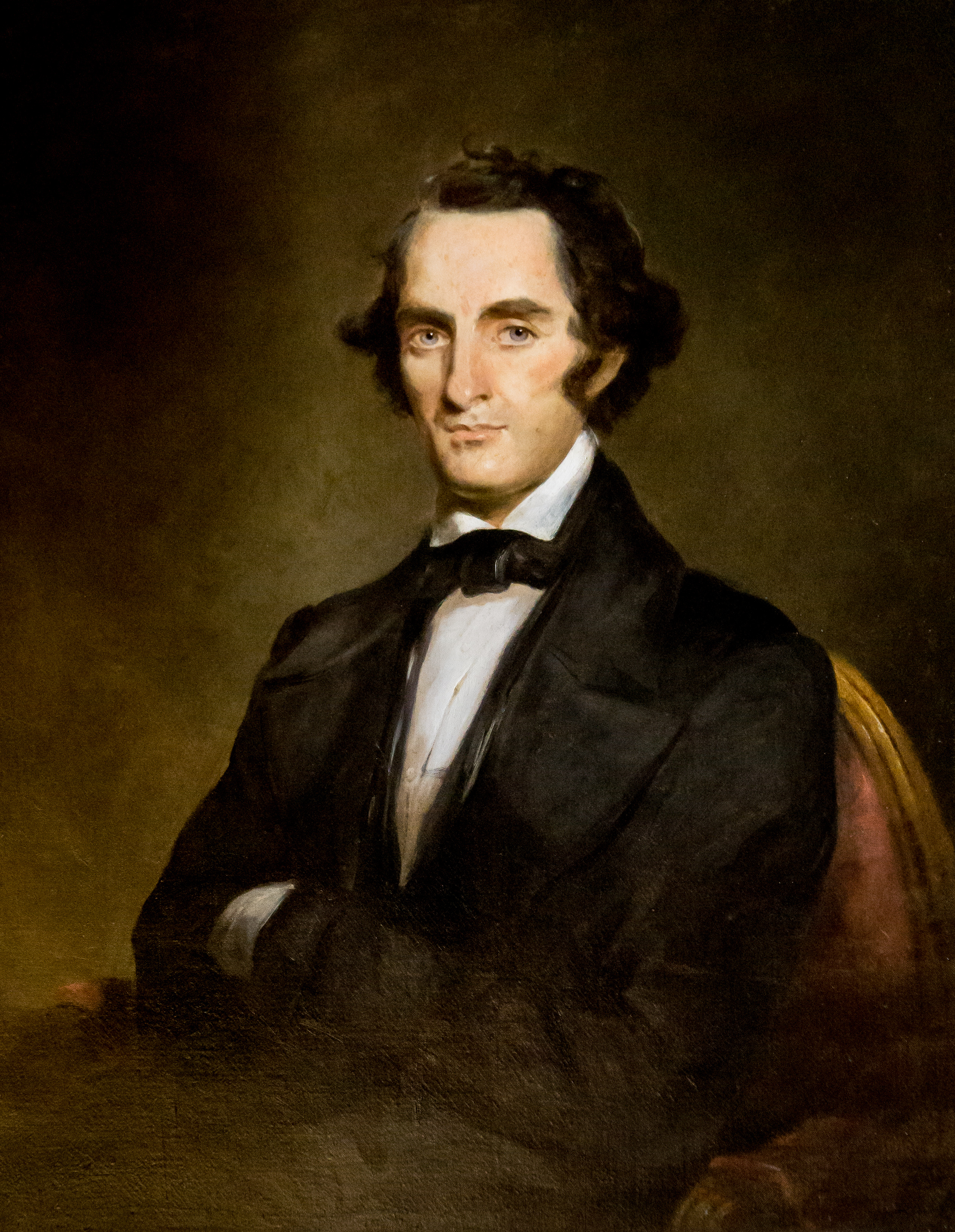
Historical · U.S. Senate · Tennessee
James Jones
Former U.S. Senator from Tennessee · 1851–1857 · Ind. Republican-Democrat · Class 1
James Jones represented Tennessee in the United States Senate (1851–1857) for the Ind. Republican-Democrat party. The page below collects sourced biographical facts, term history, committee roles, and provenance for Jones.
Bioguide ID: J000229
Key facts
- Full name
- James Jones
- State
- Tennessee
- Party
- Ind. Republican-Democrat
- Senate class
- Class I
- Senate service
- 1851–1857
- First Senate term
- 1851
- Status
- Left office
- Current term ends
- —
- Born
- 1809
- Bioguide ID
- J000229
- Committee assignments
- —
- Dataset version
- 1.20260602
Biographical narrative
856 words · sourced from the Wikipedia REST extract
James Jones was an American politician who served as a U.S. Senator from Tennessee and as the tenth governor of the state. His political career spanned significant periods in the mid-19th century, during which he was affiliated with the Whig Party before transitioning to the Democratic Party. Jones's tenure in public office included notable electoral victories and legislative challenges, reflecting the political dynamics of his time.
Early life and career
James Chamberlain Jones was born on April 20, 1809, in Davidson County, Tennessee. He was the son of Peter and Catherine Chappell Jones. Tragically, both of his parents passed away when he was still a child, leading him to be raised by an uncle in Wilson County. His early education was sporadic, as he attended public schools only occasionally. In 1829, he married Sarah Munford and subsequently purchased a farm near Lebanon, Tennessee.
Jones's political involvement began in earnest in the mid-1830s when he supported the presidential campaign of Hugh Lawson White, a former Democrat who had aligned himself with the Whig Party after breaking from Andrew Jackson. In 1837, he was elected to the Tennessee House of Representatives, where he represented Wilson County. He was reelected in 1839, demonstrating his growing influence within the state. During this period, he also served as an elector for the presidential candidate William Henry Harrison in 1840. While in the legislature, Jones pursued legal studies, although he never practiced law professionally.
Senate tenure
In 1841, Jones was nominated by the Tennessee Whigs to run for governor, a position he successfully secured by defeating the incumbent, James K. Polk, in a closely contested election. His victory was attributed to his reputation as an engaging speaker and his ability to connect with voters. During his first term as governor, Jones faced significant challenges, particularly due to a divided legislature. The state senate was controlled by a group of Democratic senators known as the "Immortal Thirteen," which resulted in legislative gridlock. Despite these difficulties, his administration managed to pass debt reform legislation in 1842.
Jones's second gubernatorial term began in 1843, during which the political landscape shifted in favor of the Whigs, allowing for more productive governance. This period saw the establishment of educational institutions for the blind and deaf, as well as the official designation of Nashville as the permanent capital of Tennessee. The cornerstone for the Tennessee State Capitol was laid during his administration, marking a significant milestone in the state's development.
After completing his gubernatorial terms, Jones did not pursue a third term. Instead, he accepted a position as president of the Memphis and Charleston Railroad. In 1851, he was appointed to the U.S. Senate by the state legislature to fill the vacancy left by Hopkins L. Turney. His Senate term began amidst a turbulent political climate, as the Whig Party was fracturing over the contentious issue of slavery.
During his time in the Senate, Jones initially supported Winfield Scott in the 1852 presidential election but soon began to distance himself from the Whig Party. By 1854, he expressed discontent with northern Whigs for their opposition to the Kansas-Nebraska Act. As the Whig Party continued to decline, Jones opted not to join the American Party, which many southern Whigs were gravitating towards. Instead, he supported James Buchanan in the 1856 presidential election and later endorsed Stephen Douglas in the 1860 election.
Jones's Senate tenure concluded on March 3, 1857, after which he returned to his farm near Memphis. His political career was marked by significant transitions, reflecting the broader shifts occurring in American politics during the antebellum period. He passed away on October 29, 1859, and was laid to rest in Elmwood Cemetery in Memphis.
Legislative focus and committees
During his time in the Senate, Jones's legislative focus was influenced by the prevailing political issues of the day, particularly the debates surrounding slavery and state rights. His alignment with the Whig Party initially guided his legislative priorities, but as the party began to disintegrate, his positions evolved. Jones was known for his oratory skills, which he had honed during his earlier political career, and he utilized these abilities to advocate for his constituents and the principles he believed in.
While specific details about the committees he served on during his Senate tenure are not documented, it can be inferred that his experience as a former governor and his background in state politics would have contributed to his understanding of legislative processes and the importance of collaboration across party lines. His advocacy for educational reforms during his governorship likely influenced his perspectives on social issues while in the Senate.
Jones's political journey reflects the complexities of 19th-century American politics, particularly in the Southern states, where issues of slavery and sectionalism were increasingly polarizing. His ability to navigate these challenges, from his early days in the Tennessee House of Representatives to his role in the U.S. Senate, underscores the dynamic nature of political leadership during a critical period in American history. After leaving the Senate, he continued to engage with the community through his work with the railroad, demonstrating a commitment to infrastructure and economic development in Tennessee.
Notable legislation
Sponsored and co-sponsored legislation for James Jones is pending operator curation. The biographical narrative above carries the same provenance trail until per-bill rows are written.
Sources
- [1]https://en.wikipedia.org/wiki/James_C._JonesWikipedia · retrieved 2026-06-02
Notable quotes
Sourced quotes for James Jones are pending operator curation. Narrative-scope provenance remains attached below.
Sources
- [1]https://en.wikipedia.org/wiki/James_C._JonesWikipedia · retrieved 2026-06-02
Key positions
Curated policy positions for James Jones are pending operator review. The biographical narrative above carries the same provenance trail until per-topic positions are written.
Sources
- [1]https://en.wikipedia.org/wiki/James_C._JonesWikipedia · retrieved 2026-06-02
Terms served
- 1851–1857U.S. Senate · Term 1 · Ind. Republican-Democrat · Class I
Sources & provenance
Every attributable claim above carries a per-section [N] marker that resolves to the corresponding URL below. Each entry records the upstream provider, the canonical URL, and the timestamp at which the source was retrieved by the ingest pipeline.
Key facts
- https://bioguide.congress.gov/search/bio/J000229bioguide · retrieved 2026-06-02
- https://www.govtrack.us/congress/members/406122govtrack · retrieved 2026-06-02
Biographical narrative
- https://en.wikipedia.org/wiki/James_C._Joneswikipedia · retrieved 2026-06-02
Find your senator
Every U.S. state elects two senators. Browse Tennessee’s delegation, the full former-senator roster, or explore the role and term length.
Related on The Candidate
- Preceded by Hopkins TurneyEarlier holder of the Tennessee Class I Senate seat · Democratic.Open
- Succeeded by Andrew JohnsonLater holder of the Tennessee Class I Senate seat · Democratic.Open
- Albert GoreFormer U.S. Senator from Tennessee · DemocraticOpen
- Albert Gore Jr.Former U.S. Senator from Tennessee · DemocraticOpen
- Alexander AndersonFormer U.S. Senator from Tennessee · DemocraticOpen
- Alfred NicholsonFormer U.S. Senator from Tennessee · DemocraticOpen