
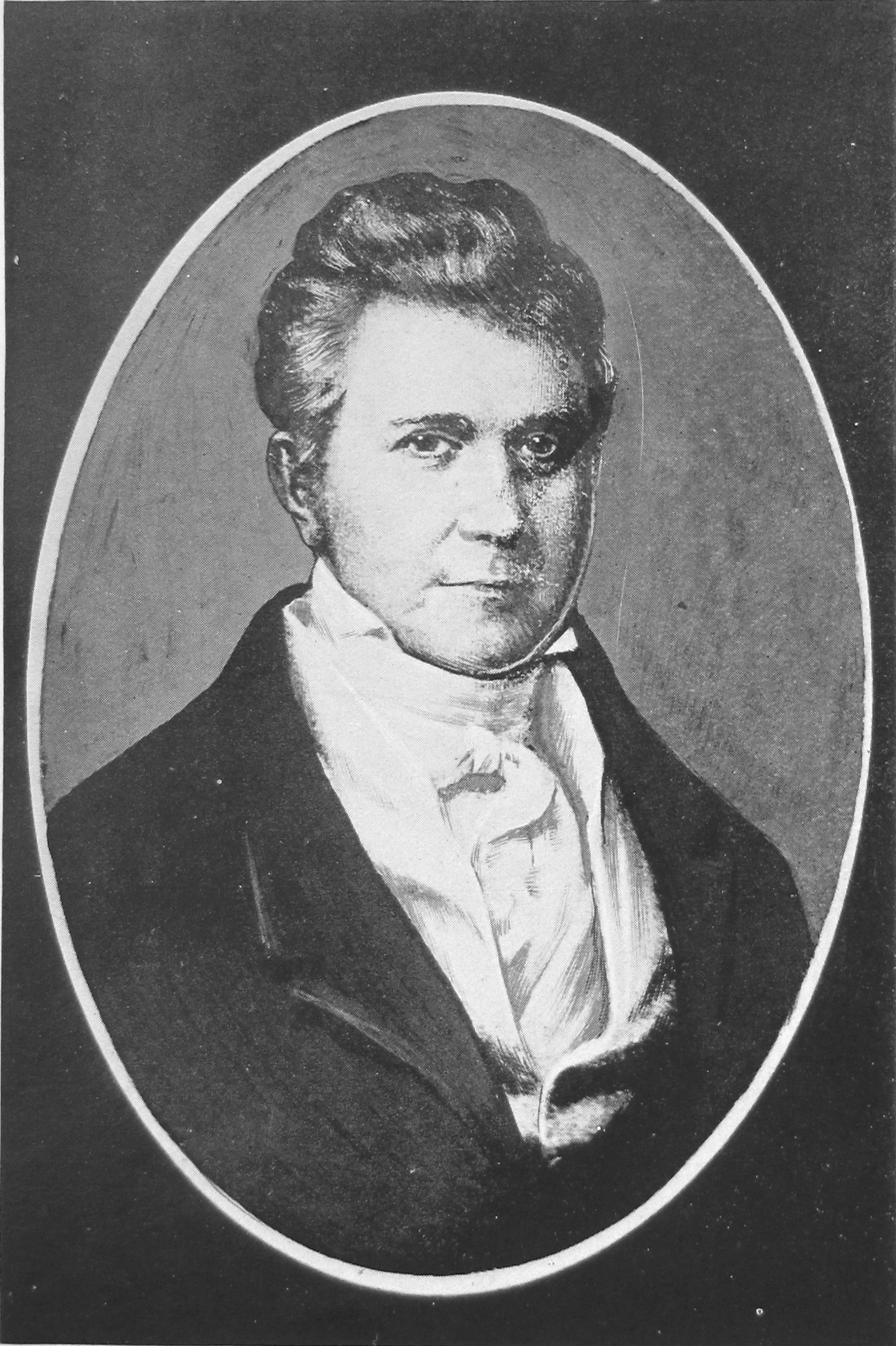
Historical · U.S. Senate · Tennessee
John Williams
Former U.S. Senator from Tennessee · 1815–1823 · Republican · Class 2
John Williams represented Tennessee in the United States Senate (1815–1823) for the Republican party. The page below collects sourced biographical facts, term history, committee roles, and provenance for Williams.
Bioguide ID: W000516
Key facts
- Full name
- John Williams
- State
- Tennessee
- Party
- Republican
- Senate class
- Class II
- Senate service
- 1815–1823
- First Senate term
- 1815
- Status
- Left office
- Current term ends
- —
- Born
- 1778
- Bioguide ID
- W000516
- Committee assignments
- —
- Dataset version
- 1.20260602
Biographical narrative
892 words · sourced from the Wikipedia REST extract
John Williams was a prominent American lawyer, soldier, and statesman who served as a U.S. Senator from Tennessee during the early 19th century. His political career was marked by his alignment with the Republican Party and his involvement in significant military engagements, particularly during the War of 1812. Williams' tenure in the Senate spanned from 1815 to 1823, during which he played a role in various legislative matters and navigated complex political relationships, notably with Andrew Jackson. After his Senate career, he continued to engage in diplomatic roles, reflecting his enduring commitment to public service.
Early life and career
John Williams was born on January 29, 1778, in what is now Forsyth County, North Carolina, which was then part of Surry County. He was the third of twelve children born to Joseph and Rebekah Lanier Williams. His father had Welsh ancestry, while his mother descended from French Huguenots. Williams came from a politically active family; two of his brothers, Lewis and Robert Williams, served as U.S. congressmen, and another brother, Thomas Lanier Williams, became a notable judge in Tennessee. Additionally, he was related to Congressman Marmaduke Williams.
Williams pursued legal studies in Salisbury, North Carolina, in the late 1790s. His early military career began when he served as a captain in the 6th U.S. Infantry from 1799 to 1800. Shortly after his military service, he moved to Knoxville, Tennessee, where he was admitted to the bar in 1803. In 1805, he married Melinda White, the daughter of James White, who was a founder of Knoxville.
In 1807, Williams was appointed as Tennessee's attorney general, a position he held for a brief period. His early political involvement included leading a public meeting in 1811 to criticize Archibald Roane for resigning from the state legislature to pursue a judicial position, reflecting Williams' engagement with local governance and political accountability.
Senate tenure
Williams' entry into the U.S. Senate came in 1815 when he was selected to fill the vacancy left by Jesse Wharton, who had resigned. Williams was subsequently reelected in 1817 for a full six-year term. His legislative actions during his Senate career included voting in favor of the establishment of the Second Bank of the United States in 1816, opposing the Bonus Bill of 1817, and supporting the Missouri Compromise in 1820. He also served as the chairman of the Committee on Military Affairs, where he oversaw a reduction in the armed forces, indicating his involvement in military policy during a time of transition in the post-war period.
Williams' relationship with Andrew Jackson, a fellow Tennessee politician, was complex and evolved over time. Initially, they worked together during the Creek War, where Williams commanded the 39th U.S. Infantry Regiment under Jackson's leadership. However, tensions arose between the two men, particularly following Jackson's controversial invasion of Florida in 1819. Williams faced accusations from Jackson regarding the motivations behind the invasion, which led to a public dispute that strained their relationship.
In 1821, Williams was one of only four senators to oppose the Adams–Onís Treaty, which facilitated Spain's cession of Florida to the United States. His opposition to this treaty further illustrated his divergence from Jackson's political maneuvers. By 1823, Williams had publicly declared his support for William H. Crawford, a political rival of Jackson, which prompted Jackson's allies to seek Williams' removal from the Senate. Despite attempts to find a challenger to unseat him, Jackson ultimately decided to run for Williams' Senate seat, reflecting the intense political rivalry that characterized this period.
Legislative focus and committees
Throughout his Senate career, Williams was involved in various legislative initiatives and committee work that reflected the political priorities of his time. His support for the Second Bank of the United States indicated an alignment with federal economic policies aimed at stabilizing the nation's finances following the War of 1812. Conversely, his opposition to the Bonus Bill of 1817 demonstrated his skepticism regarding certain federal expenditures and government involvement in private enterprise.
As chairman of the Committee on Military Affairs, Williams played a significant role in shaping military policy during a time when the United States was reassessing its military commitments and structure. His oversight of a reduction in armed forces highlighted the shifting priorities of the federal government in the aftermath of the war, as the nation sought to balance military readiness with fiscal responsibility.
Williams' legislative actions also reflected the broader political landscape of the early 19th century, characterized by regional interests and the emergence of new political factions. His support for the Missouri Compromise was indicative of the contentious debates surrounding slavery and statehood, issues that would continue to dominate American politics in the years leading up to the Civil War.
After leaving the Senate in 1823, Williams continued his public service when he was appointed by President John Quincy Adams as chargé d'affaires to the Federal Republic of Central America in 1825. This diplomatic role underscored his ongoing commitment to U.S. foreign relations and his adaptability in navigating different facets of public service.
John Williams passed away on August 10, 1837, leaving behind a legacy as a soldier, lawyer, and statesman who contributed to the early political and military history of the United States. His life and career reflect the complexities of American politics in the early 19th century, marked by regional loyalties, military engagements, and the evolving nature of governance.
Notable legislation
Sponsored and co-sponsored legislation for John Williams is pending operator curation. The biographical narrative above carries the same provenance trail until per-bill rows are written.
Sources
- [1]https://en.wikipedia.org/wiki/John_Williams_(Tennessee_politician)Wikipedia · retrieved 2026-06-02
Notable quotes
Sourced quotes for John Williams are pending operator curation. Narrative-scope provenance remains attached below.
Sources
- [1]https://en.wikipedia.org/wiki/John_Williams_(Tennessee_politician)Wikipedia · retrieved 2026-06-02
Key positions
Curated policy positions for John Williams are pending operator review. The biographical narrative above carries the same provenance trail until per-topic positions are written.
Sources
- [1]https://en.wikipedia.org/wiki/John_Williams_(Tennessee_politician)Wikipedia · retrieved 2026-06-02
Terms served
- 1815–1817U.S. Senate · Term 1 · Republican · Class II
- 1817–1823U.S. Senate · Term 2 · Republican · Class II
Sources & provenance
Every attributable claim above carries a per-section [N] marker that resolves to the corresponding URL below. Each entry records the upstream provider, the canonical URL, and the timestamp at which the source was retrieved by the ingest pipeline.
Key facts
- https://bioguide.congress.gov/search/bio/W000516bioguide · retrieved 2026-06-02
- https://www.govtrack.us/congress/members/411672govtrack · retrieved 2026-06-02
Biographical narrative
- https://en.wikipedia.org/wiki/John_Williams_(Tennessee_politician)wikipedia · retrieved 2026-06-02
Find your senator
Every U.S. state elects two senators. Browse Tennessee’s delegation, the full former-senator roster, or explore the role and term length.
Related on The Candidate
- Preceded by Jesse WhartonEarlier holder of the Tennessee Class II Senate seat · Republican.Open
- Succeeded by Hugh WhiteLater holder of the Tennessee Class II Senate seat · Whig.Open
- Albert GoreFormer U.S. Senator from Tennessee · DemocraticOpen
- Albert Gore Jr.Former U.S. Senator from Tennessee · DemocraticOpen
- Alexander AndersonFormer U.S. Senator from Tennessee · DemocraticOpen
- Alfred NicholsonFormer U.S. Senator from Tennessee · DemocraticOpen