
Historical · U.S. Senate · Tennessee
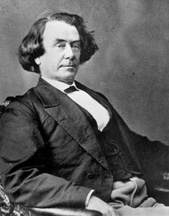
Joseph Fowler
Former U.S. Senator from Tennessee · 1866–1871 · Republican · Class 2
Joseph Fowler represented Tennessee in the United States Senate (1866–1871) for the Republican party. The page below collects sourced biographical facts, term history, committee roles, and provenance for Fowler.
Bioguide ID: F000324
Key facts
- Full name
- Joseph Fowler
- State
- Tennessee
- Party
- Republican
- Senate class
- Class II
- Senate service
- 1866–1871
- First Senate term
- 1866
- Status
- Left office
- Current term ends
- —
- Born
- 1820
- Bioguide ID
- F000324
- Committee assignments
- —
- Dataset version
- 1.20260602
Biographical narrative
840 words · sourced from the Wikipedia REST extract
Joseph Fowler was a prominent American attorney and politician who served as a United States Senator from Tennessee during the post-Civil War era. A member of the Republican Party, Fowler's political career was marked by his support for the Union during the Civil War and his involvement in significant legislative matters during his time in the Senate. His tenure lasted from 1866 until 1871, during which he participated in key events such as the impeachment trial of President Andrew Johnson. After leaving the Senate, Fowler continued his legal career and remained active in political circles until his death in 1902.
Early life and career
Joseph Fowler was born on August 31, 1820, in Steubenville, Ohio. He was the son of James and Sarah (Atkinson) Fowler, who hailed from Maryland and Virginia, respectively. Fowler's early education took place at Grove Academy in Steubenville, after which he attended Franklin College in New Athens, Ohio, graduating in 1843. Following his graduation, he took on various educational roles, including teaching in Shelby County, Kentucky, in 1844, and serving as a professor of mathematics at Franklin College in Davidson County, Tennessee, from 1845 to 1849.
Fowler's legal career began after he studied law in Bowling Green, Kentucky, where he was admitted to the bar. He practiced law in Tennessee until the onset of the Civil War in 1861. His commitment to education continued as he served as president of Howard Female College in Gallatin, Tennessee, from 1856 until 1861. Fowler's strong Unionist beliefs led him to relocate his family to Springfield, Illinois, at the start of the Civil War. He returned to Tennessee once a pro-Union government was established in the state.
During the Civil War, Fowler held the position of Tennessee's state comptroller from 1862 to 1865. His tenure in this role coincided with the military governorship of Andrew Johnson, during which Fowler played a significant part in the state's financial administration during a tumultuous period.
Senate tenure
Fowler's political career advanced when he was elected to the United States Senate in 1866, following Tennessee's readmission to the Union as the first former Confederate state. His Senate term began on July 24, 1866, after being elected by the Tennessee General Assembly. As a member of the Republican Party, Fowler aligned himself with the majority caucus in the Senate. During the 40th Congress, he served as the chairman of the Committee on Engrossed Bills, a role that involved overseeing the finalization of legislation before it was presented to the President for approval.
Fowler's Senate tenure was marked by significant national events, including the impeachment trial of President Andrew Johnson. During this trial, Fowler notably broke ranks with his party by voting for Johnson's acquittal. This decision placed him among a small group of Republican senators who expressed concerns over the fairness of the impeachment proceedings, which they believed were manipulated to present a one-sided case against the President. Fowler's vote, along with those of other dissenting senators, reflected a complex political landscape during a time of deep national division.
Fowler's actions during the impeachment trial drew attention and scrutiny, particularly as subsequent investigations revealed allegations of bribery among some senators who voted for Johnson's conviction. This controversy highlighted the intense political pressures and ethical dilemmas faced by lawmakers during this period.
Legislative focus and committees
Throughout his time in the Senate, Fowler was involved in various legislative matters that were critical to the reconstruction of the South and the reintegration of Tennessee into the Union. His role as chairman of the Committee on Engrossed Bills placed him at the center of legislative processes, ensuring that bills were properly prepared for final consideration. While specific legislative initiatives he championed are not detailed in the available records, his participation in the Senate during a pivotal time in American history suggests that he was engaged in discussions and decisions that shaped the future of the nation.
Fowler did not seek reelection at the end of his Senate term, which concluded on March 3, 1871. After leaving the Senate, he returned to Tennessee, where he resumed his legal practice in Nashville. His political involvement continued as he became active in the Liberal Republican Party in 1872, even serving as a delegate to its national convention. In 1875, he was selected to deliver the funeral oration at a public memorial in Nashville commemorating Andrew Johnson's death, reflecting his ongoing engagement with significant political figures and events.
In 1878, Fowler relocated to Washington, D.C., where he continued to practice law until shortly before his death. His contributions to legal scholarship included writing articles for publications such as The Magazine of American History, further demonstrating his commitment to public discourse and historical reflection.
Fowler passed away on April 1, 1902, in Washington, D.C. He was interred at Lexington Cemetery in Lexington, Kentucky. His legacy is preserved through a collection of his papers maintained by the Tennessee State Library and Archives, which provides insight into his life and contributions to American politics during a transformative period in the nation’s history.
Notable legislation
Sponsored and co-sponsored legislation for Joseph Fowler is pending operator curation. The biographical narrative above carries the same provenance trail until per-bill rows are written.
Sources
- [1]https://en.wikipedia.org/wiki/Joseph_S._FowlerWikipedia · retrieved 2026-06-02
Notable quotes
Sourced quotes for Joseph Fowler are pending operator curation. Narrative-scope provenance remains attached below.
Sources
- [1]https://en.wikipedia.org/wiki/Joseph_S._FowlerWikipedia · retrieved 2026-06-02
Key positions
Curated policy positions for Joseph Fowler are pending operator review. The biographical narrative above carries the same provenance trail until per-topic positions are written.
Sources
- [1]https://en.wikipedia.org/wiki/Joseph_S._FowlerWikipedia · retrieved 2026-06-02
Terms served
- 1866–1871U.S. Senate · Term 1 · Republican · Class II
Sources & provenance
Every attributable claim above carries a per-section [N] marker that resolves to the corresponding URL below. Each entry records the upstream provider, the canonical URL, and the timestamp at which the source was retrieved by the ingest pipeline.
Key facts
- https://bioguide.congress.gov/search/bio/F000324bioguide · retrieved 2026-06-02
- https://www.govtrack.us/congress/members/404273govtrack · retrieved 2026-06-02
Biographical narrative
- https://en.wikipedia.org/wiki/Joseph_S._Fowlerwikipedia · retrieved 2026-06-02
Find your senator
Every U.S. state elects two senators. Browse Tennessee’s delegation, the full former-senator roster, or explore the role and term length.
Related on The Candidate
- Preceded by Alfred NicholsonEarlier holder of the Tennessee Class II Senate seat · Democratic.Open
- Succeeded by Henry CooperLater holder of the Tennessee Class II Senate seat · Democratic.Open
- Albert GoreFormer U.S. Senator from Tennessee · DemocraticOpen
- Albert Gore Jr.Former U.S. Senator from Tennessee · DemocraticOpen
- Alexander AndersonFormer U.S. Senator from Tennessee · DemocraticOpen
- Republican PartyFederal candidates and office holders on the Republican line.Open