
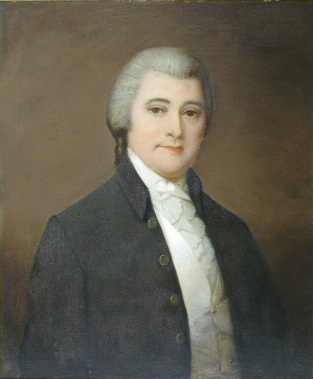
Historical · U.S. Senate · Tennessee
William Blount
Former U.S. Senator from Tennessee · 1796–1797 · Republican · Class 2
William Blount represented Tennessee in the United States Senate (1796–1797) for the Republican party. The page below collects sourced biographical facts, term history, committee roles, and provenance for Blount.
Bioguide ID: B000570
Key facts
- Full name
- William Blount
- State
- Tennessee
- Party
- Republican
- Senate class
- Class II
- Senate service
- 1796–1797
- First Senate term
- 1796
- Status
- Left office
- Current term ends
- —
- Born
- 1749
- Bioguide ID
- B000570
- Committee assignments
- —
- Dataset version
- 1.20260602
Biographical narrative
985 words · sourced from the Wikipedia REST extract
William Blount was an American politician and landowner who played a significant role in the early political landscape of the United States. Born on March 26, 1749, in North Carolina, he became a prominent figure as a Founding Father, serving as a signer of the U.S. Constitution. Blount was a member of the North Carolina delegation at the Constitutional Convention in 1787 and was instrumental in the ratification of the Constitution in his home state. He later served as the first governor of the Southwest Territory and was one of the first U.S. Senators from Tennessee. His political career was marked by significant achievements, but it ended abruptly when he was expelled from the Senate for treason in 1797.
Early life and career
William Blount was born in Windsor, North Carolina, into a family that had gained prominence through land ownership and agricultural ventures. His father, Jacob Blount, was a successful planter who established Blount Hall, a plantation in Pitt County. William was the eldest of several children and received limited formal education, primarily learning through involvement in his father's business operations. The Blount family was engaged in various agricultural activities, including raising livestock, growing cotton and tobacco, and producing turpentine. They also operated a mill and a horse racing track, which provided William and his siblings with early exposure to the potential profits of land speculation.
During the Regulator Movement, a popular uprising in North Carolina against colonial governance, the Blount family remained loyal to the established government. Jacob Blount supported Governor William Tryon’s forces, which included William and his brothers, although they did not see significant combat. As tensions escalated between the American colonies and Great Britain in the 1770s, the Blount family shifted their allegiance to the Patriot cause. In 1776, William was appointed paymaster for the New Bern District Brigade of the North Carolina militia, while his brothers served in the Continental Army.
Throughout the American Revolutionary War, William Blount was actively involved in military logistics and support. He served as paymaster for the 3rd North Carolina Regiment and was present at key moments, including the defense of Philadelphia and the disastrous siege of Charleston. His financial management during the war was not without challenges; he lost a significant sum intended for the payment of soldiers during the Battle of Camden. Despite these setbacks, Blount continued to build his political career.
In late 1779, Blount entered North Carolina politics by running for a seat in the state House of Commons. After a contentious election, he secured his position in January 1781. His political career progressed as he was elected as one of North Carolina's delegates to the Continental Congress in 1782. During his time in Congress, Blount was involved in various legislative matters, including opposing tax measures and discussing land cession acts to address the state's debts. He returned to North Carolina in 1783, where he continued to influence state politics.
Senate tenure
William Blount's political career took a significant turn when he became involved in the formation of the state of Tennessee. Following the American Revolutionary War, the Southwest Territory was established, and Blount was appointed as its first governor in 1790. In this role, he played a crucial part in negotiating the Treaty of Holston in 1791, which resulted in the acquisition of substantial land from Native American tribes, furthering U.S. territorial expansion.
With Tennessee's admission to the Union in 1796, Blount was elected as one of the state’s first U.S. Senators. His Senate term began that same year, marking a new chapter in his political career. Blount's tenure in the Senate was relatively brief, as he faced significant challenges that would ultimately lead to his expulsion. His involvement in land speculation and aggressive investments in the region contributed to his financial troubles. In the late 1790s, he was implicated in a conspiracy to involve Great Britain in the acquisition of Spanish-controlled territories, a move he believed would increase the value of his land holdings.
The conspiracy was uncovered in 1797, leading to a scandal that resulted in Blount being expelled from the Senate. This event marked him as the first federal official to face impeachment. Despite the severity of the situation, Blount maintained a level of popularity in Tennessee, which allowed him to continue his political career at the state level.
Legislative focus and committees
During his time in the Senate, William Blount's legislative focus was influenced by his background as a landowner and his experiences as governor of the Southwest Territory. His interests included land acquisition, territorial expansion, and the management of relations with Native American tribes. Blount's role in negotiating treaties, such as the Treaty of Holston, underscored his commitment to integrating newly acquired territories into the United States.
Blount's involvement in the Senate was characterized by his advocacy for policies that would benefit the settlers and landowners in Tennessee and the surrounding regions. He sought to promote the interests of his constituents, particularly in terms of land rights and economic development. His experience as a land speculator informed his legislative priorities, as he aimed to facilitate the settlement of western lands and enhance the economic prospects of the newly formed state.
Despite the controversies surrounding his later political actions, Blount's early career was marked by significant contributions to the establishment of the United States' governance framework. His participation in the Constitutional Convention and efforts to secure North Carolina's ratification of the Constitution were pivotal moments in American history. Blount's legacy is intertwined with the early development of Tennessee and the broader narrative of the United States' expansion during the late 18th century.
Following his expulsion from the Senate, Blount returned to Tennessee, where he continued to engage in state politics until his death on March 21, 1800. His life and career reflect the complexities of early American politics, characterized by ambition, controversy, and the challenges of governance in a rapidly changing nation.
Notable legislation
Sponsored and co-sponsored legislation for William Blount is pending operator curation. The biographical narrative above carries the same provenance trail until per-bill rows are written.
Sources
- [1]https://en.wikipedia.org/wiki/William_BlountWikipedia · retrieved 2026-06-02
Notable quotes
Sourced quotes for William Blount are pending operator curation. Narrative-scope provenance remains attached below.
Sources
- [1]https://en.wikipedia.org/wiki/William_BlountWikipedia · retrieved 2026-06-02
Key positions
Curated policy positions for William Blount are pending operator review. The biographical narrative above carries the same provenance trail until per-topic positions are written.
Sources
- [1]https://en.wikipedia.org/wiki/William_BlountWikipedia · retrieved 2026-06-02
Terms served
- 1796–1797U.S. Senate · Term 1 · Republican · Class II
Sources & provenance
Every attributable claim above carries a per-section [N] marker that resolves to the corresponding URL below. Each entry records the upstream provider, the canonical URL, and the timestamp at which the source was retrieved by the ingest pipeline.
Key facts
- https://bioguide.congress.gov/search/bio/B000570bioguide · retrieved 2026-06-02
- https://www.govtrack.us/congress/members/401543govtrack · retrieved 2026-06-02
Biographical narrative
- https://en.wikipedia.org/wiki/William_Blountwikipedia · retrieved 2026-06-02
Find your senator
Every U.S. state elects two senators. Browse Tennessee’s delegation, the full former-senator roster, or explore the role and term length.
Related on The Candidate
- Succeeded by Andrew JacksonLater holder of the Tennessee Class II Senate seat · Democratic.Open
- Albert GoreFormer U.S. Senator from Tennessee · DemocraticOpen
- Albert Gore Jr.Former U.S. Senator from Tennessee · DemocraticOpen
- Alexander AndersonFormer U.S. Senator from Tennessee · DemocraticOpen
- Alfred NicholsonFormer U.S. Senator from Tennessee · DemocraticOpen
- Republican PartyFederal candidates and office holders on the Republican line.Open