
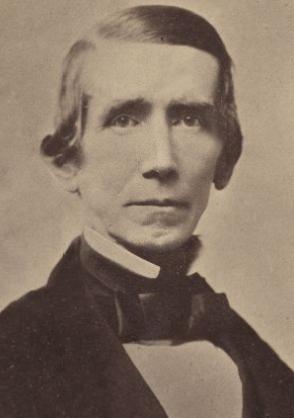
Historical · U.S. Senate · Texas
James Henderson
Former U.S. Senator from Texas · 1857–1859 · Democratic · Class 1
James Henderson represented Texas in the United States Senate (1857–1859) for the Democratic party. The page below collects sourced biographical facts, term history, committee roles, and provenance for Henderson.
Bioguide ID: H000481
Key facts
- Full name
- James Henderson
- State
- Texas
- Party
- Democratic
- Senate class
- Class I
- Senate service
- 1857–1859
- First Senate term
- 1857
- Status
- Left office
- Current term ends
- —
- Born
- 1808
- Bioguide ID
- H000481
- Committee assignments
- —
- Dataset version
- 1.20260602
Biographical narrative
812 words · sourced from the Wikipedia REST extract
James Henderson was a prominent American lawyer, politician, and soldier who served as a U.S. Senator from Texas as a member of the Democratic Party. His political career was marked by significant contributions to the early governance of Texas, including his role as the first governor of the state. Henderson's tenure in the U.S. Senate began in 1857 and concluded with his death in 1858, making him a notable figure in the political landscape of Texas during a formative period in its history.
Early life and career
James Henderson was born on March 31, 1808, in Lincolnton, North Carolina. He was the son of Lawson Henderson and Elizabeth Carruth Henderson. His childhood home, known as Woodside, is recognized for its historical significance and was added to the National Register of Historic Places in 1973. Henderson pursued his education at Pleasant Retreat Academy before enrolling at the University of North Carolina to study law. Upon completing his studies, he dedicated himself to rigorous preparation for the bar examination, ultimately gaining admission to the North Carolina State Bar in 1829.
Following his legal training, Henderson joined the North Carolina militia, where he attained the rank of colonel. In 1835, he relocated to Canton, Mississippi, to establish a law practice. During this time, he also owned enslaved individuals. Henderson's attention soon shifted toward the ongoing conflict in Texas, where he became an advocate for the Texan struggle for independence from Mexico. He began delivering speeches to rally support and funds for the cause. In June 1836, he traveled to Texas with a group of volunteers, arriving after many pivotal events had already transpired, including the signing of the Texas Declaration of Independence and the fall of the Alamo.
Upon his arrival, Henderson was commissioned as a brigadier general in the Texas Army by interim President David G. Burnet. He was tasked with returning to North Carolina to recruit additional troops for the Texan cause, which he undertook at his own expense.
Senate tenure
Henderson's political career in the Republic of Texas began shortly after his military service. In September 1836, he was appointed attorney general by President Sam Houston. By December of that year, he was named secretary of state, succeeding the late Stephen F. Austin. In early 1837, Henderson was appointed as the minister from the Republic of Texas to France and England, where he successfully negotiated the recognition of Texas' independence and established trade agreements with both nations.
Returning to Texas in 1840, Henderson resumed his law practice in San Augustine. He played a crucial role in the annexation of Texas to the United States, traveling to Washington, D.C., in 1844 to work with Isaac Van Zandt on the annexation efforts. Although an initial treaty was signed, it was ultimately rejected by the Senate. However, a subsequent treaty was passed on December 29, 1845, leading to Texas' admission as a state.
Henderson was elected as the first governor of Texas in preparation for statehood, taking office on February 19, 1846. His governorship coincided with the outbreak of the Mexican-American War, during which he took a leave of absence to command a division of Texas volunteers as a major general under Zachary Taylor. After the war, he returned to his gubernatorial duties but opted not to seek re-election for a second term.
On November 9, 1857, Henderson was appointed to the U.S. Senate, where he served until his death on June 4, 1858. His brief tenure in the Senate was marked by the political tensions of the era, particularly as the nation approached the Civil War.
Legislative focus and committees
During his time in the Senate, Henderson's legislative focus and committee assignments reflected the interests and needs of Texas as a newly admitted state. While specific details regarding his committee assignments or legislative initiatives are not documented in the available records, it can be inferred that his background in law and governance, along with his experience as a military leader, likely informed his contributions to discussions and decisions impacting Texas and the broader national landscape.
Henderson's death from tuberculosis occurred while he was still in office, marking the end of his political career and life. He was interred at the Texas State Cemetery, where he remains a notable figure in Texas history. His legacy is commemorated through various geographical locations and institutions named in his honor, including Henderson County and the city of Henderson in Texas.
In his personal life, Henderson married Frances Cox, whom he met during his diplomatic service in Europe. The couple established their residence in Texas and had five children, three of whom survived into adulthood. Following Henderson's death, his family faced significant changes, including a move to Europe during the Civil War years. Henderson's contributions to Texas and his role in the early governance of the state remain significant in the historical narrative of American politics.
Notable legislation
Sponsored and co-sponsored legislation for James Henderson is pending operator curation. The biographical narrative above carries the same provenance trail until per-bill rows are written.
Sources
- [1]https://en.wikipedia.org/wiki/J._Pinckney_HendersonWikipedia · retrieved 2026-06-02
Notable quotes
Sourced quotes for James Henderson are pending operator curation. Narrative-scope provenance remains attached below.
Sources
- [1]https://en.wikipedia.org/wiki/J._Pinckney_HendersonWikipedia · retrieved 2026-06-02
Key positions
Curated policy positions for James Henderson are pending operator review. The biographical narrative above carries the same provenance trail until per-topic positions are written.
Sources
- [1]https://en.wikipedia.org/wiki/J._Pinckney_HendersonWikipedia · retrieved 2026-06-02
Terms served
- 1857–1859U.S. Senate · Term 1 · Democratic · Class I
Sources & provenance
Every attributable claim above carries a per-section [N] marker that resolves to the corresponding URL below. Each entry records the upstream provider, the canonical URL, and the timestamp at which the source was retrieved by the ingest pipeline.
Key facts
- https://bioguide.congress.gov/search/bio/H000481bioguide · retrieved 2026-06-02
- https://www.govtrack.us/congress/members/405344govtrack · retrieved 2026-06-02
Biographical narrative
- https://en.wikipedia.org/wiki/J._Pinckney_Hendersonwikipedia · retrieved 2026-06-02
Find your senator
Every U.S. state elects two senators. Browse Texas’s delegation, the full former-senator roster, or explore the role and term length.
Related on The Candidate
- Preceded by Thomas RuskEarlier holder of the Texas Class I Senate seat · Democratic.Open
- Succeeded by Louis WigfallLater holder of the Texas Class I Senate seat · Democratic.Open
- Andrew HoustonFormer U.S. Senator from Texas · DemocraticOpen
- Charles CulbersonFormer U.S. Senator from Texas · DemocraticOpen
- Earle MayfieldFormer U.S. Senator from Texas · DemocraticOpen
- Horace ChiltonFormer U.S. Senator from Texas · DemocraticOpen