
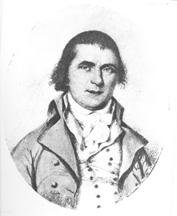
Historical · U.S. Senate · Virginia
Andrew Moore
Former U.S. Senator from Virginia · 1804–1809 · Republican · Class 1
Andrew Moore represented Virginia in the United States Senate (1804–1809) for the Republican party. The page below collects sourced biographical facts, term history, committee roles, and provenance for Moore.
Bioguide ID: M000891
Key facts
- Full name
- Andrew Moore
- State
- Virginia
- Party
- Republican
- Senate class
- Class I
- Senate service
- 1804–1809
- First Senate term
- 1804
- Status
- Left office
- Current term ends
- —
- Born
- —
- Bioguide ID
- M000891
- Committee assignments
- —
- Dataset version
- 1.20260602
Biographical narrative
974 words · sourced from the Wikipedia REST extract
Andrew Moore was an American lawyer and politician who served as a U.S. Senator from Virginia. A member of the Republican Party, he held office during a formative period in American history. Moore's political career spanned multiple decades, during which he was involved in significant legislative developments and served in various capacities, including as a delegate to the Virginia convention that ratified the United States Constitution. His tenure in the Senate lasted from 1804 until 1809, marking a notable chapter in his extensive public service that also included time in the U.S. House of Representatives and the Virginia legislature.
Early life and career
Andrew Moore was born in 1752 in Virginia, where he would later establish himself as a prominent figure in both law and politics. He pursued a legal education under the tutelage of George Wythe, a respected legal scholar and one of the signers of the Declaration of Independence. Moore was admitted to the bar in 1774, marking the beginning of his legal career. His legal expertise would serve him well as he transitioned into public service.
During the American Revolutionary War, Moore rose to the rank of captain in the Continental Army. He participated in key battles, including the pivotal Battle of Saratoga, which was a turning point in the war. His military service not only demonstrated his commitment to the American cause but also helped to establish his reputation as a leader in his community. Following the war, he continued to serve his state by being commissioned as a major general in the Virginia militia in 1803, reflecting his ongoing dedication to public service and military readiness.
Moore's political career began in earnest when he was elected as a delegate to the Virginia convention that ratified the United States Constitution in 1788. This convention was crucial in shaping the future of the nation, as it addressed the concerns of various factions regarding the proposed Constitution. Moore's involvement in this significant event underscored his commitment to the principles of governance and his belief in the need for a strong federal framework.
In addition to his role in the ratification of the Constitution, Moore served in the Virginia legislature from 1791 to 1789 and again from 1799 to 1800. His time in the legislature allowed him to engage in the legislative process at the state level, where he contributed to the development of laws and policies that would impact the lives of Virginians. This experience laid the groundwork for his later service in the U.S. Congress.
Senate tenure
Moore's tenure in the U.S. Senate began in 1804, following a contested election that highlighted the political tensions of the time. Initially, he lost a close race to Thomas Lewis, who was seated as the senator. However, Moore contested the election results, arguing that several votes had been cast by individuals who were not qualified to vote. After a thorough examination of the election process, Congress ultimately ruled in favor of Moore, declaring him the rightful winner of the Senate seat.
During his time in the Senate, which lasted until 1809, Moore was part of a legislative body that was grappling with the challenges of a young nation. The Senate was involved in various critical issues, including foreign relations, economic policy, and the expansion of the United States. Moore's participation in the Senate came during a period marked by significant political developments, including debates over the War of 1812 and the implications of westward expansion.
Moore's legislative contributions during his Senate tenure were shaped by the political landscape of the time, as well as his own experiences and beliefs. Although specific details regarding the bills he supported or opposed are not provided, it is clear that his role as a senator placed him at the center of important discussions that would influence the course of American history.
After completing his Senate term, Moore returned to Virginia, where he continued to be involved in public life until his death on April 14, 1821. His legacy as a politician and lawyer is marked by his commitment to service and his contributions to the early governance of the United States.
Legislative focus and committees
While specific details regarding Moore's legislative focus and committee assignments during his Senate tenure are not available, it can be inferred that his background as a lawyer and military officer influenced his perspectives on various issues. Given the context of his time in the Senate, it is likely that he engaged with matters related to national defense, legal reform, and the rights of states versus federal authority.
Moore's experience in the Virginia legislature and as a delegate to the ratifying convention would have provided him with a strong foundation in understanding the complexities of governance. His legal training would have equipped him with the analytical skills necessary to navigate the legislative process and contribute to discussions on a wide range of topics.
The early 19th century was a time of significant change in the United States, with issues such as territorial expansion, economic development, and relations with foreign powers at the forefront of national discourse. Senators like Moore played a vital role in shaping the policies that would guide the nation through these transformative years. His participation in the Senate allowed him to influence decisions that would have lasting implications for the future of the United States.
In summary, Andrew Moore's career as a U.S. Senator from Virginia was marked by his commitment to public service, his legal expertise, and his involvement in the foundational moments of American governance. His tenure in the Senate, though relatively brief, occurred during a pivotal time in the nation's history, and his contributions reflect the complexities and challenges faced by lawmakers in the early years of the Republic. Moore's legacy continues to be remembered as part of the broader narrative of American political history.
Notable legislation
Sponsored and co-sponsored legislation for Andrew Moore is pending operator curation. The biographical narrative above carries the same provenance trail until per-bill rows are written.
Sources
- [1]https://en.wikipedia.org/wiki/Andrew_Moore_(politician)Wikipedia · retrieved 2026-06-02
Notable quotes
Sourced quotes for Andrew Moore are pending operator curation. Narrative-scope provenance remains attached below.
Sources
- [1]https://en.wikipedia.org/wiki/Andrew_Moore_(politician)Wikipedia · retrieved 2026-06-02
Key positions
Curated policy positions for Andrew Moore are pending operator review. The biographical narrative above carries the same provenance trail until per-topic positions are written.
Sources
- [1]https://en.wikipedia.org/wiki/Andrew_Moore_(politician)Wikipedia · retrieved 2026-06-02
Terms served
- 1789–1791U.S. House · District 3 · Term 1 · Democratic
- 1791–1793U.S. House · District 3 · Term 2 · Democratic
- 1793–1795U.S. House · District 2 · Term 3 · Democratic
- 1795–1797U.S. House · District 2 · Term 4 · Republican
- 1804–1809U.S. Senate · Term 5 · Republican · Class I
Sources & provenance
Every attributable claim above carries a per-section [N] marker that resolves to the corresponding URL below. Each entry records the upstream provider, the canonical URL, and the timestamp at which the source was retrieved by the ingest pipeline.
Key facts
- https://bioguide.congress.gov/search/bio/M000891bioguide · retrieved 2026-06-02
- https://www.govtrack.us/congress/members/407863govtrack · retrieved 2026-06-02
Biographical narrative
- https://en.wikipedia.org/wiki/Andrew_Moore_(politician)wikipedia · retrieved 2026-06-02
Find your senator
Every U.S. state elects two senators. Browse Virginia’s delegation, the full former-senator roster, or explore the role and term length.
Related on The Candidate
- Preceded by Stevens MasonEarlier holder of the Virginia Class I Senate seat · Republican.Open
- Succeeded by Richard BrentLater holder of the Virginia Class I Senate seat · Republican.Open
- Abraham VenableFormer U.S. Senator from Virginia · RepublicanOpen
- Absalom RobertsonFormer U.S. Senator from Virginia · DemocraticOpen
- Armistead MasonFormer U.S. Senator from Virginia · RepublicanOpen
- Benjamin LeighFormer U.S. Senator from Virginia · Anti-JacksonianOpen