
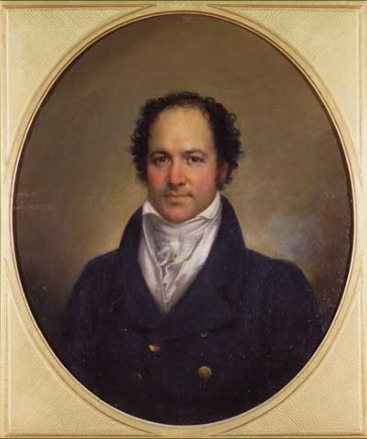
Historical · U.S. Senate · Virginia
Benjamin Leigh
Former U.S. Senator from Virginia · 1834–1836 · Anti-Jacksonian · Class 2
Benjamin Leigh represented Virginia in the United States Senate (1834–1836) for the Anti-Jacksonian party. The page below collects sourced biographical facts, term history, committee roles, and provenance for Leigh.
Bioguide ID: L000232
Key facts
- Full name
- Benjamin Leigh
- State
- Virginia
- Party
- Anti-Jacksonian
- Senate class
- Class II
- Senate service
- 1834–1836
- First Senate term
- 1834
- Status
- Left office
- Current term ends
- —
- Born
- 1781
- Bioguide ID
- L000232
- Committee assignments
- —
- Dataset version
- 1.20260602
Biographical narrative
908 words · sourced from the Wikipedia REST extract
Benjamin Watkins Leigh was an American lawyer and politician who served as a U.S. Senator from Virginia during the 1830s. A member of the Anti-Jacksonian Party, Leigh's political career was marked by his involvement in significant legislative debates, particularly those surrounding the contentious issue of slavery. He was born on June 18, 1781, and passed away on February 2, 1849. His contributions to Virginia's legal framework and his role in the U.S. Senate reflect a career deeply intertwined with the political and social dynamics of his time.
Early life and career
Benjamin Watkins Leigh was born in Chesterfield County, Virginia, on June 18, 1781, at a property known as "Gravel Hill," which served as the glebe for Dale Parish. He was the son of Reverend William Leigh and Elizabeth (née Watkins) Leigh. After the death of his father in 1787 and his mother in 1799, Leigh pursued his education at the College of William and Mary, where he studied law. He began his legal practice in Petersburg, Virginia, in 1802, where he also took on the responsibility of raising his younger brother, William.
Leigh's political career began in earnest when he was elected to represent Dinwiddie County in the Virginia House of Delegates from 1811 to 1813. Following this initial foray into politics, he relocated to Richmond, where he quickly advanced in his legal career. He played a pivotal role in revising the Code of Virginia in 1819 and was a delegate to the Virginia Constitutional Convention held between 1829 and 1830. Additionally, Leigh served as a reporter for the Virginia Court of Appeals from 1829 to 1841, further solidifying his influence in the state's legal landscape. He returned to the Virginia legislature, representing Henrico County during the session of 1830-31.
Leigh's appointment to the United States Senate came in 1834 when he was selected by the Virginia legislature to fill the vacancy left by the resignation of William Cabell Rives. His political affiliation was with the Anti-Jacksonian Party, a faction that emerged in opposition to President Andrew Jackson's policies. Leigh's tenure in the Senate was characterized by his active participation in the debates surrounding the increasingly divisive issue of slavery.
Senate tenure
Benjamin Watkins Leigh's first term in the U.S. Senate began in 1834, and he served until his resignation on July 4, 1836. During his time in office, Leigh was involved in significant legislative discussions, particularly regarding slavery and its implications for the nation. The period was marked by heightened tensions over the institution of slavery, and Leigh found himself at the center of these debates.
One notable aspect of Leigh's Senate career was his response to the growing anti-slavery movement. The House of Representatives had passed a "gag rule" that effectively tabled all petitions related to anti-slavery, a measure that sparked considerable controversy. Although a similar proposal did not pass in the Senate, Leigh supported an alternative approach that allowed the Senate to ignore such petitions. His stance reflected the prevailing attitudes in Virginia and the South during this period.
Leigh also responded to President Jackson's call for Congress to censor anti-slavery publications from the federal mail. This proposal was ultimately defeated in the Senate, but it underscored the contentious atmosphere surrounding the issue of slavery. In a more proactive measure, Leigh proposed a statewide boycott of pro-emancipation newspapers, arguing that Virginians had the right to suppress what they considered inflammatory and dangerous content.
In addition to his involvement in slavery-related legislation, Leigh played a role in addressing the crisis surrounding South Carolina's nullification of federal tariffs. He was tasked with urging South Carolina to refrain from escalating tensions, demonstrating his engagement with broader national issues during his Senate tenure.
Leigh's time in the Senate came to an end when he resigned on July 4, 1836. Following his departure from the Senate, he returned to Richmond to continue his legal practice, where he remained active in the legal community.
Legislative focus and committees
During his Senate tenure, Benjamin Watkins Leigh's legislative focus was primarily on issues related to slavery and state rights, reflecting the political climate of the time. His involvement in the debates surrounding the "gag rule" and anti-slavery petitions illustrated his alignment with the interests of his constituents in Virginia, who largely opposed the abolitionist movement.
Leigh's participation in the Senate also included efforts to address the broader implications of state sovereignty, particularly in the context of South Carolina's nullification crisis. His role in attempting to mediate this situation highlighted his commitment to maintaining the Union while advocating for the rights of individual states.
In addition to his legislative activities, Leigh was a founding member of the Virginia Historical Society in 1831 and served as the first chairman of its standing committee. This involvement reflected his interest in preserving Virginia's history and heritage, further emphasizing his connection to the state's legal and cultural landscape.
Overall, Leigh's Senate career was marked by a commitment to the principles of his party and the interests of his constituents. His legislative actions and responses to national crises were indicative of the complex political environment of the early 19th century, particularly regarding the contentious issue of slavery. After leaving the Senate, Leigh continued to influence Virginia's legal landscape until his death on February 2, 1849, in Richmond, where he was buried in Shockoe Hill Cemetery. His legacy includes his contributions to Virginia's legal framework and his role in the evolving political discourse of his time.
Notable legislation
Sponsored and co-sponsored legislation for Benjamin Leigh is pending operator curation. The biographical narrative above carries the same provenance trail until per-bill rows are written.
Sources
- [1]https://en.wikipedia.org/wiki/Benjamin_W._LeighWikipedia · retrieved 2026-06-02
Notable quotes
Sourced quotes for Benjamin Leigh are pending operator curation. Narrative-scope provenance remains attached below.
Sources
- [1]https://en.wikipedia.org/wiki/Benjamin_W._LeighWikipedia · retrieved 2026-06-02
Key positions
Curated policy positions for Benjamin Leigh are pending operator review. The biographical narrative above carries the same provenance trail until per-topic positions are written.
Sources
- [1]https://en.wikipedia.org/wiki/Benjamin_W._LeighWikipedia · retrieved 2026-06-02
Terms served
- 1834–1835U.S. Senate · Term 1 · Anti-Jacksonian · Class II
- 1835–1836U.S. Senate · Term 2 · Anti-Jacksonian · Class II
Sources & provenance
Every attributable claim above carries a per-section [N] marker that resolves to the corresponding URL below. Each entry records the upstream provider, the canonical URL, and the timestamp at which the source was retrieved by the ingest pipeline.
Key facts
- https://bioguide.congress.gov/search/bio/L000232bioguide · retrieved 2026-06-02
- https://www.govtrack.us/congress/members/406735govtrack · retrieved 2026-06-02
Biographical narrative
- https://en.wikipedia.org/wiki/Benjamin_W._Leighwikipedia · retrieved 2026-06-02
Find your senator
Every U.S. state elects two senators. Browse Virginia’s delegation, the full former-senator roster, or explore the role and term length.
Related on The Candidate
- Preceded by Littleton TazewellEarlier holder of the Virginia Class II Senate seat · Jackson.Open
- Succeeded by Richard ParkerLater holder of the Virginia Class II Senate seat · Democratic.Open
- Abraham VenableFormer U.S. Senator from Virginia · RepublicanOpen
- Absalom RobertsonFormer U.S. Senator from Virginia · DemocraticOpen
- Andrew MooreFormer U.S. Senator from Virginia · RepublicanOpen
- Armistead MasonFormer U.S. Senator from Virginia · RepublicanOpen