
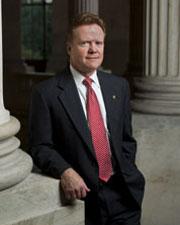
Historical · U.S. Senate · Virginia
Jim Webb
Former U.S. Senator from Virginia · 2007–2013 · Democratic · Class 1
Jim Webb represented Virginia in the United States Senate (2007–2013) for the Democratic party. The page below collects sourced biographical facts, term history, committee roles, and provenance for Webb.
Bioguide ID: W000803
Key facts
- Full name
- Jim Webb
- State
- Virginia
- Party
- Democratic
- Senate class
- Class I
- Senate service
- 2007–2013
- First Senate term
- 2007
- Status
- Left office
- Current term ends
- —
- Born
- 1946
- Bioguide ID
- W000803
- Committee assignments
- —
- Dataset version
- 1.20260601-3
Biographical narrative
1,011 words · sourced from the Wikipedia REST extract
James Henry Webb Jr. is a former United States Senator from Virginia, a member of the Democratic Party, and a notable figure in American politics and military service. Born on February 9, 1946, Webb has had a diverse career that includes serving as a Marine Corps officer, an author, and a government official. He was elected to the Senate in 2006 and served until January 3, 2013. Webb is recognized for his contributions to both military and civilian life, including his work in defense and veterans' affairs, as well as his literary achievements.
Early life and career
Jim Webb was born in St. Joseph, Missouri, into a military family. His father, James Henry Webb, was a career officer in the United States Air Force, which necessitated frequent relocations for the family. Webb spent his childhood in various states, including Missouri, Illinois, Texas, Alabama, Nebraska, California, and Virginia, as well as in England. His father's military service included flying B-17s and B-29s during World War II and participating in the Berlin airlift. After developing a medical condition, Webb's father transitioned to a role in the Air Force missile program, eventually commanding the 1001st Missile Squadron at Vandenberg Air Force Base.
Webb's ancestry traces back to Scots-Irish immigrants who settled in the British North American colonies in the mid-18th century. His family history is a significant theme in his writings, particularly in his book "Born Fighting: How the Scots-Irish Shaped America," which explores the contributions of his ancestors to American history. This book was later adapted into a television documentary.
Webb's education was marked by frequent changes, attending more than a dozen schools before graduating high school in Bellevue, Nebraska. He began his higher education at the University of Southern California on a Naval Reserve Officers Training Corps scholarship, where he was also involved in the Delta Chi fraternity. In 1964, he received an appointment to the United States Naval Academy in Annapolis, Maryland. At the Naval Academy, Webb was active in leadership roles, serving on the Brigade Honor Committee and the Brigade Staff. He graduated in 1968, earning recognition for his leadership abilities.
Following his graduation, Webb was commissioned as a second lieutenant in the U.S. Marine Corps and attended the Marine Corps Officer Basic School, where he graduated first in his class. His military service included a tour in Vietnam, where he served as a platoon commander and earned several commendations for his bravery, including the Navy Cross, the Silver Star, and two Bronze Stars. His experiences in Vietnam, including injuries that led to his medical retirement, shaped his perspectives on military and veteran affairs.
After his military service, Webb pursued a legal education at Georgetown University, where he earned a Juris Doctor degree and received the Horan Award for excellence in legal writing. His legal career included roles as Counsel for the United States House Committee on Veterans' Affairs and as Assistant Secretary of Defense for Reserve Affairs.
Senate tenure
Jim Webb was elected to the United States Senate in 2006, making him the first Democratic senator from Virginia since 1994. His election marked a significant moment in Virginia's political landscape, as he was the first Democrat to hold the Senate seat without having previously served as the state's governor. Webb's tenure in the Senate began in January 2007 and lasted until January 2013. During this period, he was involved in various legislative efforts and initiatives, focusing on issues pertinent to veterans, military families, and national security.
Webb's election was characterized by a campaign that emphasized his military background, experience in government, and commitment to addressing the needs of veterans. His victory was seen as part of a broader shift in the political climate of Virginia and the nation, reflecting changing attitudes among voters.
Throughout his Senate career, Webb served on several committees, where he contributed to discussions and decisions on a range of issues, including defense, foreign relations, and veterans' affairs. His military experience provided him with a unique perspective on these matters, and he often advocated for policies that supported service members and their families.
Legislative focus and committees
During his time in the Senate, Jim Webb focused on a variety of legislative issues, with a particular emphasis on veterans' affairs and military issues. His background as a Marine Corps officer and his experiences in Vietnam informed his advocacy for policies that aimed to improve the lives of veterans and active-duty service members. Webb was known for his commitment to ensuring that veterans received the benefits and support they deserved, particularly in the areas of healthcare and education.
Webb served on several key Senate committees, including the Senate Armed Services Committee and the Senate Veterans' Affairs Committee. His role on these committees allowed him to engage directly with issues related to national security, military readiness, and the welfare of veterans. He was involved in discussions about military funding, troop deployments, and the challenges faced by returning service members.
In addition to his focus on veterans, Webb also addressed broader issues such as economic policy, education, and social justice. He was known for his willingness to engage in bipartisan efforts to find solutions to complex problems. Webb's legislative work reflected his belief in the importance of addressing the needs of all Americans, particularly those who had served in the military.
After leaving the Senate, Webb continued to be active in public life, exploring opportunities in academia and public policy. He announced the formation of an exploratory committee for a potential presidential run in 2016, although he later withdrew from the race. In 2020, he was appointed as the first distinguished fellow of the University of Notre Dame's International Security Center, further demonstrating his ongoing commitment to issues of national importance.
Jim Webb's career is marked by significant contributions to both military and civilian spheres, reflecting a dedication to public service and advocacy for those who have served in the armed forces. His legacy includes a focus on the well-being of veterans and a commitment to addressing the challenges faced by military families in the United States.
Notable legislation
Sponsored and co-sponsored legislation for Jim Webb is pending operator curation. The biographical narrative above carries the same provenance trail until per-bill rows are written.
Sources
- [1]https://en.wikipedia.org/wiki/Jim_WebbWikipedia · retrieved 2026-06-01
Notable quotes
Sourced quotes for Jim Webb are pending operator curation. Narrative-scope provenance remains attached below.
Sources
- [1]https://en.wikipedia.org/wiki/Jim_WebbWikipedia · retrieved 2026-06-01
Key positions
Curated policy positions for Jim Webb are pending operator review. The biographical narrative above carries the same provenance trail until per-topic positions are written.
Sources
- [1]https://en.wikipedia.org/wiki/Jim_WebbWikipedia · retrieved 2026-06-01
Terms served
- 2007–2013U.S. Senate · Term 1 · Democratic · Class I
Sources & provenance
Every attributable claim above carries a per-section [N] marker that resolves to the corresponding URL below. Each entry records the upstream provider, the canonical URL, and the timestamp at which the source was retrieved by the ingest pipeline.
Key facts
- https://bioguide.congress.gov/search/bio/W000803bioguide · retrieved 2026-06-01
- http://webb.senate.gov/senate.gov · retrieved 2026-06-01
Biographical narrative
- https://en.wikipedia.org/wiki/Jim_Webbwikipedia · retrieved 2026-06-01
Find your senator
Every U.S. state elects two senators. Browse Virginia’s delegation, the full former-senator roster, or explore the role and term length.
Related on The Candidate
- Preceded by George AllenEarlier holder of the Virginia Class I Senate seat · Republican.Open
- Abraham VenableFormer U.S. Senator from Virginia · RepublicanOpen
- Absalom RobertsonFormer U.S. Senator from Virginia · DemocraticOpen
- Andrew MooreFormer U.S. Senator from Virginia · RepublicanOpen
- Armistead MasonFormer U.S. Senator from Virginia · RepublicanOpen
- Democratic PartyFederal candidates and office holders on the Democratic line.Open