
Historical · U.S. Senate · Virginia
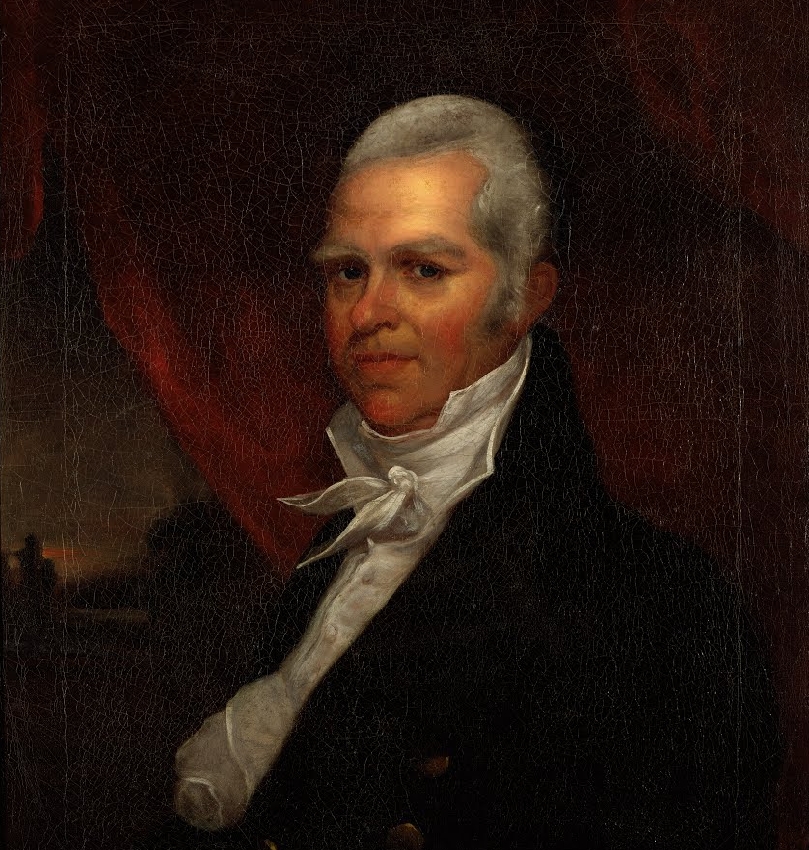
William Giles
Former U.S. Senator from Virginia · 1804–1815 · Republican · Class 2
William Giles represented Virginia in the United States Senate (1804–1815) for the Republican party. The page below collects sourced biographical facts, term history, committee roles, and provenance for Giles.
Bioguide ID: G000183
Key facts
- Full name
- William Giles
- State
- Virginia
- Party
- Republican
- Senate class
- Class II
- Senate service
- 1804–1815
- First Senate term
- 1804
- Status
- Left office
- Current term ends
- —
- Born
- 1762
- Bioguide ID
- G000183
- Committee assignments
- —
- Dataset version
- 1.20260602
Biographical narrative
995 words · sourced from the Wikipedia REST extract
William Giles was an American politician who served as a U.S. Senator from Virginia and held various political positions throughout his career, including the governorship of Virginia. A member of the Republican Party, he was known for his opposition to certain federal policies and his advocacy for agrarian interests. His political career spanned several decades, during which he was involved in significant legislative debates and political movements of his time.
Early life and career
William Giles was born on August 12, 1762, in Amelia County, Virginia, where he would later build his home known as The Wigwam. His early education took place at Prince Edward Academy, which is now part of Hampden-Sydney College, and he furthered his studies at the College of New Jersey, now known as Princeton University. It is believed that he followed Samuel Stanhope Smith, who was teaching at Prince Edward Academy before becoming president of Princeton in 1779. Giles also pursued legal studies under Chancellor George Wythe and at the College of William and Mary, which equipped him with the knowledge necessary for his future political career.
Giles was admitted to the Virginia bar in 1786, marking the beginning of his professional life as a lawyer. He was an advocate for the new U.S. Constitution during the ratification debates of 1788, although he did not participate in the ratifying convention. His political career began in earnest when he was elected to the U.S. House of Representatives in a special election in 1790, filling the vacancy left by the deceased Theodorick Bland. This election is notable as Giles is considered to be the first member of Congress elected through a special election. He was subsequently re-elected three times, serving until 1798 when he resigned due to health issues and his discontent with the Alien and Sedition Acts.
During his initial tenure in Congress, Giles aligned himself with prominent Virginian figures such as James Madison and Thomas Jefferson, opposing the financial policies of Alexander Hamilton, particularly the establishment of a national bank. He was actively involved in legislative efforts to challenge Hamilton's administration, including introducing resolutions aimed at censuring Hamilton's management of finances. His political stance included opposition to the pro-British Jay's Treaty and resistance to naval appropriations intended for use against France during the Quasi-War. In addition, he supported the Kentucky and Virginia Resolutions, which declared the Alien and Sedition Acts unconstitutional.
After a brief hiatus from Congress, Giles returned to the House of Representatives from 1801 to 1803 before being appointed to the U.S. Senate in 1804 following the resignation of Wilson Cary Nicholas. His Senate career lasted until 1815, during which he was reappointed in 1810. His time in the Senate was marked by significant political events, including his advocacy for the impeachment of Justice Samuel Chase, which he viewed as a matter of public confidence rather than a legal trial. His disappointment in Chase's acquittal reflected his deep engagement with the political controversies of the era.
Senate tenure
Giles's Senate tenure began in 1804, and he quickly became an influential figure within the chamber. He was a strong supporter of James Madison's presidential candidacy in 1808, favoring Madison over the Federalist candidate Charles Cotesworth Pinckney. However, his relationship with Madison became strained as he criticized the president's handling of foreign relations, particularly regarding Britain. Despite his criticisms, Giles voted in favor of the declaration of war against Britain in 1812, showcasing the complexities of his political positions.
Giles's tenure in the Senate was characterized by his opposition to certain policies advocated by fellow politicians, including Albert Gallatin, the Secretary of the Treasury. His disagreements with Gallatin were significant enough to affect his own political aspirations, particularly when he was not nominated for the position of Secretary of State. His refusal to adhere to the General Assembly's instructions during his time in the Senate ultimately led to his rejection in subsequent elections, as state legislatures were responsible for electing senators at that time.
After concluding his Senate service in 1815, Giles returned to the Virginia House of Delegates for a brief period from 1816 to 1817. Following this term, he stepped back from active political life for a time, although he continued to engage in public discourse through opinion pieces and columns published in the Richmond, Virginia, Enquirer. In these writings, he expressed his concerns about the political climate, criticizing what he perceived as false prosperity during the Era of Good Feelings and the influence of banks and tariffs on government integrity.
Legislative focus and committees
Throughout his political career, William Giles was known for his strong advocacy of agrarian interests and his opposition to centralized government policies that he believed undermined the rights of farmers. His legislative focus included a critique of the Jeffersonian program for public education, which he argued was unjust and detrimental to rural families. He contended that taxing one individual to educate another's children was inequitable and that the educational system would create a class of teachers who would advocate for higher taxes and increased government spending.
In the latter part of his career, Giles attempted to return to the Senate in 1825 after James Barbour's departure but was unsuccessful, as the legislature appointed John Randolph instead. However, he was elected to the House of Delegates again in 1826 and subsequently served as Governor of Virginia from 1827 to 1830. During his governorship, he encouraged resistance among southern states against the American System promoted by Henry Clay, advocating for a boycott of northern manufactured goods. His efforts to organize this resistance, however, met with limited support from other southern senators.
Giles's final political involvement included participation in the Virginia Constitutional Convention of 1829-1830, where he strongly supported maintaining the existing apportionment of the House of Delegates, favoring the interests of the eastern counties. His political career concluded with his death on December 4, 1830, leaving behind a legacy marked by his commitment to agrarian values and his opposition to perceived federal overreach.
Notable legislation
Sponsored and co-sponsored legislation for William Giles is pending operator curation. The biographical narrative above carries the same provenance trail until per-bill rows are written.
Sources
- [1]https://en.wikipedia.org/wiki/William_Branch_GilesWikipedia · retrieved 2026-06-02
Notable quotes
Sourced quotes for William Giles are pending operator curation. Narrative-scope provenance remains attached below.
Sources
- [1]https://en.wikipedia.org/wiki/William_Branch_GilesWikipedia · retrieved 2026-06-02
Key positions
Curated policy positions for William Giles are pending operator review. The biographical narrative above carries the same provenance trail until per-topic positions are written.
Sources
- [1]https://en.wikipedia.org/wiki/William_Branch_GilesWikipedia · retrieved 2026-06-02
Terms served
- 1790–1791U.S. House · District 9 · Term 1 · Republican
- 1791–1793U.S. House · District 9 · Term 2 · Republican
- 1793–1795U.S. House · District 9 · Term 3 · Republican
- 1795–1797U.S. House · District 9 · Term 4 · Republican
- 1797–1798U.S. House · District 9 · Term 5 · Republican
- 1801–1803U.S. House · District 9 · Term 6 · Republican
- 1804–1804U.S. Senate · Term 7 · Republican · Class I
- 1804–1805U.S. Senate · Term 8 · Republican · Class II
- 1805–1811U.S. Senate · Term 9 · Republican · Class II
- 1811–1815U.S. Senate · Term 10 · Republican · Class II
Sources & provenance
Every attributable claim above carries a per-section [N] marker that resolves to the corresponding URL below. Each entry records the upstream provider, the canonical URL, and the timestamp at which the source was retrieved by the ingest pipeline.
Key facts
- https://bioguide.congress.gov/search/bio/G000183bioguide · retrieved 2026-06-02
- https://www.govtrack.us/congress/members/404548govtrack · retrieved 2026-06-02
Biographical narrative
- https://en.wikipedia.org/wiki/William_Branch_Gileswikipedia · retrieved 2026-06-02
Find your senator
Every U.S. state elects two senators. Browse Virginia’s delegation, the full former-senator roster, or explore the role and term length.
Related on The Candidate
- Preceded by Henry TazewellEarlier holder of the Virginia Class II Senate seat · Republican.Open
- Succeeded by Armistead MasonLater holder of the Virginia Class II Senate seat · Republican.Open
- Abraham VenableFormer U.S. Senator from Virginia · RepublicanOpen
- Absalom RobertsonFormer U.S. Senator from Virginia · DemocraticOpen
- Andrew MooreFormer U.S. Senator from Virginia · RepublicanOpen
- Republican PartyFederal candidates and office holders on the Republican line.Open