
Historical · U.S. Senate · Virginia
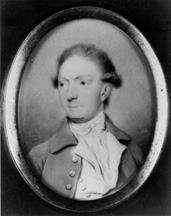
William Grayson
Former U.S. Senator from Virginia · 1789–1791 · Anti-Administration · Class 1
William Grayson represented Virginia in the United States Senate (1789–1791) for the Anti-Administration party. The page below collects sourced biographical facts, term history, committee roles, and provenance for Grayson.
Bioguide ID: G000403
Key facts
- Full name
- William Grayson
- State
- Virginia
- Party
- Anti-Administration
- Senate class
- Class I
- Senate service
- 1789–1791
- First Senate term
- 1789
- Status
- Left office
- Current term ends
- —
- Born
- —
- Bioguide ID
- G000403
- Committee assignments
- —
- Dataset version
- 1.20260602
Biographical narrative
912 words · sourced from the Wikipedia REST extract
William Grayson was a prominent planter, lawyer, and statesman from Virginia, who played a significant role in the early political landscape of the United States. He served as one of the first two U.S. Senators from Virginia and was a notable leader of the Anti-Federalist faction. Grayson’s political career was marked by his commitment to the principles of governance that aligned with his beliefs about states' rights and the limitations of federal power. His tenure in the Senate was brief, as he became the first member of the United States Congress to die while in office.
Early life and career
William Grayson was born in 1736 at Belle Aire Plantation, located in what is now Woodbridge, Virginia. He was the son of Benjamin Grayson and Susannah Monroe Grayson. His father, a Scottish immigrant, established himself as a successful merchant and planter in the region, becoming a prominent figure in local governance as a justice of the peace. Grayson’s mother, who had previously been married twice, came from a notable family in Westmoreland County. Among her descendants was James Monroe, who would later become a U.S. Senator and President.
Grayson experienced significant familial loss during his early years. His mother passed away when he was just ten years old, and his father died when he was sixteen. Following his father's death, his eldest brother, Benjamin Grayson Jr., became his legal guardian. The family estate, which included approximately 2,800 acres of land, was divided among the brothers, with William receiving a substantial inheritance that allowed him to pursue his education and career.
Grayson received his early education locally and demonstrated a strong aptitude for languages, particularly Latin and Greek, as well as a keen interest in English history. His guardian facilitated his further education at the University of Pennsylvania, after which Grayson traveled to England. Although family accounts suggest he studied law at the University of Oxford, there is no documentation to confirm this. Instead, it is believed that he may have been apprenticed to British merchant bankers.
Upon returning to Virginia, Grayson began practicing law in Prince William County and the surrounding areas. His legal career coincided with the growing political tensions in the American colonies, and he became involved in the revolutionary movement. Grayson was active in various Committees of Correspondence, which were essential in organizing colonial resistance against British rule. His legal background and connections within the planter elite positioned him as a significant figure in the political landscape of Virginia.
Senate tenure
William Grayson was elected as one of the first two U.S. Senators from Virginia in 1789, representing the Anti-Administration party. His election to the Senate came during a formative period in American history, as the newly established government sought to define its structure and authority. Grayson’s tenure in the Senate was characterized by his alignment with the Anti-Federalist perspective, which advocated for a decentralized government that prioritized states' rights over federal authority.
Grayson served in the Senate until his death on March 12, 1790. His time in office was marked by the challenges of establishing a new government and the debates surrounding the ratification of the Constitution. As a member of the Anti-Federalist faction, Grayson was critical of the proposed Constitution, fearing that it concentrated too much power in the federal government. His concerns reflected the broader apprehensions of many Virginians and other Anti-Federalists regarding the potential erosion of state sovereignty.
During his brief Senate career, Grayson engaged in discussions about the structure of the federal government and the rights of states. His contributions to the Senate were part of the larger discourse on how to balance power between the national and state governments, a debate that would continue to shape American politics for generations.
Legislative focus and committees
While specific details regarding the legislation Grayson supported or opposed during his Senate tenure are not extensively documented, his alignment with the Anti-Federalist faction suggests a focus on issues related to states' rights and the limitations of federal power. Anti-Federalists were concerned about the potential for a strong central government to infringe upon the liberties of individuals and the rights of states.
Grayson’s involvement in the Senate occurred during a time when the legislative body was still establishing its role within the federal government. The early Senate was tasked with addressing foundational issues, including the establishment of executive departments, the creation of a national bank, and the formulation of foreign policy. Grayson’s perspectives on these matters would have been influenced by his commitment to the principles of limited government and the protection of individual liberties.
In addition to his legislative activities, Grayson’s background as a lawyer and his experience in local governance likely informed his approach to the issues facing the Senate. His connections with other prominent figures of the time, including George Washington and George Mason, would have provided him with insights into the political dynamics of the era.
Grayson’s untimely death in 1790 marked the end of his contributions to the Senate, but his legacy as a leader of the Anti-Federalist movement and one of Virginia’s first senators remains significant in the context of American history. His commitment to advocating for the rights of states and his role in the early legislative processes of the United States reflect the complexities of the nation’s founding period. Grayson’s life and career illustrate the challenges and debates that shaped the formation of the American government and the ongoing struggle to balance power between state and federal authorities.
Notable legislation
Sponsored and co-sponsored legislation for William Grayson is pending operator curation. The biographical narrative above carries the same provenance trail until per-bill rows are written.
Sources
- [1]https://en.wikipedia.org/wiki/William_GraysonWikipedia · retrieved 2026-06-02
Notable quotes
Sourced quotes for William Grayson are pending operator curation. Narrative-scope provenance remains attached below.
Sources
- [1]https://en.wikipedia.org/wiki/William_GraysonWikipedia · retrieved 2026-06-02
Key positions
Curated policy positions for William Grayson are pending operator review. The biographical narrative above carries the same provenance trail until per-topic positions are written.
Sources
- [1]https://en.wikipedia.org/wiki/William_GraysonWikipedia · retrieved 2026-06-02
Terms served
- 1789–1791U.S. Senate · Term 1 · Anti-Administration · Class I
Sources & provenance
Every attributable claim above carries a per-section [N] marker that resolves to the corresponding URL below. Each entry records the upstream provider, the canonical URL, and the timestamp at which the source was retrieved by the ingest pipeline.
Key facts
- https://bioguide.congress.gov/search/bio/G000403bioguide · retrieved 2026-06-02
- https://www.govtrack.us/congress/members/404753govtrack · retrieved 2026-06-02
Biographical narrative
- https://en.wikipedia.org/wiki/William_Graysonwikipedia · retrieved 2026-06-02
Find your senator
Every U.S. state elects two senators. Browse Virginia’s delegation, the full former-senator roster, or explore the role and term length.
Related on The Candidate
- Succeeded by Stevens MasonLater holder of the Virginia Class I Senate seat · Republican.Open
- Abraham VenableFormer U.S. Senator from Virginia · RepublicanOpen
- Absalom RobertsonFormer U.S. Senator from Virginia · DemocraticOpen
- Andrew MooreFormer U.S. Senator from Virginia · RepublicanOpen
- Armistead MasonFormer U.S. Senator from Virginia · RepublicanOpen
- Senators from VirginiaEvery former U.S. Senator who has represented Virginia.Open