
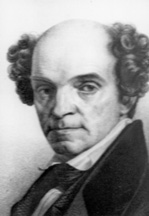
Historical · U.S. Senate · Virginia
William Roane
Former U.S. Senator from Virginia · 1837–1841 · Democratic · Class 2
William Roane represented Virginia in the United States Senate (1837–1841) for the Democratic party. The page below collects sourced biographical facts, term history, committee roles, and provenance for Roane.
Bioguide ID: R000293
Key facts
- Full name
- William Roane
- State
- Virginia
- Party
- Democratic
- Senate class
- Class II
- Senate service
- 1837–1841
- First Senate term
- 1837
- Status
- Left office
- Current term ends
- —
- Born
- 1787
- Bioguide ID
- R000293
- Committee assignments
- —
- Dataset version
- 1.20260602
Biographical narrative
865 words · sourced from the Wikipedia REST extract
William Roane was a prominent Virginia politician in the early 19th century, serving in various legislative capacities, including the United States Senate. A member of the Democratic Party, Roane's political career spanned several significant roles, including service in the Virginia House of Delegates and the United States House of Representatives. His tenure in the Senate was marked by his leadership as chairman of the Committee on the District of Columbia. Roane's legacy is intertwined with his familial connections, being the son of a notable judge and the grandson of the influential Founding Father Patrick Henry.
Early life and career
William Roane was born on September 17, 1787, in Virginia, into a family with a rich political heritage. His father, Judge Spencer Roane, was a respected figure in Virginia's legal community, while his grandfather, Patrick Henry, was a prominent leader in the American Revolution and a key advocate for individual liberties. This lineage likely influenced Roane's early interest in public service and governance.
Roane's educational background included preparatory studies, although specific details about his formal education are not extensively documented. Nevertheless, it is evident that he was well-prepared for a career in politics. His political journey began in the Virginia House of Delegates, where he served from 1812 to 1815. This position allowed him to engage directly with the legislative process at the state level, gaining valuable experience that would serve him well in his future roles.
In 1814, Roane was elected as a Democratic-Republican to the United States House of Representatives. He served in this capacity from 1815 to 1817, representing Virginia's interests in the national legislature. His time in the House was relatively brief, as he chose not to seek reelection after his term. Following his departure from the House, Roane continued his public service by joining the executive council of Virginia, further solidifying his involvement in the state's governance.
Senate tenure
Roane's most notable federal role came when he was elected to the United States Senate. He filled a vacancy and began his Senate term in 1837, representing Virginia as a member of the Democratic Party. His time in the Senate lasted until March 3, 1841, when his term concluded. During this period, Roane was actively involved in the legislative process and took on significant responsibilities.
One of Roane's key roles in the Senate was his position as chairman of the Committee on the District of Columbia from 1837 to 1839. This committee was responsible for overseeing matters related to the federal district, including legislation that affected the governance and administration of Washington, D.C. As chairman, Roane played a crucial role in shaping policies and addressing issues pertinent to the district during a time of growth and change in the nation’s capital.
Despite his contributions to the Senate, Roane faced challenges in his political career. After serving one term, he sought reelection but was unsuccessful in his bid. This defeat marked the end of his formal political career in the Senate. Following his departure from the Senate, Roane returned to Virginia, where he engaged in agricultural pursuits. His post-Senate life was characterized by a focus on farming and managing his estate, Tree Hill, located in Virginia.
Legislative focus and committees
During his time in the Senate, Roane's legislative focus was primarily directed towards issues affecting the District of Columbia, given his role as chairman of the relevant committee. The District of Columbia was undergoing significant changes during this period, and Roane's leadership in the committee allowed him to influence legislation that would shape the governance of the capital. His work would have included addressing local governance issues, infrastructure development, and other matters critical to the functioning of the federal district.
Roane's background in state politics likely informed his approach to federal issues. His experience in the Virginia House of Delegates and the United States House of Representatives provided him with a comprehensive understanding of legislative processes and the importance of local governance. This understanding would have been particularly valuable in his role overseeing the District of Columbia, where local and federal interests often intersected.
While specific legislative achievements during Roane's Senate tenure are not detailed in the available records, his leadership position suggests that he was actively engaged in discussions and decisions that impacted the district and, by extension, the nation. The role of the Senate committee chair is often pivotal in shaping the legislative agenda, and Roane's contributions would have been significant during his time in office.
After leaving the Senate, Roane's life shifted away from the political arena. He returned to Virginia, where he focused on agricultural activities until his death on May 11, 1845. His passing marked the end of a career that had spanned various levels of government, reflecting a commitment to public service that began in his youth and continued throughout his life.
William Roane was interred at the Lyons Family Cemetery in Hanover County, Virginia, where he is remembered as a figure who contributed to the political landscape of his time. His connections to notable historical figures and his service in multiple legislative bodies underscore the legacy he left behind in Virginia and the broader context of American governance during the early 19th century.
Notable legislation
Sponsored and co-sponsored legislation for William Roane is pending operator curation. The biographical narrative above carries the same provenance trail until per-bill rows are written.
Sources
- [1]https://en.wikipedia.org/wiki/William_H._RoaneWikipedia · retrieved 2026-06-02
Notable quotes
Sourced quotes for William Roane are pending operator curation. Narrative-scope provenance remains attached below.
Sources
- [1]https://en.wikipedia.org/wiki/William_H._RoaneWikipedia · retrieved 2026-06-02
Key positions
Curated policy positions for William Roane are pending operator review. The biographical narrative above carries the same provenance trail until per-topic positions are written.
Sources
- [1]https://en.wikipedia.org/wiki/William_H._RoaneWikipedia · retrieved 2026-06-02
Terms served
- 1815–1817U.S. House · District 12 · Term 1 · Republican
- 1837–1841U.S. Senate · Term 2 · Democratic · Class II
Sources & provenance
Every attributable claim above carries a per-section [N] marker that resolves to the corresponding URL below. Each entry records the upstream provider, the canonical URL, and the timestamp at which the source was retrieved by the ingest pipeline.
Key facts
- https://bioguide.congress.gov/search/bio/R000293bioguide · retrieved 2026-06-02
- https://www.govtrack.us/congress/members/409266govtrack · retrieved 2026-06-02
Biographical narrative
- https://en.wikipedia.org/wiki/William_H._Roanewikipedia · retrieved 2026-06-02
Find your senator
Every U.S. state elects two senators. Browse Virginia’s delegation, the full former-senator roster, or explore the role and term length.
Related on The Candidate
- Preceded by Richard ParkerEarlier holder of the Virginia Class II Senate seat · Democratic.Open
- Succeeded by William ArcherLater holder of the Virginia Class II Senate seat · Whig.Open
- Abraham VenableFormer U.S. Senator from Virginia · RepublicanOpen
- Absalom RobertsonFormer U.S. Senator from Virginia · DemocraticOpen
- Andrew MooreFormer U.S. Senator from Virginia · RepublicanOpen
- Armistead MasonFormer U.S. Senator from Virginia · RepublicanOpen