
Historical · U.S. Senate · Wisconsin
Charles Durkee
Former U.S. Senator from Wisconsin · 1855–1861 · Republican · Class 3
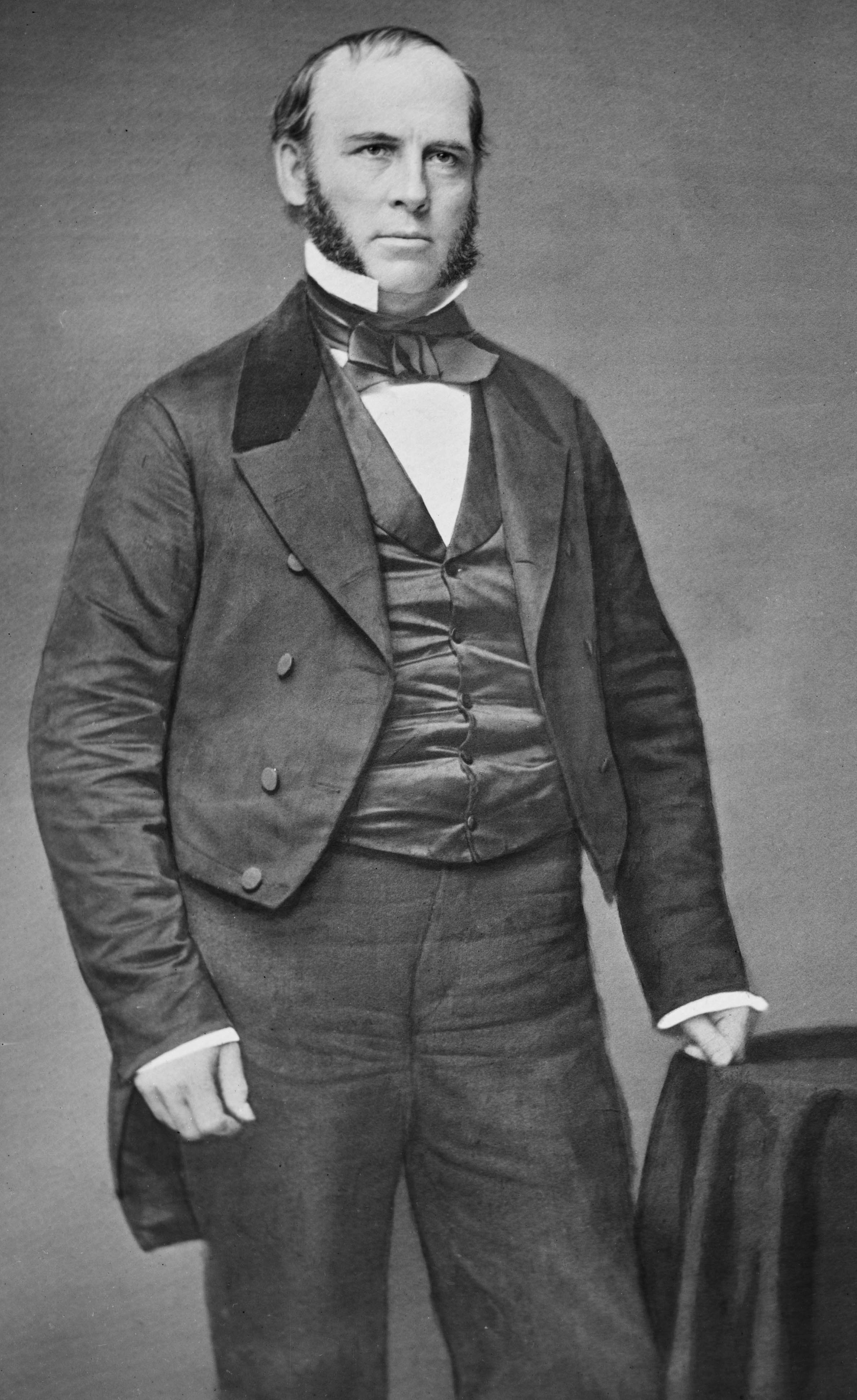
Charles Durkee represented Wisconsin in the United States Senate (1855–1861) for the Republican party. The page below collects sourced biographical facts, term history, committee roles, and provenance for Durkee.
Bioguide ID: D000573
Key facts
- Full name
- Charles Durkee
- State
- Wisconsin
- Party
- Republican
- Senate class
- Class III
- Senate service
- 1855–1861
- First Senate term
- 1855
- Status
- Left office
- Current term ends
- —
- Born
- 1805
- Bioguide ID
- D000573
- Committee assignments
- —
- Dataset version
- 1.20260602
Biographical narrative
841 words · sourced from the Wikipedia REST extract
Charles Durkee was an American politician and pioneer who served as a U.S. Senator from Wisconsin from 1855 to 1861. A member of the Republican Party, he was notable for his advocacy of temperance and abolition, as well as his involvement in the early political landscape of Wisconsin. Before his tenure in the Senate, Durkee served two terms in the U.S. House of Representatives and later held the position of governor of the Utah Territory from 1865 to 1869. His contributions to both state and national politics reflect a commitment to the principles of abolition and anti-slavery, as well as a dedication to public service.
Early life and career
Charles Durkee was born on December 10, 1805, in Royalton, Vermont. His early life was marked by a transition from a merchant to a politician, reflecting the dynamic changes occurring in America during the 19th century. In 1836, he moved to the Wisconsin Territory, where he became involved in various economic activities, including agriculture and lumbering. Durkee played a significant role in the founding of Southport, which would later be renamed Kenosha, Wisconsin. His contributions to the community included land development that is now part of the Library Park Historic District in Kenosha.
Durkee's political career began in the Wisconsin Territorial Legislature, where he served two terms. Initially a member of the Democratic Party, he was elected to the 1st Wisconsin Territorial Assembly. His political ideology evolved over time, leading him to become a prominent figure in the Liberty Party during the 1840s, which focused on the abolition of slavery. In 1848, the Liberty Party merged with other anti-slavery factions to form the Free Soil Party, and Durkee was elected to the U.S. House of Representatives as part of Wisconsin's first full congressional delegation. He served two terms in the House from March 4, 1849, to March 3, 1853, representing Wisconsin's 1st congressional district.
Durkee's political affiliations continued to shift as he became a leader in the Free Soil Party. In 1854, the Free Soil Party merged with remnants of the Whig Party to create the Republican Party. Shortly thereafter, Durkee was elected as the first Republican U.S. senator from Wisconsin, marking a significant milestone in his political career.
Senate tenure
Durkee's Senate term began in 1855 and lasted until 1861. During this period, he was part of a rapidly changing political landscape, as the nation grappled with issues surrounding slavery and states' rights. His election to the Senate was a reflection of the growing influence of the Republican Party, which was founded on principles that opposed the expansion of slavery into the territories.
As a senator, Durkee participated in various debates and discussions that were pivotal to the political climate of the time. His tenure coincided with significant national events, including the lead-up to the Civil War. While specific details of his legislative actions during this period are not extensively documented, Durkee's alignment with the Republican Party and his previous advocacy for abolition suggest that he was likely involved in efforts to address the contentious issues of slavery and civil rights.
Durkee's Senate career concluded on March 3, 1861, after which he continued to engage in public service. In 1865, he was appointed as the governor of the Utah Territory, a position he held until 1869. His resignation from this role was due to health issues, and he passed away on January 14, 1870, in Omaha, Nebraska, while returning home.
Legislative focus and committees
Throughout his political career, Charles Durkee demonstrated a strong commitment to the principles of abolition and temperance. His early involvement in the Liberty Party and later the Free Soil Party highlighted his dedication to anti-slavery causes. These values were central to the Republican Party's platform during his time in the Senate, and they likely influenced his legislative priorities.
While specific committee assignments during his Senate tenure are not detailed, it can be inferred that Durkee's background and political beliefs would have positioned him to engage in discussions related to civil rights, economic development, and the governance of newly acquired territories. His advocacy for temperance also suggests a focus on social reform, which was a significant issue in American politics during the mid-19th century.
Durkee's later appointment as governor of the Utah Territory further exemplifies his commitment to public service and governance. In this role, he would have been responsible for overseeing the administration of the territory, addressing local issues, and implementing federal policies. His tenure as governor lasted until 1869, when he resigned due to health concerns.
In summary, Charles Durkee's political career spanned several decades and included significant contributions to the early political framework of Wisconsin and the broader national landscape. His advocacy for abolition and temperance, along with his roles in both the U.S. House of Representatives and the Senate, reflect a dedication to the principles of justice and reform during a tumultuous period in American history. His legacy is remembered in various forms, including the naming of streets and institutions in his honor, signifying his impact on the communities he served.
Notable legislation
Sponsored and co-sponsored legislation for Charles Durkee is pending operator curation. The biographical narrative above carries the same provenance trail until per-bill rows are written.
Sources
- [1]https://en.wikipedia.org/wiki/Charles_DurkeeWikipedia · retrieved 2026-06-02
Notable quotes
Sourced quotes for Charles Durkee are pending operator curation. Narrative-scope provenance remains attached below.
Sources
- [1]https://en.wikipedia.org/wiki/Charles_DurkeeWikipedia · retrieved 2026-06-02
Key positions
Curated policy positions for Charles Durkee are pending operator review. The biographical narrative above carries the same provenance trail until per-topic positions are written.
Sources
- [1]https://en.wikipedia.org/wiki/Charles_DurkeeWikipedia · retrieved 2026-06-02
Terms served
- 1849–1851U.S. House · District 1 · Term 1 · Free Soil
- 1851–1853U.S. House · District 1 · Term 2 · Free Soil
- 1855–1861U.S. Senate · Term 3 · Republican · Class III
Sources & provenance
Every attributable claim above carries a per-section [N] marker that resolves to the corresponding URL below. Each entry records the upstream provider, the canonical URL, and the timestamp at which the source was retrieved by the ingest pipeline.
Key facts
- https://bioguide.congress.gov/search/bio/D000573bioguide · retrieved 2026-06-02
- https://www.govtrack.us/congress/members/403676govtrack · retrieved 2026-06-02
Biographical narrative
- https://en.wikipedia.org/wiki/Charles_Durkeewikipedia · retrieved 2026-06-02
Find your senator
Every U.S. state elects two senators. Browse Wisconsin’s delegation, the full former-senator roster, or explore the role and term length.
Related on The Candidate
- Preceded by Isaac WalkerEarlier holder of the Wisconsin Class III Senate seat · Democratic.Open
- Succeeded by Timothy HoweLater holder of the Wisconsin Class III Senate seat · Republican.Open
- Alexander WileyFormer U.S. Senator from Wisconsin · RepublicanOpen
- Angus CameronFormer U.S. Senator from Wisconsin · RepublicanOpen
- Francis DuffyFormer U.S. Senator from Wisconsin · DemocraticOpen
- Gaylord NelsonFormer U.S. Senator from Wisconsin · DemocraticOpen