
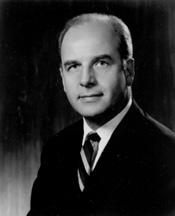
Historical · U.S. Senate · Wisconsin
Gaylord Nelson
Former U.S. Senator from Wisconsin · 1963–1981 · Democratic · Class 3
Gaylord Nelson represented Wisconsin in the United States Senate (1963–1981) for the Democratic party. The page below collects sourced biographical facts, term history, committee roles, and provenance for Nelson.
Bioguide ID: N000033
Key facts
- Full name
- Gaylord Nelson
- State
- Wisconsin
- Party
- Democratic
- Senate class
- Class III
- Senate service
- 1963–1981
- First Senate term
- 1963
- Status
- Left office
- Current term ends
- —
- Born
- 1916
- Bioguide ID
- N000033
- Committee assignments
- —
- Dataset version
- 1.20260602
Biographical narrative
911 words · sourced from the Wikipedia REST extract
Gaylord Nelson was a prominent American politician who served as a United States Senator from Wisconsin. A member of the Democratic Party, he is best known for his significant contributions to environmental legislation and his role in the establishment of Earth Day. His tenure in the Senate spanned from 1963 until 1981, during which he became a leading voice for environmental protection and social justice issues. Nelson's commitment to public service and advocacy for the environment has left a lasting impact on both state and national levels.
Early life and career
Gaylord Nelson was born on June 4, 1916, in Clear Lake, Wisconsin. He grew up in a rural setting, which fostered an early appreciation for nature and the environment. Nelson's educational journey began at the University of Wisconsin-Madison, where he earned a Bachelor of Arts degree in 1939. He continued his studies at the University of Wisconsin Law School, obtaining his law degree in 1942. Following his graduation, he served in the United States Army Air Forces during World War II, where he achieved the rank of captain.
After the war, Nelson returned to Wisconsin and began his political career. He was elected to the Wisconsin State Assembly in 1949, where he served for two years. His early political experiences laid the groundwork for his future endeavors in public service. In 1958, he was elected Governor of Wisconsin, a position he held until 1962. During his governorship, Nelson focused on various issues, including education, health care, and environmental conservation. His time as governor was marked by a commitment to progressive policies that aimed to improve the quality of life for Wisconsin residents.
Nelson's governorship provided him with valuable experience and visibility, which he leveraged when he ran for the U.S. Senate. His successful campaign in 1962 marked the beginning of his long tenure in the Senate, where he would become known for his environmental advocacy and legislative initiatives.
Senate tenure
Gaylord Nelson's Senate career began in 1963, and he quickly established himself as a leading figure in environmental policy. Throughout his three terms in the Senate, he was known for his dedication to addressing pressing environmental issues and advocating for sustainable practices. Nelson's commitment to these causes was evident in his efforts to promote legislation aimed at protecting natural resources and public health.
One of Nelson's most notable achievements was his role in founding Earth Day, which first took place on April 22, 1970. This event mobilized millions of Americans to advocate for environmental protection and raised awareness about the importance of preserving the planet. The success of Earth Day demonstrated the growing public concern for environmental issues and helped to catalyze significant legislative changes at both the state and federal levels.
During his time in the Senate, Nelson served on various committees that allowed him to influence a wide range of policies. He was involved in discussions and debates on issues such as air and water quality, land conservation, and public health. His work contributed to the passage of important environmental legislation, including the National Environmental Policy Act and the Clean Water Act, which aimed to regulate pollution and protect natural resources.
Nelson's tenure in the Senate was also marked by his commitment to social justice and civil rights. He was an advocate for policies that aimed to improve the lives of marginalized communities and promote equality. His efforts in this area reflected a broader commitment to progressive values that characterized his political career.
Nelson was re-elected to the Senate multiple times, serving until January 3, 1981. His decision not to seek re-election in 1980 marked the end of his formal political career. However, his influence continued to be felt in environmental advocacy and public policy long after he left office.
Legislative focus and committees
Throughout his Senate career, Gaylord Nelson was deeply engaged in environmental legislation and served on several key committees that shaped his legislative focus. His work on the Senate Committee on Interior and Insular Affairs was particularly significant, as it allowed him to address issues related to land management, conservation, and natural resource protection. Nelson's expertise in these areas enabled him to advocate effectively for policies that aimed to safeguard the environment for future generations.
In addition to his work on environmental issues, Nelson was involved in various other legislative initiatives. He recognized the interconnectedness of environmental health and public welfare, advocating for policies that addressed both. His commitment to comprehensive environmental reform was evident in his support for legislation that aimed to improve air and water quality, as well as his efforts to promote sustainable land use practices.
Nelson's advocacy extended beyond environmental issues; he also championed civil rights and social justice. He was a proponent of policies that sought to address inequality and improve access to education and healthcare for all Americans. His work in this area reflected a broader commitment to progressive values that characterized his political philosophy.
In summary, Gaylord Nelson's Senate tenure was marked by a strong focus on environmental protection, social justice, and public health. His leadership in founding Earth Day and his involvement in key legislative initiatives demonstrated his commitment to creating a more sustainable and equitable society. Although he concluded his formal political career in 1981, his legacy continues to influence environmental policy and advocacy in the United States. Nelson's contributions to the Senate and his dedication to public service have left an enduring impact on both Wisconsin and the nation as a whole.
Notable legislation
Sponsored and co-sponsored legislation for Gaylord Nelson is pending operator curation. The biographical narrative above carries the same provenance trail until per-bill rows are written.
Sources
- [1]https://en.wikipedia.org/wiki/Gaylord_NelsonWikipedia · retrieved 2026-06-02
Notable quotes
Sourced quotes for Gaylord Nelson are pending operator curation. Narrative-scope provenance remains attached below.
Sources
- [1]https://en.wikipedia.org/wiki/Gaylord_NelsonWikipedia · retrieved 2026-06-02
Key positions
Curated policy positions for Gaylord Nelson are pending operator review. The biographical narrative above carries the same provenance trail until per-topic positions are written.
Sources
- [1]https://en.wikipedia.org/wiki/Gaylord_NelsonWikipedia · retrieved 2026-06-02
Terms served
- 1963–1969U.S. Senate · Term 1 · Democratic · Class III
- 1969–1975U.S. Senate · Term 2 · Democratic · Class III
- 1975–1981U.S. Senate · Term 3 · Democratic · Class III
Sources & provenance
Every attributable claim above carries a per-section [N] marker that resolves to the corresponding URL below. Each entry records the upstream provider, the canonical URL, and the timestamp at which the source was retrieved by the ingest pipeline.
Key facts
- https://bioguide.congress.gov/search/bio/N000033bioguide · retrieved 2026-06-02
- https://www.govtrack.us/congress/members/408123govtrack · retrieved 2026-06-02
Biographical narrative
- https://en.wikipedia.org/wiki/Gaylord_Nelsonwikipedia · retrieved 2026-06-02
Find your senator
Every U.S. state elects two senators. Browse Wisconsin’s delegation, the full former-senator roster, or explore the role and term length.
Related on The Candidate
- Preceded by Alexander WileyEarlier holder of the Wisconsin Class III Senate seat · Republican.Open
- Succeeded by Robert Kasten Jr.Later holder of the Wisconsin Class III Senate seat · Republican.Open
- Angus CameronFormer U.S. Senator from Wisconsin · RepublicanOpen
- Charles DurkeeFormer U.S. Senator from Wisconsin · RepublicanOpen
- Francis DuffyFormer U.S. Senator from Wisconsin · DemocraticOpen
- Democratic PartyFederal candidates and office holders on the Democratic line.Open