
Historical · U.S. Senate · Wisconsin
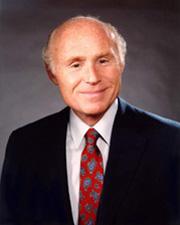
Herb Kohl
Former U.S. Senator from Wisconsin · 1989–2013 · Democratic · Class 1
Herb Kohl represented Wisconsin in the United States Senate (1989–2013) for the Democratic party. The page below collects sourced biographical facts, term history, committee roles, and provenance for Kohl.
Bioguide ID: K000305
Key facts
- Full name
- Herb Kohl
- State
- Wisconsin
- Party
- Democratic
- Senate class
- Class I
- Senate service
- 1989–2013
- First Senate term
- 1989
- Status
- Left office
- Current term ends
- —
- Born
- 1935
- Bioguide ID
- K000305
- Committee assignments
- —
- Dataset version
- 1.20260601-3
Biographical narrative
931 words · sourced from the Wikipedia REST extract
Herb Kohl was a prominent American businessman and politician who served as a U.S. Senator from Wisconsin for 24 years, from 1989 until 2013. A member of the Democratic Party, Kohl was known for his involvement in both business and public service, including his ownership of the Milwaukee Bucks basketball team. His career in politics was marked by significant contributions to various legislative committees and a focus on issues such as healthcare and fiscal policy.
Early life and career
Herbert Hiken Kohl was born on February 7, 1935, in Milwaukee, Wisconsin. He was the son of Mary and Max Kohl, both of whom were Jewish immigrants; his father came from Poland, while his mother hailed from Russia. Raised in a family that valued education and hard work, Kohl attended Washington High School in Milwaukee. He pursued higher education at the University of Wisconsin–Madison, where he earned a Bachelor of Science degree in 1956. Following his undergraduate studies, he furthered his education by obtaining a Master of Business Administration from Harvard Business School in 1958. During his time at the University of Wisconsin, Kohl was involved in campus life as a member of the Pi Lambda Phi fraternity and shared a living space with future Major League Baseball Commissioner Bud Selig.
After completing his education, Kohl served in the United States Army Reserve from 1958 to 1964. Upon leaving the military, he embarked on a career in business, initially working as an investor in real estate and the stock market. He eventually established his own firm, Kohl Investments, to manage his growing portfolio. Kohl also inherited a family business that included a chain of grocery stores and various retail establishments. In 1970, he was appointed president of Kohl's Corporation, the family-owned department store chain, a position he held until the company was sold in 1978.
Kohl's involvement in politics began in the 1970s when he became a significant donor and fundraiser for the Democratic Party in Wisconsin. He played a key role in the election campaigns of Patrick Lucey, who served as Governor of Wisconsin from 1970 to 1977. Following Lucey's second inauguration, Kohl was encouraged to seek the chairmanship of the Wisconsin Democratic Party. He was appointed interim chairman in April 1975 and later elected to the position at the state party convention. Under his leadership, the Democratic Party achieved historic victories in the 1976 elections, securing a supermajority in the state legislature and winning the state's electoral votes for the first time in over a decade. Kohl eventually stepped down from the chairmanship in June 1977, having accomplished significant milestones during his tenure.
Senate tenure
Kohl's political career advanced significantly when he decided to run for the U.S. Senate seat vacated by incumbent William Proxmire, who chose not to seek re-election in 1988. Kohl entered the Democratic primary, facing opponents such as Tony Earl, Ed Garvey, and Doug La Follette. He secured the party's nomination and subsequently won the general election against Republican candidate Susan Engeleiter. Kohl's Senate career began in January 1989, and he was re-elected three times, in 1994, 2000, and 2006.
Throughout his time in the Senate, Kohl was recognized for his commitment to public service and his engagement with constituents. In May 2011, he announced that he would not seek re-election in 2012, expressing a belief in the importance of term limits and the idea that the office belonged to the people of Wisconsin rather than to him personally.
Legislative focus and committees
During his Senate tenure, Kohl served on several key committees that shaped his legislative focus. He was a member of the Committee on Appropriations, where he chaired the Subcommittee on Agriculture, Rural Development, Food and Drug Administration, and Related Agencies. His involvement in this committee allowed him to influence funding decisions related to agriculture and rural development, which are critical issues for Wisconsin.
Kohl also served on various other subcommittees within the Appropriations Committee, including those focused on defense, labor, health and human services, and transportation. His work on these subcommittees highlighted his commitment to addressing a wide range of issues affecting his constituents and the nation.
In addition to his role on the Appropriations Committee, Kohl was a member of the Committee on Banking, Housing, and Urban Affairs, where he participated in subcommittees that dealt with housing, financial institutions, and international trade. His work in this area underscored his interest in economic issues and the importance of financial stability for American families.
Kohl also held the position of Vice Chairman on the Committee on the Judiciary, where he chaired the Subcommittee on Antitrust, Competition Policy, and Consumer Rights. This role allowed him to advocate for consumer protections and fair competition in the marketplace. He was also involved in subcommittees addressing crime, drugs, and terrorism, demonstrating his engagement with a broad spectrum of legal and societal issues.
Throughout his Senate career, Kohl was characterized as a populist-leaning liberal. He supported various initiatives, including President Barack Obama's health reform legislation, and voted in favor of the Affordable Care Act. His legislative record reflects a commitment to addressing healthcare access and affordability, as well as a focus on fiscal policies that aimed to balance the needs of consumers with the realities of economic governance.
In summary, Herb Kohl's career as a U.S. Senator was marked by a dedication to public service, a focus on key legislative issues, and active participation in various committees. His background in business and philanthropy, combined with his political experience, allowed him to navigate the complexities of governance and advocate for the interests of his constituents in Wisconsin.
Notable legislation
Sponsored and co-sponsored legislation for Herb Kohl is pending operator curation. The biographical narrative above carries the same provenance trail until per-bill rows are written.
Sources
- [1]https://en.wikipedia.org/wiki/Herb_KohlWikipedia · retrieved 2026-06-01
Notable quotes
Sourced quotes for Herb Kohl are pending operator curation. Narrative-scope provenance remains attached below.
Sources
- [1]https://en.wikipedia.org/wiki/Herb_KohlWikipedia · retrieved 2026-06-01
Key positions
Curated policy positions for Herb Kohl are pending operator review. The biographical narrative above carries the same provenance trail until per-topic positions are written.
Sources
- [1]https://en.wikipedia.org/wiki/Herb_KohlWikipedia · retrieved 2026-06-01
Terms served
- 1989–1995U.S. Senate · Term 1 · Democratic · Class I
- 1995–2001U.S. Senate · Term 2 · Democratic · Class I
- 2001–2007U.S. Senate · Term 3 · Democratic · Class I
- 2007–2013U.S. Senate · Term 4 · Democratic · Class I
Sources & provenance
Every attributable claim above carries a per-section [N] marker that resolves to the corresponding URL below. Each entry records the upstream provider, the canonical URL, and the timestamp at which the source was retrieved by the ingest pipeline.
Key facts
- https://bioguide.congress.gov/search/bio/K000305bioguide · retrieved 2026-06-01
- http://kohl.senate.gov/senate.gov · retrieved 2026-06-01
Biographical narrative
- https://en.wikipedia.org/wiki/Herb_Kohlwikipedia · retrieved 2026-06-01
Find your senator
Every U.S. state elects two senators. Browse Wisconsin’s delegation, the full former-senator roster, or explore the role and term length.
Related on The Candidate
- Preceded by William ProxmireEarlier holder of the Wisconsin Class I Senate seat · Democratic.Open
- Alexander WileyFormer U.S. Senator from Wisconsin · RepublicanOpen
- Angus CameronFormer U.S. Senator from Wisconsin · RepublicanOpen
- Charles DurkeeFormer U.S. Senator from Wisconsin · RepublicanOpen
- Francis DuffyFormer U.S. Senator from Wisconsin · DemocraticOpen
- Democratic PartyFederal candidates and office holders on the Democratic line.Open