
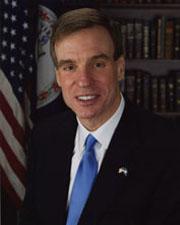
Serving · U.S. Senate · Virginia
Mark Warner
U.S. Senator from Virginia · 2009–present · Democratic · Class 2
Mark Warner represents Virginia in the United States Senate (2009–present) for the Democratic party. The page below collects sourced biographical facts, term history, committee roles, and provenance for Warner.
Bioguide ID: W000805
Key facts
- Full name
- Mark Warner
- State
- Virginia
- Party
- Democratic
- Senate class
- Class II
- Senate service
- 2009–present
- First Senate term
- 2009
- Status
- Currently serving
- Current term ends
- 2027
- Born
- 1954
- Bioguide ID
- W000805
- Committee assignments
- 5
- Dataset version
- 1.20260601-4
Biographical narrative
919 words · sourced from the Wikipedia REST extract
Mark R. Warner is an American businessman and politician currently serving as the senior United States senator from Virginia, a position he has held since 2009. A member of the Democratic Party, Warner previously served as the 69th governor of Virginia from 2002 to 2006. He is recognized for his leadership roles in the Senate, where he serves as the vice chair of the Senate Democratic Caucus and the Senate Intelligence Committee. Warner's political career has been marked by a focus on various issues, including technology, healthcare, and transportation.
Early life and career
Mark R. Warner was born on December 15, 1954, in Indianapolis, Indiana. He is the son of Marjorie and Robert F. Warner and has a younger sister named Lisa. Warner spent his formative years in Illinois and later moved to Vernon, Connecticut, where he graduated from Rockville High School. His interest in politics was sparked by his eighth-grade social studies teacher, who encouraged him to engage in social and political change during a pivotal year in American history. Warner's leadership skills were evident early on, as he served as class president and initiated a weekly basketball game tradition at his home.
Warner pursued higher education at George Washington University, where he earned a Bachelor of Arts degree in political science in 1977. He graduated with a perfect 4.0 GPA and was inducted into Phi Beta Kappa, graduating as valedictorian. Warner was the first member of his family to graduate from college. His involvement in politics began during his time at George Washington University, where he worked on Capitol Hill to help finance his education. He served as the youth coordinator for Ella Grasso's successful gubernatorial campaign in Connecticut and later worked in the office of Representative Chris Dodd, eventually becoming Dodd's campaign manager during his freshman year of law school.
Warner graduated from Harvard Law School in 1980, where he also contributed to the university by coaching the first intramural women's basketball team. After completing his education, he worked for the Democratic Party in Atlanta from 1980 to 1982 but never practiced law. Warner's early career included founding two businesses that did not succeed before he transitioned into the telecommunications sector. He became a general contractor for cellular businesses and investors, eventually founding Columbia Capital, a venture capital firm that invested in numerous technology companies, including Nextel. He co-founded Capital Cellular Corporation in 1989, leveraging his expertise in federal telecommunications law to navigate the cellular spectrum market.
Senate tenure
Mark Warner's political career took a significant turn when he was elected to the U.S. Senate in 2008. He previously attempted to secure a Senate seat in 1996 but was unsuccessful against incumbent Republican John Warner. However, his political profile grew, and he was elected governor of Virginia in 2001, where he served until 2006. His gubernatorial tenure helped solidify his political base, particularly in rural Virginia.
Warner's first Senate term began in January 2009, and he has since been re-elected twice, in 2014 and 2020. He became Virginia's senior senator in 2013 following the retirement of Senator Jim Webb. Throughout his time in the Senate, Warner has been involved in various legislative initiatives and has played a critical role in shaping policy in areas such as technology, healthcare, and national security.
In addition to his legislative responsibilities, Warner has served in prominent leadership roles within the Senate. He is the vice chair of the Senate Democratic Caucus, which positions him as a key figure in Democratic leadership and strategy. Additionally, as vice chair of the Senate Intelligence Committee, he has been involved in overseeing intelligence operations and addressing national security issues, particularly in the context of cybersecurity and foreign interference in U.S. elections.
Legislative focus and committees
Warner's legislative focus reflects his background in business and technology, as well as his commitment to addressing pressing national issues. He has been an advocate for policies that support innovation, economic growth, and job creation, particularly in the technology sector. His experience in venture capital and telecommunications has informed his approach to legislation related to technology and infrastructure.
In the Senate, Warner has been active in promoting healthcare reform, emphasizing the need for accessible and affordable healthcare for all Americans. He has worked on initiatives aimed at improving healthcare delivery and reducing costs, particularly in the context of the Affordable Care Act and subsequent healthcare legislation.
Transportation has also been a significant area of focus for Warner. He has advocated for increased funding for transportation infrastructure, recognizing its importance for economic development and public safety. His efforts have included working with both Democratic and Republican legislators to address transportation challenges in Virginia and beyond.
Warner's involvement in the Senate Intelligence Committee has positioned him at the forefront of discussions on national security and intelligence oversight. He has been vocal about the need for robust cybersecurity measures to protect against threats from foreign adversaries and has worked to enhance the nation's capacity to respond to emerging security challenges.
Overall, Warner's tenure in the Senate has been characterized by a commitment to bipartisan cooperation and a focus on issues that impact the lives of Virginians and Americans at large. His background in business, combined with his political experience, has shaped his approach to governance and policy-making, making him a prominent figure in contemporary American politics. As he continues to serve in the Senate, Warner's influence on legislative matters and his leadership within the Democratic Party remain significant. His current term is set to conclude on January 3, 2027.
Committees & roles
- Senate Select Committee on IntelligenceChair · since 2025
- Senate Committee on Banking, Housing, and Urban AffairsMember · since 2025
- Senate Committee on FinanceMember · since 2025
- Senate Committee on Rules and AdministrationMember · since 2025
- Senate Committee on the BudgetMember · since 2025
Notable legislation
Sponsored and co-sponsored legislation for Mark Warner is pending operator curation. The biographical narrative above carries the same provenance trail until per-bill rows are written.
Sources
- [1]https://en.wikipedia.org/wiki/Mark_WarnerWikipedia · retrieved 2026-06-01
Notable quotes
Sourced quotes for Mark Warner are pending operator curation. Narrative-scope provenance remains attached below.
Sources
- [1]https://en.wikipedia.org/wiki/Mark_WarnerWikipedia · retrieved 2026-06-01
Key positions
Curated policy positions for Mark Warner are pending operator review. The biographical narrative above carries the same provenance trail until per-topic positions are written.
Sources
- [1]https://en.wikipedia.org/wiki/Mark_WarnerWikipedia · retrieved 2026-06-01
Terms served
- 2009–2015U.S. Senate · Term 1 · Democratic · Class II
- 2015–2021U.S. Senate · Term 2 · Democratic · Class II
- 2021–2027U.S. Senate · Term 3 · Democratic · Class II
Sources & provenance
Every attributable claim above carries a per-section [N] marker that resolves to the corresponding URL below. Each entry records the upstream provider, the canonical URL, and the timestamp at which the source was retrieved by the ingest pipeline.
Key facts
- https://bioguide.congress.gov/search/bio/W000805bioguide · retrieved 2026-06-01
- https://www.warner.senate.govsenate.gov · retrieved 2026-06-01
Biographical narrative
- https://en.wikipedia.org/wiki/Mark_Warnerwikipedia · retrieved 2026-06-01
Find your senator
Every U.S. state elects two senators. Browse Virginia’s delegation, the full currently-serving-senator roster, or explore the role and term length.
Related on The Candidate
- Tim KaineServing U.S. Senator from Virginia · DemocraticOpen
- Democratic PartyFederal candidates and office holders on the Democratic line.Open
- Senators from VirginiaEvery currently-serving U.S. Senator who has represented Virginia.Open
- All serving senatorsEvery individual currently serving in the United States Senate, grouped by state.Open
- U.S. SenateRole, term length, qualifications, and the full Senate candidate directory.Open