
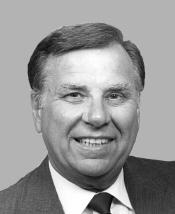
Historical · U.S. House · Alabama · District 1
H. Callahan
Former U.S. Representative · Alabama District 1 · 1985–2003 · Republican
H. Callahan represented Alabama's District 1 in the United States House of Representatives (1985–2003) for the Republican party. The page below collects sourced biographical facts, term history, committee roles, and provenance for Callahan.
Bioguide ID: C000052
Key facts
- Full name
- H. Callahan
- State
- Alabama
- District
- District 1
- Party
- Republican
- House service
- 1985–2003
- First House term
- 1985
- Status
- Left office
- Current term ends
- —
- Born
- 1932
- Bioguide ID
- C000052
- Committee assignments
- —
- Dataset version
- 1.20260605
Biographical narrative
943 words · sourced from the Wikipedia REST extract
Herbert Leon "Sonny" Callahan was a prominent American businessman and politician who served as a U.S. Representative for Alabama's 1st congressional district from 1985 until 2003. Initially a member of the Democratic Party, Callahan transitioned to the Republican Party after an unsuccessful bid for the lieutenant governorship of Alabama in 1982. His political career was marked by nine consecutive terms in the U.S. House of Representatives, during which he established himself as a significant figure in Alabama politics and a key player in various legislative matters.
Early life and career
Sonny Callahan was born on September 11, 1932, in Mobile, Alabama, into a large Irish Catholic family, where he was the youngest of nine siblings. He attended public schools in Mobile and later pursued higher education at the University of Alabama's Mobile campus. However, he left college before completing his degree to serve in the United States Navy from 1952 to 1954. Following his military service, Callahan returned to Mobile, where he began a career in the trucking and warehousing sectors.
Callahan's entry into politics began in the early 1970s when he joined the Democratic Party. He was elected to the Alabama House of Representatives in 1970, where he served until 1978. During his tenure in the state legislature, he was known for his active involvement in local issues and governance. In 1978, he successfully ran for the Alabama Senate, representing the 34th district. His time in the state legislature was characterized by a focus on regional concerns and a commitment to his constituents.
Despite his successes at the state level, Callahan faced a setback in 1982 when he lost a Democratic primary for the lieutenant governorship of Alabama. This defeat coincided with a broader trend of Southern Democrats shifting to the Republican Party during this period. Recognizing the changing political landscape, Callahan made the decision to switch parties and ran as a Republican for the U.S. House of Representatives in 1984. His candidacy was bolstered by the support of both parties, as he was seen as a strong candidate to succeed the retiring ten-term Republican congressman Jack Edwards.
House tenure
Callahan's first term in the U.S. House of Representatives began in 1985, following a competitive election in which he won by a narrow margin, largely due to strong support in Baldwin County, a Republican stronghold. His victory was also aided by the popularity of President Ronald Reagan, who was running for re-election that year. After his initial election, Callahan enjoyed a relatively unchallenged political career, facing little opposition in subsequent elections. He was unopposed in several re-election bids and consistently defeated underfunded Democratic challengers in the years that followed.
Throughout his nine terms in Congress, Callahan's electoral success was notable, particularly given the political dynamics of the district. The 1st congressional district of Alabama became a Republican stronghold during his tenure, with Democrats struggling to regain a foothold. Callahan's ability to maintain his seat was indicative of his alignment with the Republican Party's values and his effectiveness as a representative of his constituents.
During his time in the House, Callahan served on various committees and held leadership positions, including chairmanship of the House Appropriations Subcommittee on Foreign Operations, Export Financing, and Related Programs. His leadership role came after the Republican Party gained control of Congress in 1994. Callahan's tenure was marked by a cautious approach to foreign aid, reflecting his skepticism about its effectiveness. He later became the chairman of the Energy and Water Development subcommittee in 2001, further solidifying his influence in legislative matters.
Callahan's congressional career was not without controversy. He voted against the Abandoned Shipwrecks Act of 1987, which aimed to protect cultural and historical shipwrecks. Despite his opposition, the bill was signed into law by President Reagan. Additionally, Callahan was involved in a notable incident in 1998 when it was revealed that he had spoken with President Bill Clinton during a significant moment in the latter's presidency.
Callahan chose not to seek re-election in 2003, concluding his nearly two-decade-long service in the House. His departure from Congress was marked by the election of his chief of staff, Jo Bonner, who succeeded him with considerable support.
Legislative focus and committees
Throughout his congressional tenure, Sonny Callahan focused on various legislative issues, particularly those affecting his district and the broader interests of Alabama. His work on the House Appropriations Committee allowed him to influence funding decisions and policy directions related to foreign operations and energy development. Callahan's skepticism toward foreign aid was a defining feature of his legislative approach, as he often questioned the efficacy of such programs.
In addition to his committee work, Callahan was involved in several key legislative initiatives and discussions during his time in office. His leadership roles provided him with a platform to advocate for the interests of his constituents, particularly in areas related to economic development and infrastructure. He was known for his pragmatic approach to governance, often seeking to balance the needs of his district with the broader goals of the Republican Party.
After retiring from Congress, Callahan established his own lobbying firm, Sonny Callahan and Associates, and continued to engage in political activities, including serving as campaign chairman for various Republican candidates. His post-congressional career allowed him to leverage his experience and connections in Washington, D.C., to influence policy and advocate for issues important to him and his clients.
Sonny Callahan passed away on June 25, 2021, at the age of 88, leaving behind a legacy as a significant figure in Alabama politics and a dedicated public servant. His career reflects the evolving political landscape of the South and the impact of individual leaders on local and national governance.
Notable legislation
Sponsored and co-sponsored legislation for H. Callahan is pending operator curation. The biographical narrative above carries the same provenance trail until per-bill rows are written.
Sources
- [1]https://en.wikipedia.org/wiki/Sonny_CallahanWikipedia · retrieved 2026-06-05
Notable quotes
Sourced quotes for H. Callahan are pending operator curation. Narrative-scope provenance remains attached below.
Sources
- [1]https://en.wikipedia.org/wiki/Sonny_CallahanWikipedia · retrieved 2026-06-05
Key positions
Curated policy positions for H. Callahan are pending operator review. The biographical narrative above carries the same provenance trail until per-topic positions are written.
Sources
- [1]https://en.wikipedia.org/wiki/Sonny_CallahanWikipedia · retrieved 2026-06-05
Terms served
- 1985–1987U.S. House · Term 1 · Republican
- 1987–1989U.S. House · Term 2 · Republican
- 1989–1991U.S. House · Term 3 · Republican
- 1991–1993U.S. House · Term 4 · Republican
- 1993–1995U.S. House · Term 5 · Republican
- 1995–1997U.S. House · Term 6 · Republican
- 1997–1999U.S. House · Term 7 · Republican
- 1999–2001U.S. House · Term 8 · Republican
- 2001–2003U.S. House · Term 9 · Republican
Sources & provenance
Every attributable claim above carries a per-section [N] marker that resolves to the corresponding URL below. Each entry records the upstream provider, the canonical URL, and the timestamp at which the source was retrieved by the ingest pipeline.
Key facts
- https://bioguide.congress.gov/search/bio/C000052bioguide · retrieved 2026-06-05
- https://www.govtrack.us/congress/members/400500govtrack · retrieved 2026-06-05
Biographical narrative
- https://en.wikipedia.org/wiki/Sonny_Callahanwikipedia · retrieved 2026-06-05
Find your representative
Every U.S. state elects representatives by district. Browse Alabama’s delegation, the full former-representative roster, or explore the role and term length.
Related on The Candidate
- Preceded by Jack EdwardsEarlier holder of the Alabama District 1 House seat · Republican.Open
- Succeeded by Jo BonnerLater holder of the Alabama District 1 House seat · Republican.Open
- Alfred BuckFormer U.S. Representative · Alabama District 1 · RepublicanOpen
- Benjamin TurnerFormer U.S. Representative · Alabama District 1 · RepublicanOpen
- Bradley ByrneFormer U.S. Representative · Alabama District 1 · RepublicanOpen
- Edmund DarganFormer U.S. Representative · Alabama District 1 · DemocraticOpen