
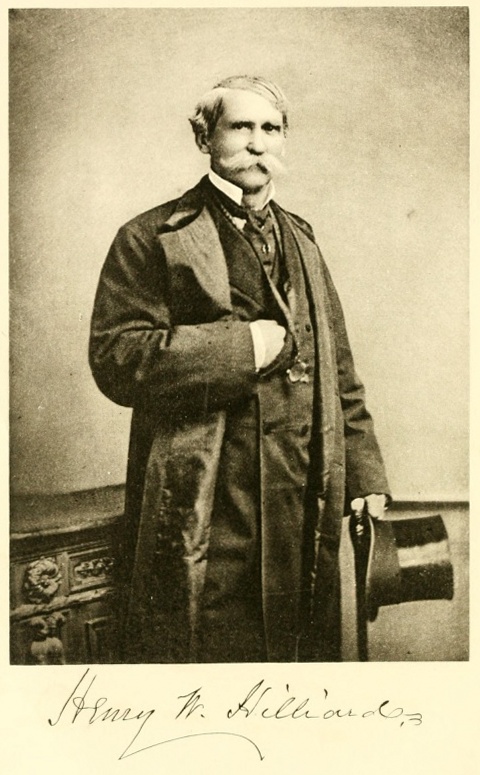
Historical · U.S. House · Alabama · District 2
Henry Hilliard
Former U.S. Representative · Alabama District 2 · 1845–1851 · Whig
Henry Hilliard represented Alabama's District 2 in the United States House of Representatives (1845–1851) for the Whig party. The page below collects sourced biographical facts, term history, committee roles, and provenance for Hilliard.
Bioguide ID: H000622
Key facts
- Full name
- Henry Hilliard
- State
- Alabama
- District
- District 2
- Party
- Whig
- House service
- 1845–1851
- First House term
- 1845
- Status
- Left office
- Current term ends
- —
- Born
- 1808
- Bioguide ID
- H000622
- Committee assignments
- —
- Dataset version
- 1.20260606
Biographical narrative
888 words · sourced from the Wikipedia REST extract
Henry Hilliard was a prominent American politician and lawyer who served as a U.S. Representative for Alabama's 2nd congressional district during the mid-19th century. A member of the Whig Party, Hilliard's congressional tenure spanned three terms from 1845 to 1851. In addition to his political career, he served as a colonel in the Confederate States Army during the American Civil War and later became known for his advocacy of abolitionism in Brazil. His life and career reflect the complexities of American politics during a tumultuous period in the nation's history.
Early life and career
Henry Washington Hilliard was born on August 4, 1808, in Fayetteville, North Carolina. He pursued higher education at South Carolina College, which is now recognized as the University of South Carolina, graduating in 1826. During his time at the college, Hilliard was actively involved in the Euphradian Society, a literary and debate organization. After completing his studies, he read law under the tutelage of William C. Preston, a prominent figure in South Carolina politics. Hilliard subsequently relocated to Athens, Georgia, where he was admitted to the bar in 1829.
Hilliard began his professional career in academia, serving as a Professor of English Literature at the University of Alabama from 1831 until 1834. He resigned from this position to focus on practicing law in Montgomery, Alabama. His political career began in earnest when he was elected to the Alabama House of Representatives, serving from 1836 to 1838. Hilliard was also active in national politics, participating as a delegate at the 1839 Whig National Convention held in Harrisburg, Pennsylvania. He ran as a Whig presidential elector in the 1840 election and made an unsuccessful bid for a seat in the 27th United States Congress.
In 1842, Hilliard was appointed as chargé d'affaires to Belgium, a diplomatic role he held until 1844. This experience in international relations would later influence his political perspectives and actions.
House tenure
Hilliard's congressional career began when he was elected as a member of the Whig Party to the 29th Congress, taking office on March 4, 1845. He was subsequently re-elected to the 30th and 31st Congresses, serving until March 3, 1851. During his time in the House of Representatives, Hilliard was involved in various legislative discussions and initiatives that were significant to his constituents and the nation at large. His tenure occurred during a period marked by intense political debates over issues such as states' rights, slavery, and sectionalism.
Despite his active role in Congress, Hilliard chose not to seek renomination in 1850, concluding his time in the House. Following his departure from Congress, he aligned himself with the Union Party, which emerged in support of the Compromise of 1850, a series of legislative measures aimed at easing tensions between free and slave states.
Hilliard's political activities did not cease with his congressional service. In 1856, he served as a presidential elector on the American ticket, reflecting his continued engagement in the political landscape of the time.
Legislative focus and committees
During his time in the House of Representatives, Hilliard's legislative focus was shaped by the prevailing issues of his era. As a member of the Whig Party, he was part of a political faction that sought to balance the interests of both Northern and Southern states, often navigating the complex dynamics of sectional tensions. His legislative work included discussions on economic policies, infrastructure development, and the contentious issue of slavery, which was a central topic in American politics during the 1840s and 1850s.
While specific details about the committees Hilliard served on during his congressional tenure are not extensively documented, it can be inferred that his legal background and experience in state politics would have informed his contributions to legislative discussions. His role as a former state representative and his diplomatic experience likely provided him with a unique perspective on the issues facing the nation.
Hilliard's political career took a significant turn during the American Civil War. He was appointed by Confederate President Jefferson Davis as the Confederate commissioner to Tennessee in 1861, and he served as a colonel in the Confederate Army. His military service included the organization of Hilliard's Legion, which was formed in Montgomery, Alabama, and participated in various military engagements. However, he resigned from the army in December 1862 to address personal matters and due to his lack of promotion to a higher rank.
After the Civil War, Hilliard returned to his legal practice, initially in Augusta, Georgia, before moving to Atlanta. In 1876, he attempted to re-enter politics as a Republican candidate for the 45th Congress but was unsuccessful. His later career included a notable appointment as Envoy Extraordinary and Minister Plenipotentiary to Brazil from 1877 to 1881, where he worked alongside prominent figures to advocate for abolitionist causes.
Henry Hilliard passed away on December 17, 1892, in Atlanta, Georgia. He was interred in Oakwood Cemetery in Montgomery, Alabama. His contributions to American politics, both as a legislator and a military officer, as well as his later advocacy for abolitionism in Brazil, mark him as a significant figure in the historical narrative of the United States during a period of profound change. In recognition of his legal contributions, he was inducted into the Alabama Lawyers Hall of Fame in 2022, reflecting his enduring legacy in the field of law and public service.
Notable legislation
Sponsored and co-sponsored legislation for Henry Hilliard is pending operator curation. The biographical narrative above carries the same provenance trail until per-bill rows are written.
Sources
- [1]https://en.wikipedia.org/wiki/Henry_W._HilliardWikipedia · retrieved 2026-06-06
Notable quotes
Sourced quotes for Henry Hilliard are pending operator curation. Narrative-scope provenance remains attached below.
Sources
- [1]https://en.wikipedia.org/wiki/Henry_W._HilliardWikipedia · retrieved 2026-06-06
Key positions
Curated policy positions for Henry Hilliard are pending operator review. The biographical narrative above carries the same provenance trail until per-topic positions are written.
Sources
- [1]https://en.wikipedia.org/wiki/Henry_W._HilliardWikipedia · retrieved 2026-06-06
Terms served
- 1845–1847U.S. House · Term 1 · Whig
- 1847–1849U.S. House · Term 2 · Whig
- 1849–1851U.S. House · Term 3 · Whig
Sources & provenance
Every attributable claim above carries a per-section [N] marker that resolves to the corresponding URL below. Each entry records the upstream provider, the canonical URL, and the timestamp at which the source was retrieved by the ingest pipeline.
Key facts
- https://bioguide.congress.gov/search/bio/H000622bioguide · retrieved 2026-06-06
- https://www.govtrack.us/congress/members/405480govtrack · retrieved 2026-06-06
Biographical narrative
- https://en.wikipedia.org/wiki/Henry_W._Hilliardwikipedia · retrieved 2026-06-06
Find your representative
Every U.S. state elects representatives by district. Browse Alabama’s delegation, the full former-representative roster, or explore the role and term length.
Related on The Candidate
- Preceded by James BelserEarlier holder of the Alabama District 2 House seat · Democratic.Open
- Succeeded by James AbercrombieLater holder of the Alabama District 2 House seat · Whig.Open
- Alfred BuckFormer U.S. Representative · Alabama District 1 · RepublicanOpen
- Benjamin TurnerFormer U.S. Representative · Alabama District 1 · RepublicanOpen
- Bradley ByrneFormer U.S. Representative · Alabama District 1 · RepublicanOpen
- Edmund DarganFormer U.S. Representative · Alabama District 1 · DemocraticOpen