
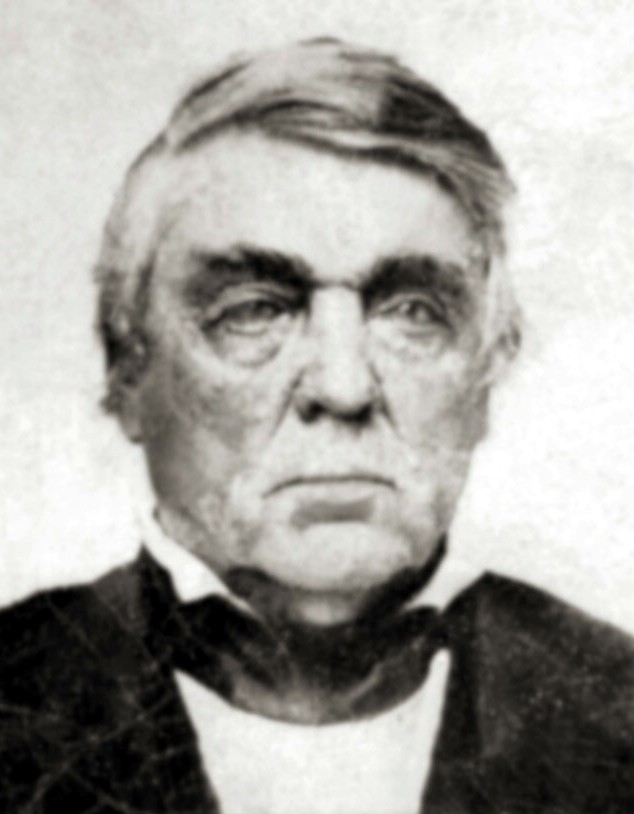
Historical · U.S. House · Alabama · District 2
James Abercrombie
Former U.S. Representative · Alabama District 2 · 1851–1855 · Whig
James Abercrombie represented Alabama's District 2 in the United States House of Representatives (1851–1855) for the Whig party. The page below collects sourced biographical facts, term history, committee roles, and provenance for Abercrombie.
Bioguide ID: A000012
Key facts
- Full name
- James Abercrombie
- State
- Alabama
- District
- District 2
- Party
- Whig
- House service
- 1851–1855
- First House term
- 1851
- Status
- Left office
- Current term ends
- —
- Born
- —
- Bioguide ID
- A000012
- Committee assignments
- —
- Dataset version
- 1.20260606
Biographical narrative
878 words · sourced from the Wikipedia REST extract
James Abercrombie was a notable American politician who served as a U.S. Representative for Alabama's Second Congressional District during the early 1850s. A member of the Whig Party, Abercrombie's political career spanned various levels of government, including service in the Alabama House of Representatives and the Alabama Senate. His tenure in the U.S. Congress lasted from 1851 until 1855, marking a significant period in his political life before he transitioned to other endeavors.
Early life and career
James Abercrombie was born on February 18, 1792, in Hancock County, Georgia, to Charles Abercrombie and Edwina Dicey Malinda Booth Abercrombie. His father was a veteran of the American Revolutionary War and later became an influential figure in Georgia politics. Growing up in a politically active family, Abercrombie received a solid education that would serve him well in his future endeavors.
During the War of 1812, Abercrombie served as a corporal in Major F. Freeman's Squadron of Georgia Cavalry, contributing to the military efforts of the time. Following the war, he relocated to Alabama, initially settling in Monroe County, which is now part of Dallas County. In 1819, he moved to Montgomery County, Alabama, where he would establish his political and personal life. In 1816, he married Evelina Elizabeth Ross, and together they had a family that included four sons and six daughters, among them James, Sarah, Jane, and Clara.
Abercrombie's interest in politics began to take shape as he became involved in local governance. He owned and managed several large plantations, where he was also a slave owner, reflecting the economic practices of the time. His political career commenced with his election to the Alabama House of Representatives in the early 1820s, where he served multiple terms, including in 1822, 1824, and again in 1838. During this period, he also held the rank of captain in the Alabama Militia, demonstrating his commitment to both civic duty and military service. Notably, he was present during the visit of the Marquis de la Fayette to Fort Mitchell, an event that underscored his engagement in state affairs.
House tenure
Abercrombie's political career advanced significantly when he became a member of the Whig Party, a political group that emerged in the 1830s and was characterized by its opposition to the policies of President Andrew Jackson. He served in the Alabama Senate from 1847 to 1850, further solidifying his political influence in the state. His involvement in state politics culminated in his participation as a delegate to the first Nashville Convention in 1850. This convention aimed to unite pro-slavery Southerners in discussions about potential secession from the Union. Abercrombie, while a supporter of slavery, identified himself as a Unionist, reflecting the complex political landscape of the time.
In 1851, Abercrombie was elected to the United States House of Representatives, representing Alabama's Second Congressional District. His congressional tenure began on March 4, 1851, and concluded on March 3, 1855. During his time in the House, Abercrombie participated in the legislative processes of the era, contributing to discussions and decisions that would shape the future of the nation. His service coincided with a tumultuous period in American history, marked by rising tensions over issues such as slavery and states' rights.
Abercrombie's two terms in the House were characterized by the challenges and debates that defined the pre-Civil War era. As a member of the Whig Party, he navigated the shifting political landscape, which was increasingly polarized over the issue of slavery. His role in Congress placed him at the center of critical discussions that would ultimately lead to significant national conflict.
Legislative focus and committees
While specific details regarding Abercrombie's legislative initiatives and committee assignments during his time in Congress are not extensively documented, it is known that he was active in the political discourse of his time. As a representative from a Southern state, he likely engaged in discussions surrounding issues pertinent to Alabama and the broader Southern interests, particularly those related to agriculture, economic development, and the institution of slavery.
Abercrombie's political alignment with the Whig Party indicated his support for a range of policies that aimed to promote economic growth and infrastructure development. The Whig Party was known for advocating for internal improvements, such as transportation and communication systems, which were crucial for the expansion of the economy in the Southern states. His legislative focus would have reflected these priorities, although specific bills or measures he sponsored or supported are not detailed in the available records.
After concluding his service in the House, Abercrombie retired from active politics in 1856. He relocated to Pensacola, Florida, where he took on the role of a brick contractor for the U.S. government. Despite stepping back from formal political roles, he remained engaged in Alabama politics, assisting in campaigns and supporting political efforts from a distance.
James Abercrombie passed away on July 2, 1861, leaving behind a legacy intertwined with the political developments of his time. He is interred at Linwood Cemetery in Columbus, Georgia, where his contributions to American politics, particularly in Alabama, are remembered as part of the complex history of the antebellum United States. His life and career reflect the intricate dynamics of a nation on the brink of significant change, marked by the tensions of sectionalism and the impending Civil War.
Notable legislation
Sponsored and co-sponsored legislation for James Abercrombie is pending operator curation. The biographical narrative above carries the same provenance trail until per-bill rows are written.
Sources
- [1]https://en.wikipedia.org/wiki/James_Abercrombie_(congressman)Wikipedia · retrieved 2026-06-06
Notable quotes
Sourced quotes for James Abercrombie are pending operator curation. Narrative-scope provenance remains attached below.
Sources
- [1]https://en.wikipedia.org/wiki/James_Abercrombie_(congressman)Wikipedia · retrieved 2026-06-06
Key positions
Curated policy positions for James Abercrombie are pending operator review. The biographical narrative above carries the same provenance trail until per-topic positions are written.
Sources
- [1]https://en.wikipedia.org/wiki/James_Abercrombie_(congressman)Wikipedia · retrieved 2026-06-06
Terms served
- 1851–1853U.S. House · Term 1 · Whig
- 1853–1855U.S. House · Term 2 · Whig
Sources & provenance
Every attributable claim above carries a per-section [N] marker that resolves to the corresponding URL below. Each entry records the upstream provider, the canonical URL, and the timestamp at which the source was retrieved by the ingest pipeline.
Key facts
- https://bioguide.congress.gov/search/bio/A000012bioguide · retrieved 2026-06-06
- https://www.govtrack.us/congress/members/400675govtrack · retrieved 2026-06-06
Biographical narrative
- https://en.wikipedia.org/wiki/James_Abercrombie_(congressman)wikipedia · retrieved 2026-06-06
Find your representative
Every U.S. state elects representatives by district. Browse Alabama’s delegation, the full former-representative roster, or explore the role and term length.
Related on The Candidate
- Preceded by Henry HilliardEarlier holder of the Alabama District 2 House seat · Whig.Open
- Succeeded by Eli ShorterLater holder of the Alabama District 2 House seat · Democratic.Open
- Alfred BuckFormer U.S. Representative · Alabama District 1 · RepublicanOpen
- Benjamin TurnerFormer U.S. Representative · Alabama District 1 · RepublicanOpen
- Bradley ByrneFormer U.S. Representative · Alabama District 1 · RepublicanOpen
- Edmund DarganFormer U.S. Representative · Alabama District 1 · DemocraticOpen