
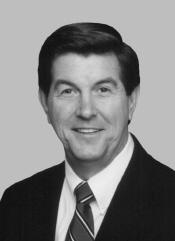
Historical · U.S. House · Alabama · District 3
Bob Riley
Former U.S. Representative · Alabama District 3 · 1997–2003 · Republican
Bob Riley represented Alabama's District 3 in the United States House of Representatives (1997–2003) for the Republican party. The page below collects sourced biographical facts, term history, committee roles, and provenance for Riley.
Bioguide ID: R000258
Key facts
- Full name
- Bob Riley
- State
- Alabama
- District
- District 3
- Party
- Republican
- House service
- 1997–2003
- First House term
- 1997
- Status
- Left office
- Current term ends
- —
- Born
- 1944
- Bioguide ID
- R000258
- Committee assignments
- —
- Dataset version
- 1.20260605
Biographical narrative
897 words · sourced from the Wikipedia REST extract
Robert Renfroe Riley, born on October 3, 1944, is a retired American politician and businessman who served as a U.S. Representative for Alabama's 3rd congressional district from 1997 to 2003. A member of the Republican Party, he later became the 52nd governor of Alabama, holding office from 2003 to 2011. His political career is marked by his commitment to term limits and his focus on various legislative issues during his time in Congress, as well as his subsequent gubernatorial tenure.
Early life and career
Riley was born in Ashland, Alabama, a small town located in Clay County. His family has a long history in the region, having been engaged in ranching and farming for six generations. This rural upbringing likely influenced his later political perspectives and priorities. He pursued higher education at the University of Alabama, where he earned a degree in business administration. During his time at the university, he was a member of the Phi Kappa Sigma fraternity, an organization that fosters brotherhood and leadership among its members.
Before entering politics, Riley built a diverse career in business. He owned and operated a car dealership and a trucking company, which provided him with insights into the challenges faced by small business owners. Additionally, he worked as a cattleman and engaged in commercial and residential real estate, experiences that contributed to his understanding of economic and community development issues. This background in business and entrepreneurship would later inform his legislative priorities and approach to governance.
Riley's entry into politics came with his election to the U.S. House of Representatives in 1996. His decision to run for office marked a significant shift from his previous career, as it was his first attempt at elected office. He successfully defeated his Democratic opponent, State Senator T.D. "Ted" Little, as well as Libertarian candidate John Sophocleus. His victory was notable, as he became only the second Republican to represent Alabama's 3rd congressional district since the Reconstruction era, following Glenn Andrews, who held the seat from 1965 to 1967 when it was designated as the 4th District.
House tenure
Riley's first term in the U.S. House began in 1997, and he quickly established himself as a member of the Republican Party. In the 1998 election, he was reelected with a significant majority, securing 58% of the vote against Democrat Joe Turnham. This victory demonstrated his growing support within his district and solidified his position as a key figure in Alabama politics. In the 2000 election, Riley faced only a Libertarian candidate, which further indicated his stronghold in the district.
During his time in Congress, Riley was known for his commitment to the principles of fiscal conservatism and limited government. He focused on issues that resonated with his constituents, advocating for policies that aimed to stimulate economic growth and enhance the quality of life in Alabama. His tenure in the House was characterized by a dedication to serving the interests of his district, which included addressing local concerns and promoting initiatives that would benefit the community.
In 2002, Riley made the decision not to seek reelection to the House. This choice was influenced by his support for term limits, which he imposed on himself, deciding to limit his congressional service to three terms. Instead, he opted to run for the governorship of Alabama, a move that would further elevate his political career and allow him to pursue broader policy initiatives at the state level.
Legislative focus and committees
Throughout his congressional tenure, Riley's legislative focus encompassed a range of issues pertinent to his constituents and the state of Alabama. He was particularly concerned with economic development, education, and fiscal responsibility. His background in business informed his approach to these issues, as he sought to create an environment conducive to growth and opportunity.
Riley's commitment to economic development was evident in his advocacy for policies that supported small businesses and job creation. He recognized the importance of fostering a robust economy to improve the lives of his constituents. This focus was reflected in his support for tax policies that aimed to reduce the burden on individuals and businesses alike.
In addition to economic issues, Riley was also dedicated to improving the education system in Alabama. He believed that a strong educational foundation was essential for the state's future prosperity. His legislative efforts included initiatives aimed at enhancing educational opportunities and ensuring accountability within the school system. This commitment to education would continue to be a hallmark of his political career, particularly during his time as governor.
Riley's tenure in the House was also marked by his involvement in various committees, where he worked collaboratively with colleagues to address pressing issues. His participation in these committees allowed him to engage with a wide range of topics and contribute to the development of legislation that aligned with his values and the needs of his constituents.
In summary, Bob Riley's career as a U.S. Representative was characterized by his commitment to fiscal conservatism, economic development, and education reform. His experiences in business and his dedication to public service shaped his approach to governance. After serving three terms in the House, he transitioned to the role of governor, where he continued to advocate for policies that would benefit the people of Alabama. His legacy in both the U.S. House of Representatives and the governor's office reflects his enduring impact on Alabama politics and governance.
Notable legislation
Sponsored and co-sponsored legislation for Bob Riley is pending operator curation. The biographical narrative above carries the same provenance trail until per-bill rows are written.
Sources
- [1]https://en.wikipedia.org/wiki/Bob_RileyWikipedia · retrieved 2026-06-05
Notable quotes
Sourced quotes for Bob Riley are pending operator curation. Narrative-scope provenance remains attached below.
Sources
- [1]https://en.wikipedia.org/wiki/Bob_RileyWikipedia · retrieved 2026-06-05
Key positions
Curated policy positions for Bob Riley are pending operator review. The biographical narrative above carries the same provenance trail until per-topic positions are written.
Sources
- [1]https://en.wikipedia.org/wiki/Bob_RileyWikipedia · retrieved 2026-06-05
Terms served
- 1997–1999U.S. House · Term 1 · Republican
- 1999–2001U.S. House · Term 2 · Republican
- 2001–2003U.S. House · Term 3 · Republican
Sources & provenance
Every attributable claim above carries a per-section [N] marker that resolves to the corresponding URL below. Each entry records the upstream provider, the canonical URL, and the timestamp at which the source was retrieved by the ingest pipeline.
Key facts
- https://bioguide.congress.gov/search/bio/R000258bioguide · retrieved 2026-06-05
- https://www.govtrack.us/congress/members/400501govtrack · retrieved 2026-06-05
Biographical narrative
- https://en.wikipedia.org/wiki/Bob_Rileywikipedia · retrieved 2026-06-05
Find your representative
Every U.S. state elects representatives by district. Browse Alabama’s delegation, the full former-representative roster, or explore the role and term length.
Related on The Candidate
- Preceded by John BrowderEarlier holder of the Alabama District 3 House seat · Democratic.Open
- Alfred BuckFormer U.S. Representative · Alabama District 1 · RepublicanOpen
- Benjamin TurnerFormer U.S. Representative · Alabama District 1 · RepublicanOpen
- Bradley ByrneFormer U.S. Representative · Alabama District 1 · RepublicanOpen
- Edmund DarganFormer U.S. Representative · Alabama District 1 · DemocraticOpen
- Republican PartyFederal candidates and office holders on the Republican line.Open