
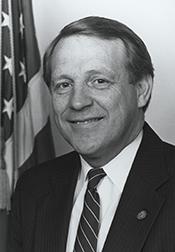
Historical · U.S. House · Alabama · District 3
John Browder
Former U.S. Representative · Alabama District 3 · 1989–1997 · Democratic
John Browder represented Alabama's District 3 in the United States House of Representatives (1989–1997) for the Democratic party. The page below collects sourced biographical facts, term history, committee roles, and provenance for Browder.
Bioguide ID: B000897
Key facts
- Full name
- John Browder
- State
- Alabama
- District
- District 3
- Party
- Democratic
- House service
- 1989–1997
- First House term
- 1989
- Status
- Left office
- Current term ends
- —
- Born
- 1943
- Bioguide ID
- B000897
- Committee assignments
- —
- Dataset version
- 1.20260605
Biographical narrative
1,085 words · sourced from the Wikipedia REST extract
John Glen Browder is a former U.S. Representative who served Alabama's 3rd congressional district as a member of the Democratic Party. His tenure in the House of Representatives spanned from 1989 to 1997, during which he was involved in various legislative initiatives and served on key committees. Browder's career in public service began in the Alabama state legislature and included a notable term as Alabama's Secretary of State. Following his congressional service, he transitioned into academia, where he continued to contribute to discussions on democracy and political science.
Early life and career
Glen Browder was born on January 15, 1943, in Sumter, South Carolina. He completed his secondary education at Edmunds High School in Sumter, graduating in 1961. Browder pursued higher education at Presbyterian College in Clinton, South Carolina, where he earned a Bachelor of Arts degree in history in 1965. He furthered his academic pursuits at Emory University in Atlanta, Georgia, obtaining both a Master of Arts and a Ph.D. in political science by 1971.
Before entering the realm of academia, Browder briefly worked as a sportswriter for the Atlanta Journal in 1966. He then served as an investigator for the United States Civil Service Commission from 1966 to 1968. Following his graduate studies, he joined the faculty at Jacksonville State University in Alabama, where he taught political science from 1971 until 1987. During this period, he also took on a role as president of Data Associates in Anniston, Alabama, from 1978 to 1987, focusing on polling and campaign management for various political candidates.
Browder's political career began in earnest when he was elected to the Alabama House of Representatives, where he served from 1983 to 1986. He was appointed to several committees, including the House Judiciary Committee and the Constitution and Elections Committee. His legislative work during this time included a significant focus on education reform, culminating in the passage of the Education Reform Act in 1984, which led to the establishment of the Governor's Education Reform Commission. He was appointed vice chairman of this commission, which aimed to enhance the quality of education in Alabama.
In addition to his education reform efforts, Browder was instrumental in passing several key pieces of legislation, including the Alabama Crime Victims Compensation Act and the Alabama Performance-Based Career Incentive Program Act, both in 1985. His contributions to the state legislature earned him recognition as an Outstanding Legislator in 1985 and 1986, along with commendations from various stakeholders in education and social services.
After completing his term in the state legislature, Browder was elected as Alabama's Secretary of State, a position he held from 1987 to 1989. During his tenure, he implemented significant reforms in the state's electoral processes, including the digitization of record-keeping, the establishment of training programs for poll workers, and the purging of ineligible voters from the rolls. One of his notable achievements was the passage of the Fair Campaign Practices Act of 1988, which modernized campaign finance laws in Alabama.
House tenure
Browder's congressional career began when he was elected to the U.S. House of Representatives in a special election to fill the vacancy left by the late William F. Nichols. He officially took office on April 4, 1989, and was subsequently re-elected for three additional terms, serving until January 3, 1997. Throughout his time in the House, Browder was known for his moderate Democratic stance and was a founding member of the Blue Dog Coalition, a group of fiscally conservative Democrats.
During his tenure in Congress, Browder was a member of the House Armed Services Committee and the House Budget Committee. He focused on issues related to military readiness and the federal budget. One of his key accomplishments was successfully advocating for the retention of Fort McClellan, an Army training base located in his district, during several attempts to close it in the early 1990s. Despite his efforts, the Army ultimately received authorization to close the base in 1995.
In addition to his work on military issues, Browder chaired a special House inquiry from 1992 to 1993 that addressed the threats posed by chemical and biological weapons in the post-Soviet world. He was also an advocate for veterans' benefits, particularly for those returning from Operation Desert Storm, and he supported research into Gulf War Syndrome, a set of health issues reported by veterans of that conflict.
Browder's leadership within the Blue Dog Coalition included serving as chairman of its Budget Committee. He played a significant role in shaping budget proposals that aimed to reduce the federal deficit while also advocating for tax cuts contingent on achieving deficit-reduction goals. His approach sought to foster bipartisan cooperation in addressing the contentious issues surrounding the federal budget.
In 1996, Browder chose not to seek re-election to the House of Representatives. His congressional seat was subsequently won by Republican Bob Riley. Instead of continuing in the House, Browder pursued a candidacy for the U.S. Senate in the same year but was unsuccessful in the Democratic primary, losing to Roger Bedford, Jr.
Legislative focus and committees
During his time in the House of Representatives, Glen Browder was actively involved in various legislative initiatives and served on important committees that shaped national policy. His membership on the House Armed Services Committee allowed him to engage with military issues, particularly those affecting his constituents in Alabama. Browder's commitment to military readiness was evident in his efforts to protect Fort McClellan from closure, highlighting his dedication to the local economy and the military community.
Browder's role on the House Budget Committee was equally significant, as he worked on fiscal policies that aimed to balance the federal budget. His participation in the Blue Dog Coalition underscored his focus on fiscal responsibility and bipartisanship, as he sought to bridge divides between Democrats and Republicans on budgetary matters.
Throughout his legislative career, Browder championed various issues, including education reform, veterans' benefits, and military readiness. His advocacy for educational initiatives was rooted in his earlier experiences in the Alabama state legislature, where he had successfully pushed for reforms aimed at improving the state's educational system. In Congress, he continued to prioritize these issues, reflecting his long-standing commitment to public service and community development.
After leaving Congress, Browder transitioned to academia, where he continued to influence discussions on democracy and political science. His experiences in both legislative and educational roles have contributed to his understanding of the complexities of governance and public policy. Browder's legacy includes his efforts to promote education, military readiness, and fiscal responsibility during his time in public office.
Notable legislation
Sponsored and co-sponsored legislation for John Browder is pending operator curation. The biographical narrative above carries the same provenance trail until per-bill rows are written.
Sources
- [1]https://en.wikipedia.org/wiki/Glen_BrowderWikipedia · retrieved 2026-06-05
Notable quotes
Sourced quotes for John Browder are pending operator curation. Narrative-scope provenance remains attached below.
Sources
- [1]https://en.wikipedia.org/wiki/Glen_BrowderWikipedia · retrieved 2026-06-05
Key positions
Curated policy positions for John Browder are pending operator review. The biographical narrative above carries the same provenance trail until per-topic positions are written.
Sources
- [1]https://en.wikipedia.org/wiki/Glen_BrowderWikipedia · retrieved 2026-06-05
Terms served
- 1989–1991U.S. House · Term 1 · Democratic
- 1991–1993U.S. House · Term 2 · Democratic
- 1993–1995U.S. House · Term 3 · Democratic
- 1995–1997U.S. House · Term 4 · Democratic
Sources & provenance
Every attributable claim above carries a per-section [N] marker that resolves to the corresponding URL below. Each entry records the upstream provider, the canonical URL, and the timestamp at which the source was retrieved by the ingest pipeline.
Key facts
- https://bioguide.congress.gov/search/bio/B000897bioguide · retrieved 2026-06-05
- https://www.govtrack.us/congress/members/401854govtrack · retrieved 2026-06-05
Biographical narrative
- https://en.wikipedia.org/wiki/Glen_Browderwikipedia · retrieved 2026-06-05
Find your representative
Every U.S. state elects representatives by district. Browse Alabama’s delegation, the full former-representative roster, or explore the role and term length.
Related on The Candidate
- Preceded by William NicholsEarlier holder of the Alabama District 3 House seat · Democratic.Open
- Succeeded by Bob RileyLater holder of the Alabama District 3 House seat · Republican.Open
- Alfred BuckFormer U.S. Representative · Alabama District 1 · RepublicanOpen
- Benjamin TurnerFormer U.S. Representative · Alabama District 1 · RepublicanOpen
- Bradley ByrneFormer U.S. Representative · Alabama District 1 · RepublicanOpen
- Edmund DarganFormer U.S. Representative · Alabama District 1 · DemocraticOpen