
Historical · U.S. House · Alabama · District 6
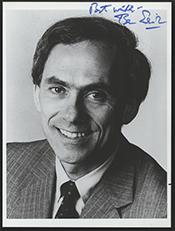
Ben Erdreich
Former U.S. Representative · Alabama District 6 · 1983–1993 · Democratic
Ben Erdreich represented Alabama's District 6 in the United States House of Representatives (1983–1993) for the Democratic party. The page below collects sourced biographical facts, term history, committee roles, and provenance for Erdreich.
Bioguide ID: E000201
Key facts
- Full name
- Ben Erdreich
- State
- Alabama
- District
- District 6
- Party
- Democratic
- House service
- 1983–1993
- First House term
- 1983
- Status
- Left office
- Current term ends
- —
- Born
- 1938
- Bioguide ID
- E000201
- Committee assignments
- —
- Dataset version
- 1.20260605
Biographical narrative
920 words · sourced from the Wikipedia REST extract
Benjamin Leader Erdreich is a former American politician and lawyer who served as a U.S. Representative for Alabama's 6th congressional district from 1983 until 1993. A member of the Democratic Party, Erdreich is notable for being the last Democrat to represent this district, which has since become strongly Republican. His legislative career is characterized by bipartisan collaboration and a focus on local issues, particularly those affecting his constituents in Alabama.
Early life and career
Ben Erdreich was born on December 9, 1938, in Birmingham, Alabama, into an upper-middle-class family. He pursued higher education at Yale University, where he completed his undergraduate studies in 1960. Following his time at Yale, Erdreich attended the University of Alabama School of Law, where he earned his law degree in 1963. During his tenure in law school, he served as the editor of the Alabama Law Review, showcasing his commitment to legal scholarship and academic excellence. After graduating, he passed the bar exam and began his legal career.
Erdreich's professional journey included a two-year stint in the United States Army, after which he established a private law practice. His early political career began in the 1970s when he served one term in the Alabama House of Representatives as a Democrat from 1970 to 1974. Following this role, he was elected as a Jefferson County Commissioner, a position he held until 1982. These early experiences in local government provided him with a foundation in public service and an understanding of the political landscape in Alabama.
House tenure
In 1982, Erdreich entered the national political arena by winning election to the U.S. House of Representatives, representing Alabama's 6th congressional district. He defeated the incumbent Republican, Albert Smith, Jr., marking a significant political shift in a district that had not seen a Democratic representative since 1965. Erdreich's victory was particularly notable as it was the last time a Democratic challenger defeated a Republican congressman in Alabama, underscoring the changing dynamics of the state's political landscape.
During his five terms in Congress, which lasted from 1983 until 1993, Erdreich was known for his collaborative approach to legislation. He was re-elected four times, often without facing serious opposition. His tenure was marked by a commitment to bipartisan work, as he co-sponsored several hundred bills across various issues. Erdreich's ability to work across party lines contributed to his effectiveness as a legislator and allowed him to address a range of concerns affecting his constituents.
One of the significant pieces of legislation Erdreich supported was the Abandoned Shipwrecks Act of 1987, which aimed to protect certain abandoned shipwrecks located in submerged lands under state jurisdiction. This legislation was designed to empower states to manage these cultural and historical resources effectively, preventing potential damage from treasure hunters and salvagers. The bill was signed into law by President Ronald Reagan in 1988.
Throughout his congressional career, Erdreich was the lead sponsor of four bills that were enacted into law. These included the designation of the new United States courthouse in Birmingham as the "Hugo L. Black United States Courthouse," and the redesignation of a federal building in Birmingham as the "Robert S. Vance Federal Building." He also sponsored the Department of Energy Metal Casting Competitiveness Research Act of 1990 and the Federal Reserve Bank Branch Modernization Act in 1992. His legislative efforts often reflected his commitment to local issues and the needs of his constituents.
However, Erdreich's political career faced challenges due to redistricting. In 1992, his district was significantly altered following a directive from the United States Department of Justice aimed at creating a majority-black district in the Birmingham area. This redistricting resulted in Erdreich's district becoming predominantly suburban and significantly whiter, shifting from an urban base with a more liberal Democratic electorate to a district that was largely conservative. Despite outspending his opponent, Spencer Bachus, in the 1992 election, Erdreich lost by a margin of seven percentage points, marking the end of his congressional tenure. His defeat was indicative of the district's conservative shift, as it has since become increasingly difficult for Democrats to compete in elections there.
Legislative focus and committees
Throughout his time in Congress, Erdreich's legislative focus encompassed a variety of issues, with a particular emphasis on local concerns relevant to his constituents in Alabama. His bipartisan approach allowed him to collaborate with members from both parties, which was reflected in the numerous bills he co-sponsored. Erdreich's ability to navigate the complexities of legislative processes contributed to his effectiveness as a representative.
Erdreich's committee assignments during his tenure in the House allowed him to engage with a range of policy areas. While specific committee memberships are not detailed in the available information, it can be inferred that his roles would have involved addressing issues pertinent to his district and the broader interests of Alabama. His legislative work often aimed to balance the needs of his constituents with national priorities, showcasing his commitment to public service.
In summary, Ben Erdreich's career as a U.S. Representative was marked by significant achievements and challenges. His early life and legal background provided a strong foundation for his political career, while his tenure in Congress demonstrated a commitment to bipartisan collaboration and local advocacy. Despite the eventual redistricting that led to his electoral defeat, Erdreich remains a notable figure in Alabama's political history, particularly for his role as the last Democrat to represent a district that has since become a Republican stronghold. After leaving Congress, Erdreich continued to engage in public service through property development in Birmingham, focusing on central-city projects.
Notable legislation
Sponsored and co-sponsored legislation for Ben Erdreich is pending operator curation. The biographical narrative above carries the same provenance trail until per-bill rows are written.
Sources
- [1]https://en.wikipedia.org/wiki/Ben_ErdreichWikipedia · retrieved 2026-06-05
Notable quotes
Sourced quotes for Ben Erdreich are pending operator curation. Narrative-scope provenance remains attached below.
Sources
- [1]https://en.wikipedia.org/wiki/Ben_ErdreichWikipedia · retrieved 2026-06-05
Key positions
Curated policy positions for Ben Erdreich are pending operator review. The biographical narrative above carries the same provenance trail until per-topic positions are written.
Sources
- [1]https://en.wikipedia.org/wiki/Ben_ErdreichWikipedia · retrieved 2026-06-05
Terms served
- 1983–1985U.S. House · Term 1 · Democratic
- 1985–1987U.S. House · Term 2 · Democratic
- 1987–1989U.S. House · Term 3 · Democratic
- 1989–1991U.S. House · Term 4 · Democratic
- 1991–1993U.S. House · Term 5 · Democratic
Sources & provenance
Every attributable claim above carries a per-section [N] marker that resolves to the corresponding URL below. Each entry records the upstream provider, the canonical URL, and the timestamp at which the source was retrieved by the ingest pipeline.
Key facts
- https://bioguide.congress.gov/search/bio/E000201bioguide · retrieved 2026-06-05
- https://www.govtrack.us/congress/members/403888govtrack · retrieved 2026-06-05
Biographical narrative
- https://en.wikipedia.org/wiki/Ben_Erdreichwikipedia · retrieved 2026-06-05
Find your representative
Every U.S. state elects representatives by district. Browse Alabama’s delegation, the full former-representative roster, or explore the role and term length.
Related on The Candidate
- Preceded by Albert Smith Jr.Earlier holder of the Alabama District 6 House seat · Republican.Open
- Succeeded by Spencer Bachus IIILater holder of the Alabama District 6 House seat · Republican.Open
- Alfred BuckFormer U.S. Representative · Alabama District 1 · RepublicanOpen
- Benjamin TurnerFormer U.S. Representative · Alabama District 1 · RepublicanOpen
- Bradley ByrneFormer U.S. Representative · Alabama District 1 · RepublicanOpen
- Edmund DarganFormer U.S. Representative · Alabama District 1 · DemocraticOpen