
Historical · U.S. House · Alabama · District 6
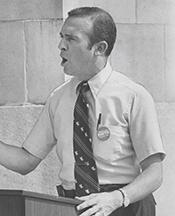
Albert Smith Jr.
Former U.S. Representative · Alabama District 6 · 1981–1983 · Republican
Albert Smith Jr. represented Alabama's District 6 in the United States House of Representatives (1981–1983) for the Republican party. The page below collects sourced biographical facts, term history, committee roles, and provenance for Jr..
Bioguide ID: S000514
Key facts
- Full name
- Albert Smith Jr.
- State
- Alabama
- District
- District 6
- Party
- Republican
- House service
- 1981–1983
- First House term
- 1981
- Status
- Left office
- Current term ends
- —
- Born
- 1931
- Bioguide ID
- S000514
- Committee assignments
- —
- Dataset version
- 1.20260605
Biographical narrative
967 words · sourced from the Wikipedia REST extract
Albert L. Smith Jr. was an American politician who served as a U.S. Representative for Alabama's 6th congressional district during the 97th Congress from 1981 to 1983. A member of the Republican Party, Smith's political career was marked by his alignment with conservative values and his engagement in various political activities throughout his life. His tenure in Congress was brief, yet it was notable for his electoral victory over a long-standing incumbent and his participation in significant legislative actions during the early 1980s.
Early life and career
Albert Lee Smith Jr. was born on August 31, 1931, in Birmingham, Alabama. He grew up in Jefferson County, where he attended local public schools. Smith completed his secondary education at Ramsay High School, a notable institution in the area. Following high school, he pursued higher education at Auburn University, located in Auburn, Alabama. He graduated in 1954 with a Bachelor of Science degree in agriculture, which laid the groundwork for his early professional endeavors.
After completing his education, Smith was commissioned as an ensign in the United States Navy, serving from 1954 to 1956. His military service was a formative experience that likely influenced his later political career. Upon leaving the Navy, Smith transitioned into the private sector, working as an insurance agent. This role provided him with valuable insights into the business community and the challenges faced by individuals and families in Alabama, which would later inform his political perspectives.
Smith's entry into politics began with his involvement in the Republican Party. He was elected as a delegate to the Republican National Convention in 1968, 1972, and 1984, reflecting his growing influence and commitment to the party. His participation in these conventions allowed him to engage with national party leaders and shape the direction of the Republican platform during a transformative period in American politics.
House tenure
Smith's political aspirations took a significant turn in the late 1970s when he decided to challenge the incumbent Republican representative for Alabama's 6th congressional district, John Hall Buchanan Jr. Buchanan had served seven terms in Congress and was known for his moderate stance within the Republican Party. In 1978, Smith ran against Buchanan in the primary election, positioning himself as a more conservative alternative. Despite his efforts, Smith lost the primary election by a considerable margin.
Undeterred by this setback, Smith made another attempt to unseat Buchanan in 1980. This time, he garnered substantial support from conservative Christian activists, which played a crucial role in his campaign. His efforts paid off when he defeated Buchanan by a surprising ten-point margin, marking a significant shift in the political landscape of the district. Following his primary victory, Smith faced Democratic challenger Pete Clifford in the general election. In a closely contested race, Smith emerged victorious, winning by a narrow three-point margin.
During his time in Congress, Smith was a supporter of President Ronald Reagan's policies, including the Economic Recovery Tax Act of 1981. This legislation aimed to stimulate economic growth through tax cuts and other measures. Smith's alignment with Reagan's administration reflected his commitment to conservative economic principles and his belief in the efficacy of tax reduction as a means to promote prosperity.
However, Smith's tenure in the House was relatively short-lived. He served only one term before being defeated by Democratic candidate Ben Erdreich, who was a Jefferson County commissioner at the time. Smith's loss in the 1982 election was significant, as he became the last Republican congressman to be unseated by a Democrat in Alabama. This defeat marked a turning point in the political dynamics of the state, as it highlighted the challenges faced by Republican candidates in a changing electoral landscape.
In 1984, Smith sought to further his political career by running for the United States Senate against incumbent Democrat Howell Heflin. However, this campaign was also unsuccessful, and Smith did not secure a position in the Senate.
Legislative focus and committees
During his time in the House of Representatives, Smith's legislative focus was primarily aligned with the conservative agenda of the Republican Party. His support for tax cuts and economic recovery initiatives reflected a broader commitment to fiscal conservatism, which was a hallmark of the Reagan administration. Smith's voting record indicated a willingness to align with party leadership on key issues, particularly those related to economic policy.
Although specific details about the committees on which Smith served during his congressional tenure are not provided, it is common for members of Congress to participate in committees that align with their interests and the needs of their constituents. Given his background in agriculture and insurance, it is plausible that Smith may have had an interest in committees related to agriculture, commerce, or finance, where he could advocate for policies that benefited his district and the broader Alabama community.
Smith's engagement in legislative activities was also influenced by his connections within the Republican Party and his experiences as a delegate at national conventions. These experiences likely provided him with a network of contacts and resources that he could leverage to advance his legislative priorities.
After leaving Congress, Smith remained active in conservative political causes and continued to engage with the Republican Party. His involvement in political activities reflected his enduring commitment to the principles he championed during his time in office. Smith passed away on August 12, 1997, at the age of sixty-five. He is interred at Elmwood Cemetery in Birmingham, Alabama, leaving behind a legacy of political engagement and advocacy for conservative values.
In summary, Albert L. Smith Jr. had a brief yet impactful career as a U.S. Representative, characterized by his electoral success against an incumbent and his alignment with conservative policies. His life and career reflect the complexities of American politics during a time of significant change and the ongoing evolution of party dynamics in Alabama.
Notable legislation
Sponsored and co-sponsored legislation for Albert Smith Jr. is pending operator curation. The biographical narrative above carries the same provenance trail until per-bill rows are written.
Sources
- [1]https://en.wikipedia.org/wiki/Albert_L._Smith_Jr.Wikipedia · retrieved 2026-06-05
Notable quotes
Sourced quotes for Albert Smith Jr. are pending operator curation. Narrative-scope provenance remains attached below.
Sources
- [1]https://en.wikipedia.org/wiki/Albert_L._Smith_Jr.Wikipedia · retrieved 2026-06-05
Key positions
Curated policy positions for Albert Smith Jr. are pending operator review. The biographical narrative above carries the same provenance trail until per-topic positions are written.
Sources
- [1]https://en.wikipedia.org/wiki/Albert_L._Smith_Jr.Wikipedia · retrieved 2026-06-05
Terms served
- 1981–1983U.S. House · Term 1 · Republican
Sources & provenance
Every attributable claim above carries a per-section [N] marker that resolves to the corresponding URL below. Each entry records the upstream provider, the canonical URL, and the timestamp at which the source was retrieved by the ingest pipeline.
Key facts
- https://bioguide.congress.gov/search/bio/S000514bioguide · retrieved 2026-06-05
- https://www.govtrack.us/congress/members/409999govtrack · retrieved 2026-06-05
Biographical narrative
- https://en.wikipedia.org/wiki/Albert_L._Smith_Jr.wikipedia · retrieved 2026-06-05
Find your representative
Every U.S. state elects representatives by district. Browse Alabama’s delegation, the full former-representative roster, or explore the role and term length.
Related on The Candidate
- Preceded by John Buchanan Jr.Earlier holder of the Alabama District 6 House seat · Republican.Open
- Succeeded by Ben ErdreichLater holder of the Alabama District 6 House seat · Democratic.Open
- Alfred BuckFormer U.S. Representative · Alabama District 1 · RepublicanOpen
- Benjamin TurnerFormer U.S. Representative · Alabama District 1 · RepublicanOpen
- Bradley ByrneFormer U.S. Representative · Alabama District 1 · RepublicanOpen
- Edmund DarganFormer U.S. Representative · Alabama District 1 · DemocraticOpen