
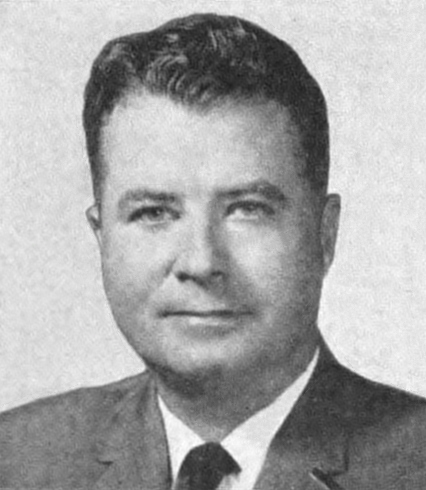
Historical · U.S. House · Alabama · District 7
James Martin
Former U.S. Representative · Alabama District 7 · 1965–1967 · Republican
James Martin represented Alabama's District 7 in the United States House of Representatives (1965–1967) for the Republican party. The page below collects sourced biographical facts, term history, committee roles, and provenance for Martin.
Bioguide ID: M000182
Key facts
- Full name
- James Martin
- State
- Alabama
- District
- District 7
- Party
- Republican
- House service
- 1965–1967
- First House term
- 1965
- Status
- Left office
- Current term ends
- —
- Born
- 1918
- Bioguide ID
- M000182
- Committee assignments
- —
- Dataset version
- 1.20260605
Biographical narrative
927 words · sourced from the Wikipedia REST extract
James Martin was an American politician who served as a U.S. Representative for Alabama's 7th congressional district from 1965 to 1967. A member of the Republican Party, he had a diverse career that included military service during World War II and a brief foray into state politics. His political journey was marked by his participation in significant electoral contests, including a run for the U.S. Senate and a bid for the governorship of Alabama. Martin's life spanned nearly a century, during which he engaged in various roles that reflected his commitment to public service and his evolving political affiliations.
Early life and career
James Douglas Martin was born on September 1, 1918, in Tarrant, Alabama. He was the son of Richard Martin, who worked as a railroad engineer, and Mary Graham, a teacher. This background provided Martin with a foundation in both the practical and educational aspects of life, which would later influence his own pursuits. He attended the Birmingham School of Law, where he earned his law degree, equipping him with the skills necessary for a career in public service and politics.
Martin's life took a significant turn when he enlisted in the United States Army during World War II. His military service began with training in psychological warfare and interrogations at Camp Ritchie, a facility known for preparing soldiers for intelligence operations. As a member of the Ritchie Boys, a group renowned for their specialized training in psychological warfare, Martin was deployed to Europe in December 1944. He served as an intelligence officer in General George S. Patton's army of occupation until his discharge in 1946. This experience not only shaped his understanding of military and intelligence operations but also instilled in him a sense of duty and leadership that would later manifest in his political career.
Following the war, Martin returned to Alabama, where he began to establish himself in the political arena. In 1962, he sought to expand his political influence by running as a Republican candidate for the United States Senate from Alabama. Although he garnered a significant number of votes, he ultimately lost to the Democratic incumbent, J. Lister Hill. This early electoral experience provided Martin with valuable insights into the political landscape of Alabama and the challenges faced by Republican candidates in a predominantly Democratic state.
House tenure
James Martin's congressional career began when he was elected to the U.S. House of Representatives in 1965, representing Alabama's 7th congressional district. His election marked a notable achievement, as he was able to secure a seat in the House during a time when the political climate was heavily influenced by the Civil Rights Movement and various social changes occurring across the nation. Martin's tenure in the House lasted until January 3, 1967, when he completed his term.
During his time in Congress, Martin was part of a legislative body that was addressing significant issues, including civil rights, social welfare, and the Vietnam War. Although specific details regarding his legislative actions and contributions during this period are not extensively documented, his role as a representative would have involved engaging with these pressing matters that were shaping the nation. His experience as a lawyer and military officer likely informed his perspectives on legislation and governance.
Despite his efforts and the experience he gained in the House, Martin's political journey took another turn when he decided to run for the governorship of Alabama in 1966. This decision marked a pivotal moment in his career, as he sought to elevate his political standing within the state. However, he faced a challenging electoral environment and ultimately lost to Democratic candidate Lurleen Wallace. This defeat concluded his tenure in the House and marked the end of his time in elected office for the foreseeable future.
Legislative focus and committees
While specific details regarding James Martin's legislative focus and committee assignments during his time in the House of Representatives are not extensively recorded, it is important to consider the broader context of the era in which he served. The mid-1960s were characterized by significant legislative activity, particularly surrounding civil rights and social justice issues. As a member of the Republican Party, Martin would have navigated a complex political landscape, balancing party priorities with the needs and concerns of his constituents in Alabama.
The 1960s were a transformative period in American history, with the Civil Rights Movement advocating for the end of racial segregation and discrimination. Martin's role as a congressman would have required him to engage with these critical issues, as well as other pressing matters such as economic policy, education, and healthcare. The decisions made by lawmakers during this time had lasting impacts on American society, and Martin's contributions, while not extensively documented, would have been part of this larger legislative narrative.
After leaving Congress, Martin's political aspirations did not diminish. He remained active in public life and was later inducted into the Alabama Academy of Honor in 2009, recognizing his contributions to the state and his service to the community. This acknowledgment reflects the respect he garnered over his lifetime, both as a politician and as a public servant.
James Martin passed away on October 30, 2017, at the age of 99, in his home in Gadsden, Alabama. His long life encompassed a range of experiences, from military service to political engagement, and he left behind a legacy that reflects the complexities of American politics during a time of significant change. His journey from a small-town upbringing to the halls of Congress illustrates the potential for public service to shape individual lives and communities.
Notable legislation
Sponsored and co-sponsored legislation for James Martin is pending operator curation. The biographical narrative above carries the same provenance trail until per-bill rows are written.
Sources
- [1]https://en.wikipedia.org/wiki/James_D._MartinWikipedia · retrieved 2026-06-05
Notable quotes
Sourced quotes for James Martin are pending operator curation. Narrative-scope provenance remains attached below.
Sources
- [1]https://en.wikipedia.org/wiki/James_D._MartinWikipedia · retrieved 2026-06-05
Key positions
Curated policy positions for James Martin are pending operator review. The biographical narrative above carries the same provenance trail until per-topic positions are written.
Sources
- [1]https://en.wikipedia.org/wiki/James_D._MartinWikipedia · retrieved 2026-06-05
Terms served
- 1965–1967U.S. House · Term 1 · Republican
Sources & provenance
Every attributable claim above carries a per-section [N] marker that resolves to the corresponding URL below. Each entry records the upstream provider, the canonical URL, and the timestamp at which the source was retrieved by the ingest pipeline.
Key facts
- https://bioguide.congress.gov/search/bio/M000182bioguide · retrieved 2026-06-05
- https://www.govtrack.us/congress/members/407203govtrack · retrieved 2026-06-05
Biographical narrative
- https://en.wikipedia.org/wiki/James_D._Martinwikipedia · retrieved 2026-06-05
Find your representative
Every U.S. state elects representatives by district. Browse Alabama’s delegation, the full former-representative roster, or explore the role and term length.
Related on The Candidate
- Preceded by Carter ManascoEarlier holder of the Alabama District 7 House seat · Democratic.Open
- Succeeded by Walter FlowersLater holder of the Alabama District 7 House seat · Democratic.Open
- Alfred BuckFormer U.S. Representative · Alabama District 1 · RepublicanOpen
- Benjamin TurnerFormer U.S. Representative · Alabama District 1 · RepublicanOpen
- Bradley ByrneFormer U.S. Representative · Alabama District 1 · RepublicanOpen
- Edmund DarganFormer U.S. Representative · Alabama District 1 · DemocraticOpen