
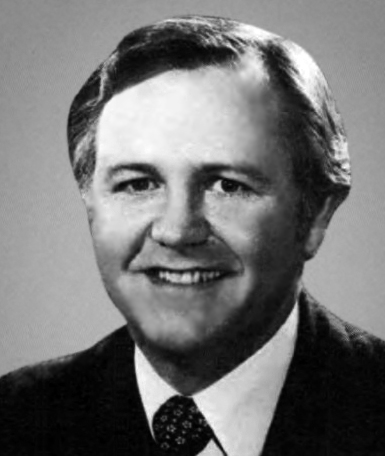
Historical · U.S. House · Arkansas · District 2
Edwin Bethune Jr.
Former U.S. Representative · Arkansas District 2 · 1979–1985 · Republican
Edwin Bethune Jr. represented Arkansas's District 2 in the United States House of Representatives (1979–1985) for the Republican party. The page below collects sourced biographical facts, term history, committee roles, and provenance for Jr..
Bioguide ID: B000422
Key facts
- Full name
- Edwin Bethune Jr.
- State
- Arkansas
- District
- District 2
- Party
- Republican
- House service
- 1979–1985
- First House term
- 1979
- Status
- Left office
- Current term ends
- —
- Born
- 1935
- Bioguide ID
- B000422
- Committee assignments
- —
- Dataset version
- 1.20260605
Biographical narrative
876 words · sourced from the Wikipedia REST extract
Ed Bethune is a former American politician, lawyer, and veteran who served as a Republican member of the United States House of Representatives for Arkansas's 2nd congressional district from 1979 to 1985. Born on December 19, 1935, in Pocahontas, Arkansas, he has had a diverse career that includes military service, legal practice, and participation in political life at both state and national levels. After completing his congressional tenure, he continued to engage in political activities and served as the state chairman of the Arkansas Republican Party.
Early life and career
Ed Bethune was born to Edwin Bethune Sr. and his wife in Pocahontas, Arkansas. He completed his secondary education at Pocahontas High School, graduating in 1953. Following high school, Bethune enlisted in the United States Marine Corps, where he served as a Sergeant from 1954 to 1957. His military service included a deployment to South Korea during the Korean War, which contributed to his understanding of international affairs and defense issues.
After his military service, Bethune pursued higher education at the University of Arkansas at Fayetteville. He earned a Bachelor of Arts degree in 1961 and was an active member of the Kappa Sigma fraternity during his time there. He continued his education at the University of Arkansas School of Law, obtaining his Juris Doctor degree in 1963. That same year, he was admitted to the Arkansas bar and began his legal practice in Pocahontas.
In the early 1970s, Bethune relocated to Searcy, Arkansas, where he practiced law alongside Odell Pollard, a former chairman of the Arkansas Republican Party who served as a mentor to him. His legal career included a role as the prosecuting attorney for the First Judicial District of Arkansas from 1970 to 1971. Additionally, he served as the chairman of the Ninth District Federal Home Loan Bank Board from 1973 to 1976. His legal and political experiences laid the groundwork for his subsequent entry into elected office.
House tenure
Ed Bethune's political career began in earnest when he ran for the position of Arkansas Attorney General in 1972. He was the Republican nominee but was defeated by the Democratic incumbent, James Guy Tucker Jr. Despite this setback, Bethune continued to build his political profile. In 1978, he successfully ran for the U.S. House of Representatives, representing Arkansas's 2nd congressional district. He was elected to the House in a political climate that favored Republican candidates, and he quickly became a prominent figure among the freshman class of lawmakers.
During his first term, which began in January 1979, Bethune was elected president of the U.S. House Republican freshman class. He was re-elected in 1980, achieving a significant victory over his Democratic opponent, Jacksonville Mayor James G. Reid. Throughout his time in office, Bethune focused on issues related to federal taxation and government spending, advocating for fiscal responsibility.
In 1982, Bethune faced a more challenging re-election campaign against Democratic candidate Charles Lindbergh George Sr., a former state senator. Despite not beginning his campaign until the final weeks before the election, Bethune managed to secure re-election, albeit with a narrower margin than in previous contests. This election marked the last time he won a congressional seat.
In 1984, Bethune sought to advance his political career by running for the U.S. Senate against incumbent Senator David Pryor. However, he was unsuccessful in this bid, losing decisively in the election. Following his departure from Congress in January 1985, Bethune remained active in the Republican Party and continued to influence Arkansas politics.
Legislative focus and committees
During his tenure in the House of Representatives, Ed Bethune was known for his strong focus on fiscal issues, particularly federal taxes and government spending. He consistently advocated for policies aimed at reducing government expenditures and promoting economic growth through tax reform. His legislative priorities reflected the broader Republican agenda of the time, which emphasized limited government and fiscal conservatism.
Bethune was also involved in various legislative initiatives and discussions surrounding national defense. He notably opposed a proposal by President Ronald Reagan to sell AWACS fighter planes to Saudi Arabia, citing concerns about the implications for Israel and regional stability. This stance highlighted his commitment to ensuring that U.S. foreign policy aligned with the interests of key allies.
In addition to his work on fiscal and defense issues, Bethune participated in several committees during his time in the House. His committee assignments allowed him to engage with a range of topics and contribute to the legislative process on various fronts. These experiences provided him with insights into the workings of Congress and the complexities of policymaking.
After leaving Congress, Bethune continued to play a role in Arkansas politics, serving as the state chairman of the Arkansas Republican Party from 1986 to 1988. He chose not to pursue a gubernatorial run in 1986, allowing other candidates to take the lead in that election cycle. His involvement in the party and his ongoing engagement with political issues reflected his enduring commitment to public service and the Republican cause.
Overall, Ed Bethune's career encompasses a blend of military service, legal practice, and political engagement. His time in the U.S. House of Representatives was marked by a focus on fiscal responsibility and national defense, and he remains a notable figure in Arkansas's political history.
Notable legislation
Sponsored and co-sponsored legislation for Edwin Bethune Jr. is pending operator curation. The biographical narrative above carries the same provenance trail until per-bill rows are written.
Sources
- [1]https://en.wikipedia.org/wiki/Ed_BethuneWikipedia · retrieved 2026-06-05
Notable quotes
Sourced quotes for Edwin Bethune Jr. are pending operator curation. Narrative-scope provenance remains attached below.
Sources
- [1]https://en.wikipedia.org/wiki/Ed_BethuneWikipedia · retrieved 2026-06-05
Key positions
Curated policy positions for Edwin Bethune Jr. are pending operator review. The biographical narrative above carries the same provenance trail until per-topic positions are written.
Sources
- [1]https://en.wikipedia.org/wiki/Ed_BethuneWikipedia · retrieved 2026-06-05
Terms served
- 1979–1981U.S. House · Term 1 · Republican
- 1981–1983U.S. House · Term 2 · Republican
- 1983–1985U.S. House · Term 3 · Republican
Sources & provenance
Every attributable claim above carries a per-section [N] marker that resolves to the corresponding URL below. Each entry records the upstream provider, the canonical URL, and the timestamp at which the source was retrieved by the ingest pipeline.
Key facts
- https://bioguide.congress.gov/search/bio/B000422bioguide · retrieved 2026-06-05
- https://www.govtrack.us/congress/members/401408govtrack · retrieved 2026-06-05
Biographical narrative
- https://en.wikipedia.org/wiki/Ed_Bethunewikipedia · retrieved 2026-06-05
Find your representative
Every U.S. state elects representatives by district. Browse Arkansas’s delegation, the full former-representative roster, or explore the role and term length.
Related on The Candidate
- Preceded by James Tucker Jr.Earlier holder of the Arkansas District 2 House seat · Democratic.Open
- Succeeded by Tommy RobinsonLater holder of the Arkansas District 2 House seat · Republican.Open
- Alfred GreenwoodFormer U.S. Representative · Arkansas District 1 · DemocraticOpen
- Archibald YellFormer U.S. Representative · Arkansas District 1 · DemocraticOpen
- Asa HodgesFormer U.S. Representative · Arkansas District 1 · RepublicanOpen
- Bill Alexander Jr.Former U.S. Representative · Arkansas District 1 · DemocraticOpen