
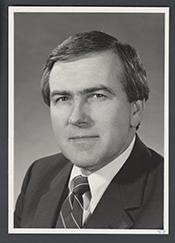
Historical · U.S. House · Arkansas · District 2
Tommy Robinson
Former U.S. Representative · Arkansas District 2 · 1985–1991 · Republican
Tommy Robinson represented Arkansas's District 2 in the United States House of Representatives (1985–1991) for the Republican party. The page below collects sourced biographical facts, term history, committee roles, and provenance for Robinson.
Bioguide ID: R000354
Key facts
- Full name
- Tommy Robinson
- State
- Arkansas
- District
- District 2
- Party
- Republican
- House service
- 1985–1991
- First House term
- 1985
- Status
- Left office
- Current term ends
- —
- Born
- 1942
- Bioguide ID
- R000354
- Committee assignments
- —
- Dataset version
- 1.20260605
Biographical narrative
871 words · sourced from the Wikipedia REST extract
Tommy F. Robinson was an American businessman, lobbyist, and politician who served as a U.S. Representative for Arkansas's 2nd congressional district from 1985 until 1991. A member of the Republican Party, Robinson's political career was preceded by a significant tenure in law enforcement, where he held various positions, including sheriff of Pulaski County. His time in Congress was marked by a transition from the Democratic Party to the Republican Party and a focus on various legislative issues.
Early life and career
Tommy Franklin Robinson was born on March 7, 1942, in Little Rock, Arkansas. He pursued higher education at the University of Arkansas at Little Rock, where he completed his studies before embarking on a career in law enforcement. Robinson served in the United States Navy from 1959 to 1963, which provided him with a foundation for his future endeavors in public service.
Robinson's law enforcement career began as a patrolman in North Little Rock, Arkansas. He later became an Arkansas state trooper and held the position of director of campus police at the University of Arkansas. His career progressed as he served as the police chief in Jacksonville, Arkansas. In 1979, he was appointed by then-Governor Bill Clinton to lead the short-lived Department of Public Safety, a role that was abolished in 1981 by Clinton's successor, Republican Frank D. White.
In 1980, Robinson was elected sheriff of Pulaski County after defeating the incumbent in the Democratic primary. His tenure as sheriff was characterized by a series of controversies and high-profile incidents. Notably, he faced challenges related to jail overcrowding, leading him to transfer state prisoners to the state prison at Pine Bluff, which resulted in significant media attention. His investigation into the murder of a local socialite also drew scrutiny, as did his confrontations with local government officials over budgetary issues.
Robinson's law enforcement strategies included innovative approaches to crime prevention, such as deploying undercover deputies in convenience stores, which reportedly led to a significant reduction in armed robberies during his time in office. However, his tenure was also marked by public disputes and confrontations with the media, earning him a reputation that included colorful nicknames from both supporters and detractors.
House tenure
Robinson's political career transitioned to the national stage when he was elected to the United States House of Representatives in 1984. Initially a member of the Democratic Party, he won a competitive primary that featured several notable candidates, including Secretary of State Paul Riviere and State Senator Stanley Russ. Robinson's campaign was notable for its financial backing, which included substantial loans that made it one of the most expensive congressional races in Arkansas history at the time.
Upon entering Congress in 1985, Robinson aligned himself with the Boll Weevil faction, a group of conservative Democrats who often opposed the party's leadership. His tenure in the House was marked by a series of votes on key legislation, including his support for the Abandoned Shipwrecks Act of 1987, which aimed to protect cultural and historical resources from treasure hunters and salvagers.
In 1989, Robinson made a significant political shift by leaving the Democratic Party to join the Republican Party, citing a belief that the Democratic Party had become too liberal. This move reflected a broader trend among some conservative Democrats during that period. In 1990, he sought the governorship of Arkansas but was unsuccessful in the primary election, losing to businessman Sheffield Nelson.
Robinson's time in the House concluded in 1991 when he was succeeded by Democrat Ray Thornton, who won the seat in the subsequent election. Following his departure from Congress, Robinson's political career continued to evolve, but he faced challenges, including involvement in the House banking scandal, which revealed that he had bounced numerous checks from the House bank.
Legislative focus and committees
During his time in the U.S. House of Representatives, Robinson was involved in various legislative initiatives and served on multiple committees. His alignment with the Boll Weevil faction indicated his focus on conservative issues, which often put him at odds with the Democratic leadership of the time. His support for legislation like the Abandoned Shipwrecks Act demonstrated his interest in cultural preservation and resource management.
After leaving Congress, Robinson attempted to return to political office in 2002 but was defeated by the Democratic incumbent, Marion Berry. In the years that followed, he engaged in various business ventures, including farming and operating a political consulting firm. His agricultural pursuits included farming milo in Monroe County, although his farm faced financial difficulties that led to bankruptcy in 2011.
In addition to his business activities, Robinson was appointed by Governor Mike Huckabee to the Pollution Control and Ecology Commission, where he served a term as Chair of the Pardons and Parole Board. These roles reflected his ongoing involvement in public service and governance, even after his congressional career had ended.
Tommy F. Robinson passed away on July 10, 2024, at a hospital in Forrest City, Arkansas. His life and career encompassed significant contributions to law enforcement and politics in Arkansas, marked by a blend of public service, controversy, and a commitment to his constituents. His legacy includes a complex narrative of a politician navigating the evolving landscape of American politics during a transformative period.
Notable legislation
Sponsored and co-sponsored legislation for Tommy Robinson is pending operator curation. The biographical narrative above carries the same provenance trail until per-bill rows are written.
Sources
- [1]https://en.wikipedia.org/wiki/Tommy_F._RobinsonWikipedia · retrieved 2026-06-05
Notable quotes
Sourced quotes for Tommy Robinson are pending operator curation. Narrative-scope provenance remains attached below.
Sources
- [1]https://en.wikipedia.org/wiki/Tommy_F._RobinsonWikipedia · retrieved 2026-06-05
Key positions
Curated policy positions for Tommy Robinson are pending operator review. The biographical narrative above carries the same provenance trail until per-topic positions are written.
Sources
- [1]https://en.wikipedia.org/wiki/Tommy_F._RobinsonWikipedia · retrieved 2026-06-05
Terms served
- 1985–1987U.S. House · Term 1 · Democratic
- 1987–1989U.S. House · Term 2 · Democratic
- 1989–1991U.S. House · Term 3 · Republican
Sources & provenance
Every attributable claim above carries a per-section [N] marker that resolves to the corresponding URL below. Each entry records the upstream provider, the canonical URL, and the timestamp at which the source was retrieved by the ingest pipeline.
Key facts
- https://bioguide.congress.gov/search/bio/R000354bioguide · retrieved 2026-06-05
- https://www.govtrack.us/congress/members/409325govtrack · retrieved 2026-06-05
Biographical narrative
- https://en.wikipedia.org/wiki/Tommy_F._Robinsonwikipedia · retrieved 2026-06-05
Find your representative
Every U.S. state elects representatives by district. Browse Arkansas’s delegation, the full former-representative roster, or explore the role and term length.
Related on The Candidate
- Preceded by Edwin Bethune Jr.Earlier holder of the Arkansas District 2 House seat · Republican.Open
- Succeeded by Vic SnyderLater holder of the Arkansas District 2 House seat · Democratic.Open
- Alfred GreenwoodFormer U.S. Representative · Arkansas District 1 · DemocraticOpen
- Archibald YellFormer U.S. Representative · Arkansas District 1 · DemocraticOpen
- Asa HodgesFormer U.S. Representative · Arkansas District 1 · RepublicanOpen
- Bill Alexander Jr.Former U.S. Representative · Arkansas District 1 · DemocraticOpen