
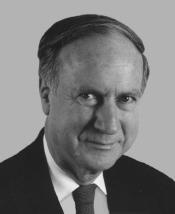
Historical · U.S. House · Arkansas · District 2
Ray Thornton Jr.
Former U.S. Representative · Arkansas District 2 · 1973–1997 · Democratic
Ray Thornton Jr. represented Arkansas's District 2 in the United States House of Representatives (1973–1997) for the Democratic party. The page below collects sourced biographical facts, term history, committee roles, and provenance for Jr..
Bioguide ID: T000243
Key facts
- Full name
- Ray Thornton Jr.
- State
- Arkansas
- District
- District 2
- Party
- Democratic
- House service
- 1973–1997
- First House term
- 1973
- Status
- Left office
- Current term ends
- —
- Born
- 1928
- Bioguide ID
- T000243
- Committee assignments
- —
- Dataset version
- 1.20260605
Biographical narrative
887 words · sourced from the Wikipedia REST extract
Ray Thornton was an American attorney and politician who served as a Democratic U.S. Representative for Arkansas. His congressional career spanned from 1973 to 1979 in the 4th congressional district and from 1991 until 1997 in the 2nd congressional district. In addition to his legislative work, Thornton held significant positions in education and the judiciary, including serving as an associate justice on the Arkansas Supreme Court from 1997 to 2004. His career was marked by a commitment to public service and a focus on legal and educational issues.
Early life and career
Ray Thornton was born on July 16, 1928, in Conway, Arkansas, to Wilma Stephens and Raymond Thornton. He completed his secondary education at Sheridan High School before pursuing higher education at Yale University, where he earned a degree in political science. Following his undergraduate studies, he attended the University of Arkansas School of Law in Fayetteville, where he obtained his Juris Doctor degree in 1956. During this period, he also served in the United States Navy during the Korean War, achieving the rank of lieutenant while stationed on the aircraft carrier USS Philippine Sea (CV-47).
After completing his military service, Thornton returned to law school and graduated in 1956. That same year, he married Betty Jo Mann, a resident of Sheridan, Arkansas, with whom he shared a partnership for 60 years. Following his graduation, he worked for over 13 years as General Counsel for Stephens Inc. and Arkansas Louisiana Gas Company, both of which were owned by his maternal uncle, Wilton (Witt) Stephens. His legal career in the private sector provided him with substantial experience before he transitioned into public service.
In 1970, Thornton entered the political arena by running for the position of Arkansas Attorney General, a role he successfully secured. His tenure as Attorney General laid the groundwork for his subsequent election to the U.S. House of Representatives. In 1972, he won the Democratic primary against fellow lawyers Richard S. Arnold and Richard Mays, both of whom would remain his lifelong friends. Thornton's victory in the primary was notable, as he faced no Republican opposition in the general election, allowing him to begin his congressional career.
House tenure
Thornton's first term in the U.S. House of Representatives began in 1973, where he represented Arkansas's 4th congressional district. During his time in Congress, he was a member of the Judiciary Committee, which played a significant role in the impeachment proceedings against President Richard Nixon. His involvement in these proceedings highlighted his commitment to legal and constitutional issues, as he worked alongside a group of moderate Democrats and Republicans to draft articles of impeachment.
After serving three terms in the House, Thornton chose not to seek a fourth term. Instead, he pursued a seat in the U.S. Senate, where he faced a competitive Democratic primary. In this race, he narrowly lost to Jim Guy Tucker and David Pryor, both of whom were prominent figures in Arkansas politics. Following this defeat, Thornton shifted his focus back to education and public service.
Legislative focus and committees
Throughout his congressional career, Thornton was known for his engagement in legal and educational matters. His work on the Judiciary Committee allowed him to delve into significant national issues, particularly those related to the rule of law and governance. His participation in the impeachment process against President Nixon was a defining moment in his legislative tenure, showcasing his dedication to accountability and oversight.
After leaving Congress, Thornton continued to influence Arkansas's educational landscape. He took on leadership roles at Henderson State University and Ouachita Baptist University, where he led a consortium aimed at enhancing cooperative academic initiatives. His commitment to education was further exemplified when he served as the seventh President of Arkansas State University from 1980 to 1984, followed by his role as President of the University of Arkansas System from 1984 to 1990. These positions allowed him to shape educational policies and promote academic excellence in the state.
In 1990, Thornton returned to Congress, this time representing Arkansas's 2nd congressional district, which included his hometown of Conway. He won the election with a significant margin against his Republican opponent, Jim Keet. During his second tenure in the House, Thornton continued to focus on issues relevant to his constituents and the broader Arkansas community.
After serving three additional terms in Congress, Thornton concluded his legislative career in January 1997. He then transitioned to the judiciary, where he was elected as an associate justice of the Arkansas Supreme Court, serving from January 1997 until January 2005. His judicial role further solidified his commitment to public service and the legal profession.
Following his retirement from the court, Thornton took on various roles in public service, including serving as the first public service fellow for the William H. Bowen School of Law at the University of Arkansas at Little Rock. In 2009, he was appointed as the first chairman of the Arkansas Lottery Commission, overseeing the establishment of the Arkansas Scholarship Lottery. He resigned from this position after one year, having laid the groundwork for the commission's operations.
Ray Thornton passed away on April 13, 2016, in Little Rock, Arkansas, at the age of 87. His legacy includes significant contributions to law, education, and public service, reflecting a lifelong commitment to the people of Arkansas and the principles of democracy.
Notable legislation
Sponsored and co-sponsored legislation for Ray Thornton Jr. is pending operator curation. The biographical narrative above carries the same provenance trail until per-bill rows are written.
Sources
- [1]https://en.wikipedia.org/wiki/Ray_ThorntonWikipedia · retrieved 2026-06-05
Notable quotes
Sourced quotes for Ray Thornton Jr. are pending operator curation. Narrative-scope provenance remains attached below.
Sources
- [1]https://en.wikipedia.org/wiki/Ray_ThorntonWikipedia · retrieved 2026-06-05
Key positions
Curated policy positions for Ray Thornton Jr. are pending operator review. The biographical narrative above carries the same provenance trail until per-topic positions are written.
Sources
- [1]https://en.wikipedia.org/wiki/Ray_ThorntonWikipedia · retrieved 2026-06-05
Terms served
- 1973–1975U.S. House · Term 1 · Democratic
- 1975–1977U.S. House · Term 2 · Democratic
- 1977–1979U.S. House · Term 3 · Democratic
- 1991–1993U.S. House · Term 4 · Democratic
- 1993–1995U.S. House · Term 5 · Democratic
- 1995–1997U.S. House · Term 6 · Democratic
Sources & provenance
Every attributable claim above carries a per-section [N] marker that resolves to the corresponding URL below. Each entry records the upstream provider, the canonical URL, and the timestamp at which the source was retrieved by the ingest pipeline.
Key facts
- https://bioguide.congress.gov/search/bio/T000243bioguide · retrieved 2026-06-05
- https://www.govtrack.us/congress/members/410821govtrack · retrieved 2026-06-05
Biographical narrative
- https://en.wikipedia.org/wiki/Ray_Thorntonwikipedia · retrieved 2026-06-05
Find your representative
Every U.S. state elects representatives by district. Browse Arkansas’s delegation, the full former-representative roster, or explore the role and term length.
Related on The Candidate
- Preceded by Pearl OldfieldEarlier holder of the Arkansas District 2 House seat · Democratic.Open
- Succeeded by Vic SnyderLater holder of the Arkansas District 2 House seat · Democratic.Open
- Alfred GreenwoodFormer U.S. Representative · Arkansas District 1 · DemocraticOpen
- Archibald YellFormer U.S. Representative · Arkansas District 1 · DemocraticOpen
- Asa HodgesFormer U.S. Representative · Arkansas District 1 · RepublicanOpen
- Bill Alexander Jr.Former U.S. Representative · Arkansas District 1 · DemocraticOpen