
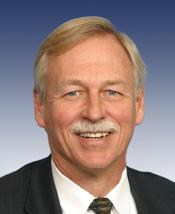
Historical · U.S. House · Arkansas · District 2
Vic Snyder
Former U.S. Representative · Arkansas District 2 · 1997–2011 · Democratic
Vic Snyder represented Arkansas's District 2 in the United States House of Representatives (1997–2011) for the Democratic party. The page below collects sourced biographical facts, term history, committee roles, and provenance for Snyder.
Bioguide ID: S000672
Key facts
- Full name
- Vic Snyder
- State
- Arkansas
- District
- District 2
- Party
- Democratic
- House service
- 1997–2011
- First House term
- 1997
- Status
- Left office
- Current term ends
- —
- Born
- 1947
- Bioguide ID
- S000672
- Committee assignments
- —
- Dataset version
- 1.20260605
Biographical narrative
1,150 words · sourced from the Wikipedia REST extract
Victor Frederick Snyder, commonly known as Vic Snyder, is a former American politician, physician, and lawyer who served as the U.S. Representative for Arkansas's 2nd congressional district from 1997 until 2011. A member of the Democratic Party, Snyder's tenure in the House of Representatives was marked by his focus on issues pertinent to veterans and military families, as well as a range of traditionally liberal positions. His background as a physician and his military service during the Vietnam War contributed to his legislative priorities and public service philosophy.
Early life and career
Vic Snyder was born on September 27, 1947, in Medford, Oregon. He completed his secondary education at Medford High School, graduating in 1965. Following high school, Snyder attended Willamette University in Salem, Oregon, where he was actively involved in campus life as a member of the Kappa Sigma fraternity. After two years of college, Snyder made the decision to volunteer for the United States Marine Corps in 1967, a choice that would shape his early adulthood. He served in Vietnam with the Headquarters Company of the 1st Marine Division during the Vietnam War, where he attained the rank of corporal.
After completing his military service, Snyder returned to his academic pursuits. He graduated with a degree in Chemistry from Willamette University in 1975 and subsequently earned his Doctor of Medicine (M.D.) degree from the University of Oregon Health Sciences Center, now known as Oregon Health & Science University, in 1979. Following his medical education, Snyder relocated to Little Rock, Arkansas, where he completed his residency at the University of Arkansas for Medical Sciences. Upon finishing his residency in 1982, he began a career as a family practice physician, a role he maintained for 15 years.
During his time as a physician, Snyder demonstrated a commitment to humanitarian efforts by volunteering his medical services in various international settings. He worked in Cambodian refugee camps in Thailand, Salvadoran refugee camps in Honduras, and Ethiopian refugee camps in Sudan. Additionally, he provided care at a Catholic mission hospital in Sierra Leone. His experiences in these diverse environments likely influenced his views on healthcare and social justice issues.
In pursuit of further education, Snyder attended the University of Arkansas at Little Rock School of Law from 1985 to 1988, where he earned his Juris Doctor (J.D.) degree while continuing to practice medicine. This combination of medical and legal training would later inform his legislative work and advocacy.
Snyder's political career began in earnest when he successfully ran for a seat in the Arkansas legislature in 1990. He served in the state legislature until 1996, during which time he engaged in various legislative initiatives. One notable controversy arose when he attempted to repeal Arkansas's outdated sodomy laws. Although his efforts were ultimately unsuccessful, they highlighted his willingness to confront contentious issues. He also challenged the authority of the Arkansas Highway Commission during his time in the legislature.
House tenure
Vic Snyder was elected to the U.S. House of Representatives in 1996, representing Arkansas's 2nd congressional district. He was subsequently reelected multiple times, serving a total of seven terms in the House until his retirement in January 2011. Throughout his congressional career, Snyder was known for his liberal positions, which were somewhat atypical for a politician from a Southern state like Arkansas, which generally leaned more conservative.
During his time in the House, Snyder was assigned to several important committees. He served on the Committee on Armed Services, where he chaired the Subcommittee on Oversight and Investigations and was also a member of the Subcommittee on Military Personnel. His involvement in these committees reflected his commitment to issues affecting military personnel and veterans, aligning with his background as a Marine Corps veteran. Additionally, Snyder was a member of the Committee on Veterans' Affairs, where he focused on health-related issues for veterans, further underscoring his dedication to this demographic.
Snyder's legislative record included a range of positions on social and economic issues. He was known for his opposition to the Federal Marriage Amendment, restrictions on abortion, and legislation aimed at limiting lawsuits against gun manufacturers and distributors. He also voted against bankruptcy reform and drilling in the Arctic National Wildlife Refuge (ANWR). Notably, Snyder was among a minority of House members who voted against authorizing the invasion of Iraq in 2002, although he consistently supported funding for U.S. troops deployed in the conflict. His voting record indicated a strong commitment to civil liberties and social justice, as well as a nuanced approach to military and foreign policy.
In contrast to some of his Democratic colleagues, Snyder held differing views on trade issues, particularly regarding free trade agreements. He diverged from the more populist sentiments within his party, especially among Southern Democrats, and opposed certain legislative measures targeting Wal-Mart, the retail giant headquartered in Bentonville, Arkansas. This stance illustrated his complex relationship with local economic interests and national party dynamics.
Legislative focus and committees
Throughout his congressional career, Vic Snyder's legislative focus was characterized by a commitment to issues affecting veterans, healthcare, and social justice. His background as a physician and his military service informed his advocacy for policies that supported military families and improved healthcare access. Snyder's work on the Committee on Armed Services and the Committee on Veterans' Affairs allowed him to address the needs of veterans and service members directly.
Snyder's leadership on the Subcommittee on Oversight and Investigations involved scrutinizing military practices and policies, ensuring accountability within the armed forces. His tenure on the Subcommittee on Military Personnel further emphasized his dedication to the welfare of service members and their families, advocating for improved benefits and support systems.
In addition to his focus on military and veterans' issues, Snyder's broader legislative agenda included a commitment to civil rights and social issues. His opposition to the Federal Marriage Amendment and restrictions on abortion reflected his alignment with progressive values. Snyder's voting record indicated a willingness to challenge the prevailing conservative norms within his state, positioning him as a more liberal voice in the House.
Snyder's electoral history demonstrated his ability to maintain support within his district, as he was reelected multiple times throughout his career. However, he announced his retirement in January 2010, signaling the end of his congressional tenure. His decision came amid indications of a challenging electoral landscape, as polling suggested he was trailing his Republican opponent. Snyder's retirement marked the conclusion of a significant chapter in Arkansas politics, characterized by his unique blend of medical expertise, legal knowledge, and commitment to public service.
In his personal life, Snyder married Betsy Singleton in 2003, who served as a United Methodist minister in Little Rock. Together, they have four sons. Following his retirement from Congress, Snyder's congressional papers were archived at the University of Arkansas at Little Rock’s Center for Arkansas History and Culture, preserving his contributions to the state's political landscape and his legacy as a public servant.
Notable legislation
Sponsored and co-sponsored legislation for Vic Snyder is pending operator curation. The biographical narrative above carries the same provenance trail until per-bill rows are written.
Sources
- [1]https://en.wikipedia.org/wiki/Vic_SnyderWikipedia · retrieved 2026-06-05
Notable quotes
Sourced quotes for Vic Snyder are pending operator curation. Narrative-scope provenance remains attached below.
Sources
- [1]https://en.wikipedia.org/wiki/Vic_SnyderWikipedia · retrieved 2026-06-05
Key positions
Curated policy positions for Vic Snyder are pending operator review. The biographical narrative above carries the same provenance trail until per-topic positions are written.
Sources
- [1]https://en.wikipedia.org/wiki/Vic_SnyderWikipedia · retrieved 2026-06-05
Terms served
- 1997–1999U.S. House · Term 1 · Democratic
- 1999–2001U.S. House · Term 2 · Democratic
- 2001–2003U.S. House · Term 3 · Democratic
- 2003–2005U.S. House · Term 4 · Democratic
- 2005–2007U.S. House · Term 5 · Democratic
- 2007–2009U.S. House · Term 6 · Democratic
- 2009–2011U.S. House · Term 7 · Democratic
Sources & provenance
Every attributable claim above carries a per-section [N] marker that resolves to the corresponding URL below. Each entry records the upstream provider, the canonical URL, and the timestamp at which the source was retrieved by the ingest pipeline.
Key facts
- https://bioguide.congress.gov/search/bio/S000672bioguide · retrieved 2026-06-05
- http://www.house.gov/snyderhouse.gov · retrieved 2026-06-05
Biographical narrative
- https://en.wikipedia.org/wiki/Vic_Snyderwikipedia · retrieved 2026-06-05
Find your representative
Every U.S. state elects representatives by district. Browse Arkansas’s delegation, the full former-representative roster, or explore the role and term length.
Related on The Candidate
- Preceded by Ray Thornton Jr.Earlier holder of the Arkansas District 2 House seat · Democratic.Open
- Succeeded by Tim GriffinLater holder of the Arkansas District 2 House seat · Republican.Open
- Alfred GreenwoodFormer U.S. Representative · Arkansas District 1 · DemocraticOpen
- Archibald YellFormer U.S. Representative · Arkansas District 1 · DemocraticOpen
- Asa HodgesFormer U.S. Representative · Arkansas District 1 · RepublicanOpen
- Bill Alexander Jr.Former U.S. Representative · Arkansas District 1 · DemocraticOpen