
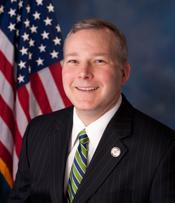
Historical · U.S. House · Arkansas · District 2
Tim Griffin
Former U.S. Representative · Arkansas District 2 · 2011–2015 · Republican
Tim Griffin represented Arkansas's District 2 in the United States House of Representatives (2011–2015) for the Republican party. The page below collects sourced biographical facts, term history, committee roles, and provenance for Griffin.
Bioguide ID: G000567
Key facts
- Full name
- Tim Griffin
- State
- Arkansas
- District
- District 2
- Party
- Republican
- House service
- 2011–2015
- First House term
- 2011
- Status
- Left office
- Current term ends
- —
- Born
- 1968
- Bioguide ID
- G000567
- Committee assignments
- —
- Dataset version
- 1.20260605
Biographical narrative
842 words · sourced from the Wikipedia REST extract
John Timothy Griffin is an American lawyer and politician who served as a U.S. Representative for Arkansas's 2nd congressional district from 2011 to 2015. A member of the Republican Party, Griffin's political career includes roles as the U.S. Attorney for the Eastern District of Arkansas and as the 20th lieutenant governor of Arkansas. He was born on August 21, 1968, in Charlotte, North Carolina, and has been involved in various capacities within the political and legal arenas throughout his career.
Early life and career
Tim Griffin was born in Charlotte, North Carolina, but grew up in Magnolia, Arkansas, located in Columbia County in the southern part of the state. His educational background includes a degree from Hendrix College, followed by studies at Pembroke College, Oxford. He later earned his Juris Doctor from Tulane Law School, equipping him with a solid foundation for his future legal and political endeavors.
Griffin's early career was marked by significant involvement in political investigations and campaigns. From September 1995 to January 1997, he worked as an investigator under Special Prosecutor David Barrett, focusing on the inquiry into former Secretary of Housing and Urban Development, Henry Cisneros. Following this role, he served for two years as the Senior Investigative Counsel for the House Committee on Government Reform, where he contributed to oversight and accountability efforts within the federal government.
In September 1999, Griffin transitioned to the Republican National Committee (RNC), where he served as Deputy Research Director during George W. Bush's presidential campaign. His responsibilities included providing legal advice during the contentious Florida recount in the 2000 election. He continued to rise within the RNC, taking on the role of Research Director and Deputy Communications Director for Bush's 2004 reelection campaign. His tenure in these positions was notable for his involvement in strategic communications and opposition research.
Griffin's political career continued to evolve as he joined the George W. Bush administration in April 2005, working as a Special Assistant to the President and Deputy Director in the Office of Political Affairs. His role in the White House allowed him to engage directly with national political strategies and initiatives.
In September 2006, Griffin was appointed as a special assistant to U.S. Attorney Bud Cummins in the Eastern District of Arkansas. Shortly thereafter, he was named interim U.S. Attorney for the district, a position he held until June 2007. His appointment was controversial, as it came amid allegations that his selection was politically motivated, leading to tensions with Arkansas's Democratic senators. Griffin's tenure as U.S. Attorney was marked by a focus on law enforcement and public service, although he ultimately resigned from the position, citing personal reasons.
House tenure
Tim Griffin was elected to the U.S. House of Representatives in 2010, representing Arkansas's 2nd congressional district. His first term began in January 2011, following a successful campaign that highlighted his background in law and public service. During his time in Congress, Griffin served on various committees and was involved in legislative discussions that aligned with his party's priorities.
Griffin's tenure in the House was characterized by his engagement in issues pertinent to his constituents, including economic development, healthcare, and government accountability. He was known for his efforts to advocate for policies that reflected the interests of Arkansans, drawing on his experience in both the legal and political spheres.
Throughout his congressional career, Griffin participated in numerous legislative initiatives and debates, contributing to the broader discourse on national issues. His time in the House concluded in January 2015, after which he pursued other political opportunities, including a successful bid for the office of lieutenant governor of Arkansas.
Legislative focus and committees
During his time in the U.S. House of Representatives, Tim Griffin focused on a range of legislative issues that were significant to his constituents and aligned with the Republican Party's platform. His legislative priorities included economic growth, healthcare reform, and enhancing government efficiency. Griffin's background as a lawyer and his experience in public service informed his approach to these issues, allowing him to engage in complex discussions regarding policy implications.
Griffin served on several committees during his congressional tenure, which provided him with a platform to influence legislation and advocate for the interests of Arkansas residents. His committee assignments allowed him to participate in the development of policies related to various sectors, including finance, healthcare, and infrastructure. Through these roles, he aimed to address the needs and concerns of his constituents while contributing to the national legislative agenda.
In addition to his committee work, Griffin was involved in various caucuses and initiatives that sought to promote specific interests or address particular challenges facing the nation. His participation in these groups reflected his commitment to representing the diverse perspectives of his constituents and engaging with broader national conversations.
After concluding his service in the House, Griffin transitioned to other political roles, including serving as the lieutenant governor of Arkansas and later as the attorney general of the state. His experiences in Congress contributed to his understanding of governance and public policy, shaping his subsequent endeavors in state leadership.
Notable legislation
Sponsored and co-sponsored legislation for Tim Griffin is pending operator curation. The biographical narrative above carries the same provenance trail until per-bill rows are written.
Sources
- [1]https://en.wikipedia.org/wiki/Tim_GriffinWikipedia · retrieved 2026-06-05
Notable quotes
Sourced quotes for Tim Griffin are pending operator curation. Narrative-scope provenance remains attached below.
Sources
- [1]https://en.wikipedia.org/wiki/Tim_GriffinWikipedia · retrieved 2026-06-05
Key positions
Curated policy positions for Tim Griffin are pending operator review. The biographical narrative above carries the same provenance trail until per-topic positions are written.
Sources
- [1]https://en.wikipedia.org/wiki/Tim_GriffinWikipedia · retrieved 2026-06-05
Terms served
- 2011–2013U.S. House · Term 1 · Republican
- 2013–2015U.S. House · Term 2 · Republican
Sources & provenance
Every attributable claim above carries a per-section [N] marker that resolves to the corresponding URL below. Each entry records the upstream provider, the canonical URL, and the timestamp at which the source was retrieved by the ingest pipeline.
Key facts
- https://bioguide.congress.gov/search/bio/G000567bioguide · retrieved 2026-06-05
- http://griffin.house.govhouse.gov · retrieved 2026-06-05
Biographical narrative
- https://en.wikipedia.org/wiki/Tim_Griffinwikipedia · retrieved 2026-06-05
Find your representative
Every U.S. state elects representatives by district. Browse Arkansas’s delegation, the full former-representative roster, or explore the role and term length.
Related on The Candidate
- Preceded by Vic SnyderEarlier holder of the Arkansas District 2 House seat · Democratic.Open
- Alfred GreenwoodFormer U.S. Representative · Arkansas District 1 · DemocraticOpen
- Archibald YellFormer U.S. Representative · Arkansas District 1 · DemocraticOpen
- Asa HodgesFormer U.S. Representative · Arkansas District 1 · RepublicanOpen
- Bill Alexander Jr.Former U.S. Representative · Arkansas District 1 · DemocraticOpen
- Republican PartyFederal candidates and office holders on the Republican line.Open