
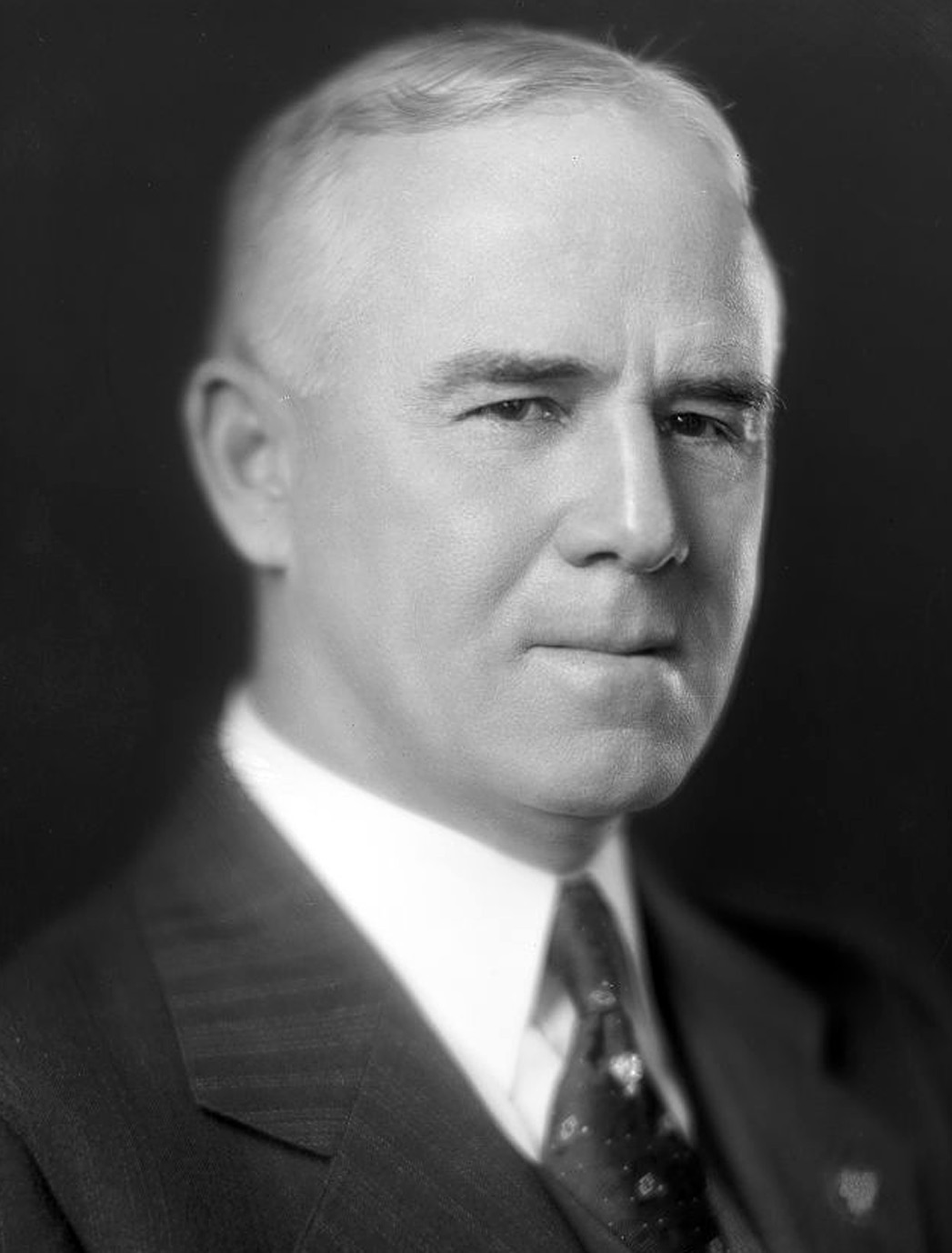
Historical · U.S. House · Arkansas · District 3
Claude Fuller
Former U.S. Representative · Arkansas District 3 · 1929–1939 · Democratic
Claude Fuller represented Arkansas's District 3 in the United States House of Representatives (1929–1939) for the Democratic party. The page below collects sourced biographical facts, term history, committee roles, and provenance for Fuller.
Bioguide ID: F000408
Key facts
- Full name
- Claude Fuller
- State
- Arkansas
- District
- District 3
- Party
- Democratic
- House service
- 1929–1939
- First House term
- 1929
- Status
- Left office
- Current term ends
- —
- Born
- 1876
- Bioguide ID
- F000408
- Committee assignments
- —
- Dataset version
- 1.20260605
Biographical narrative
876 words · sourced from the Wikipedia REST extract
Claude Fuller was a prominent American politician and lawyer who served as a U.S. Representative for Arkansas's 3rd congressional district from 1929 until 1939. A member of the Democratic Party, Fuller had a diverse career that included roles in local government, law, and banking. His early life in Illinois and subsequent move to Arkansas shaped his commitment to public service and community development.
Early life and career
Claude Albert Fuller was born on January 20, 1876, in Prophetstown, Illinois, to Wilmont P. and Maria Ocobock Fuller. In 1885, when he was just nine years old, his family relocated to Arkansas, settling on a farm near Eureka Springs. This move marked the beginning of Fuller's deep connection to the region, which would later serve as the backdrop for much of his political career.
Fuller received his early education in public schools, where he demonstrated an early interest in education and community involvement. To support himself during his studies, he worked various jobs, including as a boot black and a janitor at his school. His determination to pursue a legal career led him to complete high school in Eureka Springs in 1896 at the age of twenty. Following his graduation, he moved to Chicago to attend the Kent School of Law, where he furthered his legal education. After his time in Chicago, he returned to Eureka Springs to study law under the guidance of local attorney C. G. White.
Fuller was admitted to the bar on February 5, 1898, after successfully passing the bar examination in open court. His legal career began shortly thereafter, and he quickly became involved in local governance. He served as the city clerk of Eureka Springs from 1898 to 1902, a role that provided him with valuable experience in municipal administration. His political career continued to flourish as he was elected to the Arkansas House of Representatives, where he served from 1903 to 1905. Following this role, he was elected mayor of Eureka Springs, serving two non-consecutive terms from 1906 to 1910 and again from 1920 to 1928.
In addition to his mayoral duties, Fuller held several other significant positions. He served as the prosecuting attorney for the fourth Arkansas judicial district from 1910 to 1914, which further solidified his reputation as a dedicated public servant. He was also involved in education as president of the Eureka Springs School Board from 1916 to 1928. His political engagement extended beyond local governance; he was a delegate to numerous Democratic State conventions from 1903 to 1943 and participated in Democratic National Conventions from 1908 and 1912, as well as in later years.
House tenure
Fuller's congressional career began when he was elected as a Democrat to the U.S. House of Representatives, representing Arkansas's 3rd congressional district. His first term commenced on March 4, 1929, and he was subsequently re-elected to four additional terms, serving in total for a decade until January 3, 1939. During his time in Congress, Fuller was part of the Seventy-first Congress and the four succeeding Congresses, where he contributed to various legislative efforts and discussions pertinent to his constituents and the nation.
Fuller's tenure in the House coincided with a period of significant change in American politics and society, particularly during the Great Depression. While specific details of his legislative actions and the bills he supported are not documented here, it is known that he was involved in the broader Democratic agenda of the time, which focused on recovery and reform in response to the economic challenges facing the country.
Despite his contributions and service, Fuller faced challenges in his later political career. In 1938, he sought renomination but was unsuccessful. Following his departure from Congress, he returned to his legal practice in Eureka Springs, where he continued to engage with the community and contribute to local affairs.
Legislative focus and committees
During his time in the U.S. House of Representatives, Fuller was involved in various legislative matters that reflected the interests and needs of his constituents in Arkansas. While specific committee assignments and legislative initiatives are not detailed, it can be inferred that his background in law and local governance informed his approach to federal legislation.
Fuller’s political career was characterized by a commitment to public service and community development. His experiences as a lawyer, mayor, and state representative provided him with a unique perspective on the challenges facing both local and national governance. His involvement in state conventions and national party events also indicates a dedication to the Democratic Party and its principles, which he upheld throughout his career.
After leaving Congress, Fuller remained active in the legal field and took on leadership roles in local banking. He served as the president of the Bank of Eureka Springs from 1930 until his death, demonstrating his continued influence in the community and his commitment to economic development.
Claude Fuller passed away on January 8, 1968, in Eureka Springs, Arkansas, just days before his 92nd birthday. His contributions to local and national politics, as well as his dedication to public service, left a lasting impact on the community he served. He was interred at Odd Fellows Cemetery in Eureka Springs, marking the end of a life dedicated to the service of others and the betterment of his community.
Notable legislation
Sponsored and co-sponsored legislation for Claude Fuller is pending operator curation. The biographical narrative above carries the same provenance trail until per-bill rows are written.
Sources
- [1]https://en.wikipedia.org/wiki/Claude_A._FullerWikipedia · retrieved 2026-06-05
Notable quotes
Sourced quotes for Claude Fuller are pending operator curation. Narrative-scope provenance remains attached below.
Sources
- [1]https://en.wikipedia.org/wiki/Claude_A._FullerWikipedia · retrieved 2026-06-05
Key positions
Curated policy positions for Claude Fuller are pending operator review. The biographical narrative above carries the same provenance trail until per-topic positions are written.
Sources
- [1]https://en.wikipedia.org/wiki/Claude_A._FullerWikipedia · retrieved 2026-06-05
Terms served
- 1929–1931U.S. House · Term 1 · Democratic
- 1931–1933U.S. House · Term 2 · Democratic
- 1933–1935U.S. House · Term 3 · Democratic
- 1935–1937U.S. House · Term 4 · Democratic
- 1937–1939U.S. House · Term 5 · Democratic
Sources & provenance
Every attributable claim above carries a per-section [N] marker that resolves to the corresponding URL below. Each entry records the upstream provider, the canonical URL, and the timestamp at which the source was retrieved by the ingest pipeline.
Key facts
- https://bioguide.congress.gov/search/bio/F000408bioguide · retrieved 2026-06-05
- https://www.govtrack.us/congress/members/404349govtrack · retrieved 2026-06-05
Biographical narrative
- https://en.wikipedia.org/wiki/Claude_A._Fullerwikipedia · retrieved 2026-06-05
Find your representative
Every U.S. state elects representatives by district. Browse Arkansas’s delegation, the full former-representative roster, or explore the role and term length.
Related on The Candidate
- Preceded by John TillmanEarlier holder of the Arkansas District 3 House seat · Democratic.Open
- Succeeded by Clyde EllisLater holder of the Arkansas District 3 House seat · Democratic.Open
- Alfred GreenwoodFormer U.S. Representative · Arkansas District 1 · DemocraticOpen
- Archibald YellFormer U.S. Representative · Arkansas District 1 · DemocraticOpen
- Asa HodgesFormer U.S. Representative · Arkansas District 1 · RepublicanOpen
- Bill Alexander Jr.Former U.S. Representative · Arkansas District 1 · DemocraticOpen