
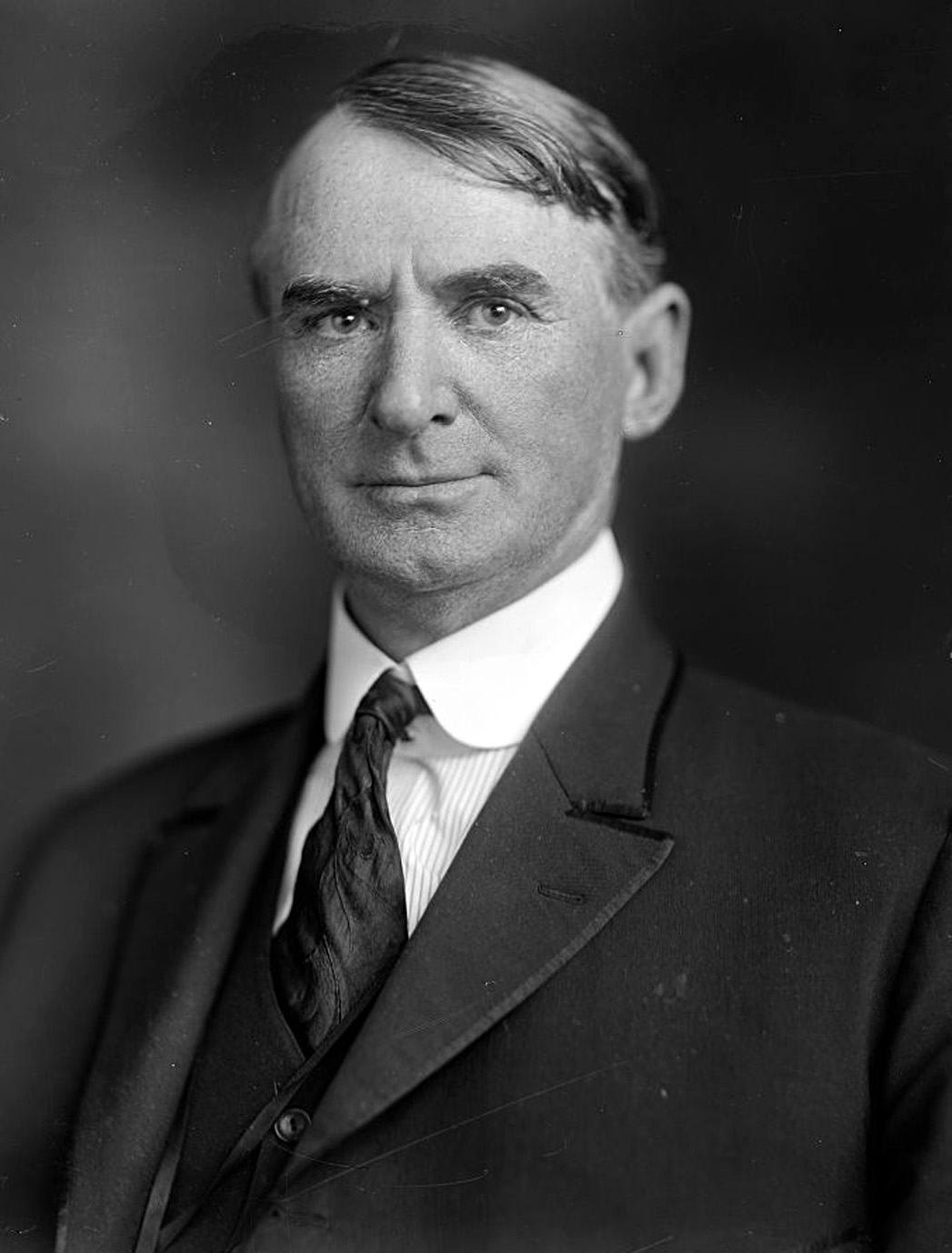
Historical · U.S. House · Arkansas · District 3
John Tillman
Former U.S. Representative · Arkansas District 3 · 1915–1929 · Democratic
John Tillman represented Arkansas's District 3 in the United States House of Representatives (1915–1929) for the Democratic party. The page below collects sourced biographical facts, term history, committee roles, and provenance for Tillman.
Bioguide ID: T000276
Key facts
- Full name
- John Tillman
- State
- Arkansas
- District
- District 3
- Party
- Democratic
- House service
- 1915–1929
- First House term
- 1915
- Status
- Left office
- Current term ends
- —
- Born
- 1859
- Bioguide ID
- T000276
- Committee assignments
- —
- Dataset version
- 1.20260606
Biographical narrative
878 words · sourced from the Wikipedia REST extract
John Tillman was a prominent political figure in Arkansas during the early 20th century, serving as a U.S. Representative for the state's third congressional district. A member of the Democratic Party, Tillman held office for a total of seven terms in the House of Representatives, beginning in 1915 and concluding in 1929. His legislative career was marked by significant involvement in state and local governance prior to his congressional service, and he played a role in various legal and educational capacities throughout his life.
Early life and career
John Newton Tillman was born on December 13, 1859, near Springfield, Missouri. His early education took place in common schools, which laid the foundation for his future academic pursuits. He graduated from the University of Arkansas at Fayetteville in 1880, marking a significant milestone in his educational journey. Following his graduation, Tillman began his professional career as an educator, teaching school while simultaneously studying law. His dedication to the legal field led to his admission to the bar in 1883, allowing him to commence his legal practice in Fayetteville, Arkansas.
Tillman's legal career was complemented by his involvement in public service. He served as the clerk of the circuit court for Washington County from 1884 to 1889, a role that provided him with valuable experience in the judicial system. His commitment to public service continued as he was elected to the Arkansas State Senate, where he served from 1888 to 1892. During his time in the state legislature, he proposed the Separate Coach Law of 1891, a piece of legislation that mandated the segregation of African American passengers on public transportation. This law was part of the broader Jim Crow laws that enforced racial segregation in the United States.
After his tenure in the state senate, Tillman transitioned to the role of prosecuting attorney for the fourth judicial circuit, serving from 1892 to 1898. His legal expertise further expanded when he was appointed as a judge of the same circuit court, a position he held from 1900 to 1905. Following his judicial service, Tillman took on a significant leadership role in education as the president of the University of Arkansas from 1905 to 1912. His contributions to the university helped shape the institution during a formative period.
House tenure
John Tillman's congressional career began when he was elected as a Democrat to the Sixty-fourth Congress, which convened on March 4, 1915. He successfully secured re-election for six consecutive terms, serving in the House of Representatives until March 3, 1929. Throughout his time in Congress, Tillman was involved in various legislative activities and contributed to discussions on a wide range of issues affecting his constituents and the nation.
One notable aspect of Tillman's congressional service was his involvement in the impeachment proceedings against George W. English, a judge of the United States District Court for the Eastern District of Illinois. In 1926, he was appointed as one of the managers by the House of Representatives to conduct these proceedings, highlighting his role in overseeing judicial accountability at the federal level. This responsibility illustrated the trust placed in him by his colleagues and underscored his engagement with significant legal matters during his tenure.
Tillman did not seek renomination in 1928, marking the end of his lengthy congressional career. His decision not to run again may have been influenced by various factors, including the changing political landscape and his own aspirations. Following his departure from Congress, Tillman returned to Fayetteville, Arkansas, where he continued to be involved in community affairs until his death on March 9, 1929.
Legislative focus and committees
During his time in the House of Representatives, John Tillman was involved in a variety of legislative issues that reflected the concerns and interests of his constituents in Arkansas. His background in law and education likely informed his approach to governance and policy-making. While specific details about the bills he sponsored or supported are not provided, it can be inferred that his legal expertise and experience in public service would have guided his legislative priorities.
Tillman's role in the impeachment proceedings against Judge English indicates his commitment to maintaining the integrity of the judicial system. This involvement suggests that he was attentive to issues of legal accountability and governance, which were significant during a time when the nation was grappling with various social and political challenges.
In addition to his legal focus, Tillman's long tenure in Congress allowed him to build relationships with fellow legislators and engage with a range of committees. These connections would have been crucial for advancing his legislative goals and representing the interests of his constituents effectively. His experience in the Arkansas State Senate and as a judge likely provided him with valuable insights into the legislative process, enabling him to navigate the complexities of federal governance.
Overall, John Tillman's career spanned several decades and encompassed various roles in public service, law, and education. His contributions to the state of Arkansas and the nation during his time in Congress reflect a commitment to public service and a focus on legal and educational issues. After his passing in 1929, he was interred in Evergreen Cemetery in Fayetteville, Arkansas, leaving behind a legacy shaped by his extensive involvement in the political and legal landscape of his time.
Notable legislation
Sponsored and co-sponsored legislation for John Tillman is pending operator curation. The biographical narrative above carries the same provenance trail until per-bill rows are written.
Sources
- [1]https://en.wikipedia.org/wiki/John_N._TillmanWikipedia · retrieved 2026-06-06
Notable quotes
Sourced quotes for John Tillman are pending operator curation. Narrative-scope provenance remains attached below.
Sources
- [1]https://en.wikipedia.org/wiki/John_N._TillmanWikipedia · retrieved 2026-06-06
Key positions
Curated policy positions for John Tillman are pending operator review. The biographical narrative above carries the same provenance trail until per-topic positions are written.
Sources
- [1]https://en.wikipedia.org/wiki/John_N._TillmanWikipedia · retrieved 2026-06-06
Terms served
- 1915–1917U.S. House · Term 1 · Democratic
- 1917–1919U.S. House · Term 2 · Democratic
- 1919–1921U.S. House · Term 3 · Democratic
- 1921–1923U.S. House · Term 4 · Democratic
- 1923–1925U.S. House · Term 5 · Democratic
- 1925–1927U.S. House · Term 6 · Democratic
- 1927–1929U.S. House · Term 7 · Democratic
Sources & provenance
Every attributable claim above carries a per-section [N] marker that resolves to the corresponding URL below. Each entry records the upstream provider, the canonical URL, and the timestamp at which the source was retrieved by the ingest pipeline.
Key facts
- https://bioguide.congress.gov/search/bio/T000276bioguide · retrieved 2026-06-06
- https://www.govtrack.us/congress/members/410849govtrack · retrieved 2026-06-06
Biographical narrative
- https://en.wikipedia.org/wiki/John_N._Tillmanwikipedia · retrieved 2026-06-06
Find your representative
Every U.S. state elects representatives by district. Browse Arkansas’s delegation, the full former-representative roster, or explore the role and term length.
Related on The Candidate
- Preceded by John FloydEarlier holder of the Arkansas District 3 House seat · Democratic.Open
- Succeeded by Claude FullerLater holder of the Arkansas District 3 House seat · Democratic.Open
- Alfred GreenwoodFormer U.S. Representative · Arkansas District 1 · DemocraticOpen
- Archibald YellFormer U.S. Representative · Arkansas District 1 · DemocraticOpen
- Asa HodgesFormer U.S. Representative · Arkansas District 1 · RepublicanOpen
- Bill Alexander Jr.Former U.S. Representative · Arkansas District 1 · DemocraticOpen