
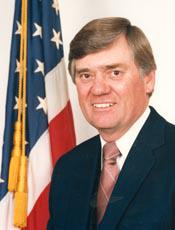
Historical · U.S. House · Arkansas · District 4
Beryl Anthony Jr.
Former U.S. Representative · Arkansas District 4 · 1979–1993 · Democratic
Beryl Anthony Jr. represented Arkansas's District 4 in the United States House of Representatives (1979–1993) for the Democratic party. The page below collects sourced biographical facts, term history, committee roles, and provenance for Jr..
Bioguide ID: A000213
Key facts
- Full name
- Beryl Anthony Jr.
- State
- Arkansas
- District
- District 4
- Party
- Democratic
- House service
- 1979–1993
- First House term
- 1979
- Status
- Left office
- Current term ends
- —
- Born
- 1938
- Bioguide ID
- A000213
- Committee assignments
- —
- Dataset version
- 1.20260605
Biographical narrative
874 words · sourced from the Wikipedia REST extract
Beryl Anthony Jr. was an American lawyer and politician who served as a Democratic U.S. Representative for Arkansas's 4th congressional district from 1979 until 1993. Throughout his seven terms in Congress, he was known for his involvement in various legislative initiatives, particularly in areas such as social security, rural health care, and international trade. His career spanned significant political and social changes in the United States, reflecting the evolving priorities of his constituents and the nation.
Early life and career
Beryl Franklin Anthony Jr. was born on February 21, 1938, in El Dorado, Arkansas. He was the son of Beryl Franklin Anthony and Oma Lee Roark. Anthony completed his primary and secondary education in the Union County public school system, graduating from El Dorado High School in 1956. He pursued higher education at the University of Arkansas, where he earned both Bachelor of Science and Bachelor of Arts degrees in 1961. During his time at the university, he became a member of the Sigma Chi fraternity. Following his undergraduate studies, Anthony continued at the University of Arkansas to obtain his Juris Doctor degree in 1963.
After being admitted to the Arkansas bar in the same year, Anthony began his legal career in El Dorado. His early professional roles included serving as assistant attorney general from 1964 to 1965 and as deputy prosecuting attorney for Union County from 1966 to 1970. He later became the prosecuting attorney for the 13th Judicial District, a position he held from 1971 to 1976. In 1977, he transitioned to private practice while also serving as legal counsel for Anthony Forest Products Company.
In addition to his legal work, Anthony was active in the political arena, participating as a delegate to Arkansas State Democratic conventions from 1964 to 1978. His legal expertise and political involvement laid the groundwork for his subsequent election to the U.S. House of Representatives.
House tenure
Beryl Anthony was elected to the United States House of Representatives in November 1978, representing Arkansas's 4th congressional district. He officially took office on January 3, 1979, and served a total of seven terms until January 3, 1993. During his initial term, he was elected vice president of his freshman class in Congress, which positioned him to take on leadership roles early in his legislative career.
Anthony was a founding member of the Sunbelt Coalition, a group that focused on monitoring the legislative impacts on southern states. His committee assignments included the House Ways and Means Committee, where he was appointed after his first term. He also served on the Oversight and Trade Subcommittees, as well as the Select Committee on Children, Youth, and Families. His leadership extended to chairing the Democratic Congressional Campaign Committee from 1987 to 1991, where he played a significant role in strategizing and supporting Democratic candidates across the country.
Throughout his congressional career, Anthony maintained a conservative voting record, aligning with the tendencies of many Southern Democrats during that period. His legislative efforts were diverse, with a focus on issues that affected his constituents and the broader national landscape.
Legislative focus and committees
During his time in Congress, Beryl Anthony was involved in a variety of significant legislative initiatives. As a member of the Ways and Means Committee, he played a crucial role in restructuring the Social Security trust fund in the 1980s, an effort aimed at ensuring the long-term viability of the program. He was also a strong advocate for improving rural health care, earning recognition from both the Arkansas Hospital Association and the American Hospital Association for his contributions to this area.
In his later terms, Anthony shifted his focus toward international trade, actively participating in discussions and legislation related to the North American Free Trade Agreement (NAFTA) and the General Agreement on Tariffs and Trade (GATT). His work in these areas reflected a broader interest in enhancing economic opportunities for his constituents and the nation.
In 1988, Congress established the bipartisan Anthony Public Finance Commission, which included mayors, governors, local government officials, and finance professionals. The commission was tasked with recommending legislation to help local governments finance essential infrastructure projects, such as roads, schools, and hospitals. One of its notable achievements was the Arbitrage Relief Provision, enacted in 1989, which significantly reduced borrowing costs for local governments undertaking infrastructure investments.
Despite his legislative accomplishments, Anthony's career faced challenges. His involvement in the House banking scandal contributed to his defeat in the Democratic primary runoff in June 1992, where he lost to Arkansas Secretary of State William J. "Bill" McCuen. McCuen subsequently lost the general election to Republican candidate Jay W. Dickey.
After leaving Congress, Anthony transitioned to a career in private practice, becoming a partner at the Washington, D.C. office of Winston & Strawn in January 1993. He represented a diverse range of clients, including trade associations, governmental entities, and corporations. His work involved various issues, including health care reform, trade relations with China, and tax law changes affecting the pharmaceutical industry.
Beryl Anthony Jr. passed away on January 11, 2025, in Palm City, Florida, at the age of 86. His legacy includes his contributions to legislative processes that shaped the lives of many in Arkansas and beyond, as well as his commitment to public service throughout his career.
Notable legislation
Sponsored and co-sponsored legislation for Beryl Anthony Jr. is pending operator curation. The biographical narrative above carries the same provenance trail until per-bill rows are written.
Sources
- [1]https://en.wikipedia.org/wiki/Beryl_Anthony_Jr.Wikipedia · retrieved 2026-06-05
Notable quotes
Sourced quotes for Beryl Anthony Jr. are pending operator curation. Narrative-scope provenance remains attached below.
Sources
- [1]https://en.wikipedia.org/wiki/Beryl_Anthony_Jr.Wikipedia · retrieved 2026-06-05
Key positions
Curated policy positions for Beryl Anthony Jr. are pending operator review. The biographical narrative above carries the same provenance trail until per-topic positions are written.
Sources
- [1]https://en.wikipedia.org/wiki/Beryl_Anthony_Jr.Wikipedia · retrieved 2026-06-05
Terms served
- 1979–1981U.S. House · Term 1 · Democratic
- 1981–1983U.S. House · Term 2 · Democratic
- 1983–1985U.S. House · Term 3 · Democratic
- 1985–1987U.S. House · Term 4 · Democratic
- 1987–1989U.S. House · Term 5 · Democratic
- 1989–1991U.S. House · Term 6 · Democratic
- 1991–1993U.S. House · Term 7 · Democratic
Sources & provenance
Every attributable claim above carries a per-section [N] marker that resolves to the corresponding URL below. Each entry records the upstream provider, the canonical URL, and the timestamp at which the source was retrieved by the ingest pipeline.
Key facts
- https://bioguide.congress.gov/search/bio/A000213bioguide · retrieved 2026-06-05
- https://www.govtrack.us/congress/members/400898govtrack · retrieved 2026-06-05
Biographical narrative
- https://en.wikipedia.org/wiki/Beryl_Anthony_Jr.wikipedia · retrieved 2026-06-05
Find your representative
Every U.S. state elects representatives by district. Browse Arkansas’s delegation, the full former-representative roster, or explore the role and term length.
Related on The Candidate
- Preceded by Oren HarrisEarlier holder of the Arkansas District 4 House seat · Democratic.Open
- Succeeded by Jay DickeyLater holder of the Arkansas District 4 House seat · Republican.Open
- Alfred GreenwoodFormer U.S. Representative · Arkansas District 1 · DemocraticOpen
- Archibald YellFormer U.S. Representative · Arkansas District 1 · DemocraticOpen
- Asa HodgesFormer U.S. Representative · Arkansas District 1 · RepublicanOpen
- Bill Alexander Jr.Former U.S. Representative · Arkansas District 1 · DemocraticOpen