
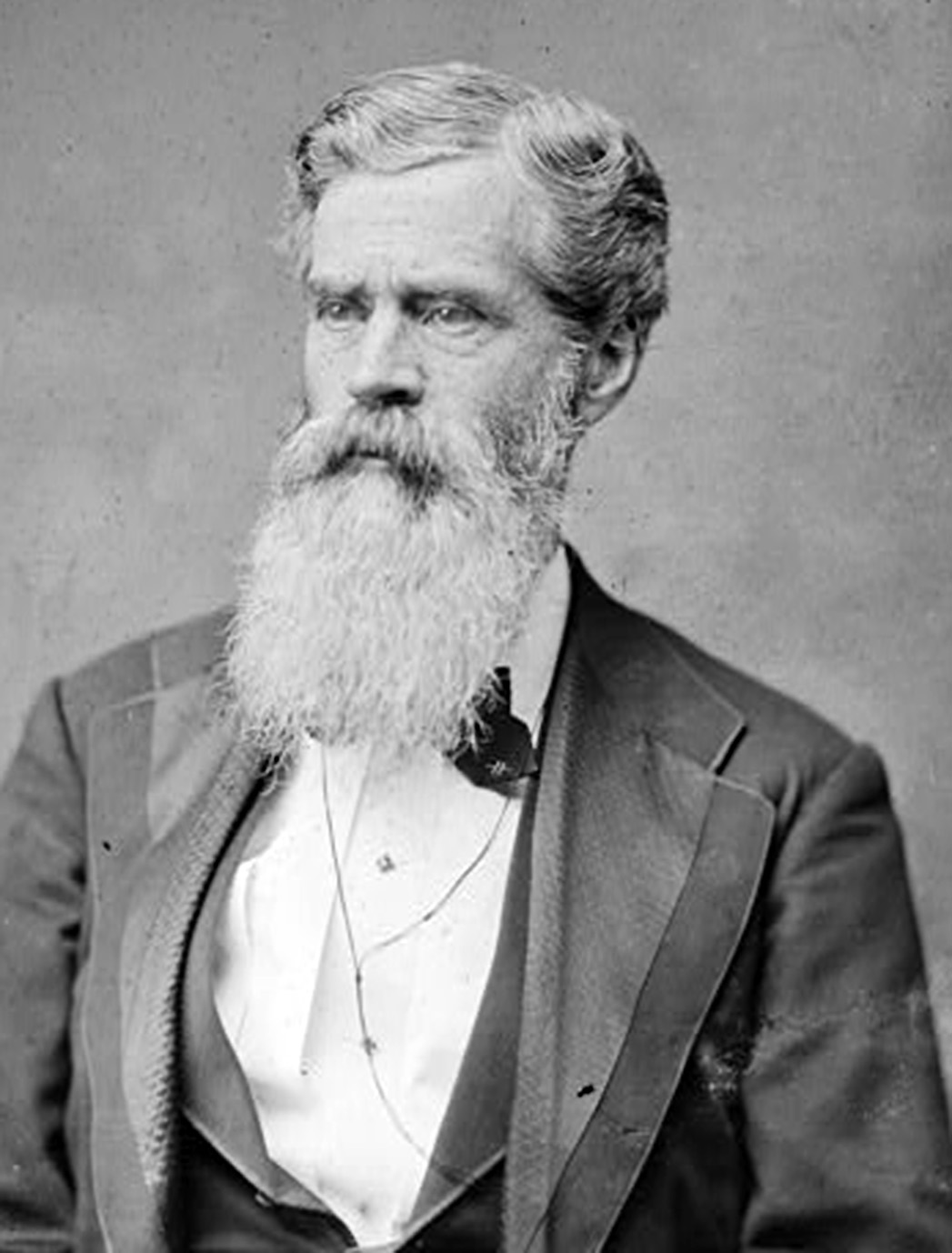
Historical · U.S. House · Arkansas · District 4
Thomas Gunter
Former U.S. Representative · Arkansas District 4 · 1873–1883 · Democratic
Thomas Gunter represented Arkansas's District 4 in the United States House of Representatives (1873–1883) for the Democratic party. The page below collects sourced biographical facts, term history, committee roles, and provenance for Gunter.
Bioguide ID: G000527
Key facts
- Full name
- Thomas Gunter
- State
- Arkansas
- District
- District 4
- Party
- Democratic
- House service
- 1873–1883
- First House term
- 1873
- Status
- Left office
- Current term ends
- —
- Born
- 1826
- Bioguide ID
- G000527
- Committee assignments
- —
- Dataset version
- 1.20260606
Biographical narrative
1,079 words · sourced from the Wikipedia REST extract
Thomas Gunter was a prominent political figure in the late 19th century, serving as a U.S. Representative from Arkansas. A member of the Democratic Party, Gunter's political career spanned five terms in the House of Representatives, where he was known for his advocacy of tribal sovereignty and his role in various congressional committees. His tenure in Congress lasted from the mid-1870s until the early 1880s, during which he engaged in significant legislative activities and contributed to the political landscape of his time.
Early life and career
Thomas Gunter was born on September 18, 1826, near McMinnville in Warren County, Tennessee. His early education included classical studies, which he pursued at Irving College, from which he graduated in 1850. Following his graduation, Gunter turned his attention to the field of law. He studied diligently and was admitted to the bar in 1853, marking the beginning of his legal career. Shortly thereafter, he relocated to Fayetteville, Arkansas, where he commenced his practice in the same year.
Gunter's legal career was briefly interrupted by the Civil War, during which he served as a colonel in the Confederate States Army, leading the Thirteenth Regiment of Arkansas Volunteers. His military service during this tumultuous period in American history undoubtedly influenced his later political views and decisions. After the war, Gunter returned to Arkansas and resumed his legal practice. He also took on the role of prosecuting attorney for the fourth judicial circuit from 1866 to 1868, further establishing his reputation in the legal community.
Gunter's entry into politics was marked by his affiliation with the Democratic Party, which was a dominant political force in the South during the Reconstruction era. His political career began to take shape when he contested the 1872 general election for the Third Congressional District of Arkansas against Republican William W. Wilshire. This election was contentious and involved a thorough review by the Committee on Elections. Ultimately, Gunter was declared the rightful winner of the election, and he took the oath of office on June 16, 1874, marking the beginning of his congressional career.
House tenure
Once in office, Gunter represented Arkansas's Fourth Congressional District, having been elected to the Forty-fourth Congress and subsequently to three additional Congresses. His tenure in the House of Representatives lasted from June 16, 1874, until March 3, 1883. During this period, he was involved in various legislative activities and served on important committees, which allowed him to influence policy and advocate for issues he deemed significant.
Gunter's role in Congress included serving as the chairman of the Committee on Private Land Claims during the Forty-fourth through the Forty-sixth Congresses. This committee was responsible for addressing issues related to land ownership and claims, particularly in the context of land grants and disputes that arose after the Civil War. Gunter's leadership in this capacity underscored his commitment to addressing the complexities of land ownership in a post-war society, where many individuals and families were seeking to secure their rights to property.
Throughout his congressional career, Gunter faced various challenges and opportunities that shaped his legislative agenda. He was known for his strong advocacy for tribal sovereignty, a position that reflected his understanding of the historical and cultural significance of Native American land rights. Gunter's commitment to this cause was evident in his opposition to policies that sought to undermine the communal land ownership systems of Native tribes. He believed that the federal government had a responsibility to respect the rights of tribes as the rightful owners of their lands.
Gunter's tenure in the House was marked by significant political developments, including debates over land policies and the treatment of Native American tribes. His advocacy for tribal sovereignty was particularly notable in the context of an 1880 removal agreement with the Utes of Colorado, which he opposed. Gunter argued that the government had historically treated Native tribes as communal entities and that this approach had yielded positive outcomes for both the tribes and American society. His perspective highlighted the complexities of land ownership and the need for a nuanced understanding of the relationship between the federal government and Native peoples.
Despite his active involvement in Congress, Gunter did not seek renomination in 1882, marking the end of his congressional career. After leaving office, he returned to Fayetteville, Arkansas, where he resumed his legal practice. His decision to step away from politics may have been influenced by the changing political landscape and the challenges faced by the Democratic Party during that period.
Legislative focus and committees
During his time in the House of Representatives, Thomas Gunter's legislative focus was characterized by his commitment to issues related to land claims and Native American rights. As chairman of the Committee on Private Land Claims, he played a crucial role in addressing the complexities surrounding land ownership in the aftermath of the Civil War. This committee was essential in resolving disputes and clarifying ownership rights, particularly for individuals and families who had been affected by the war and subsequent policies.
Gunter's advocacy for tribal sovereignty was a defining aspect of his legislative agenda. He believed in the importance of recognizing the rights of Native American tribes to their ancestral lands and opposed policies that sought to impose individual land allotments on these communities. His arguments emphasized the historical context of land treaties and the need for the federal government to uphold its commitments to tribal nations. Gunter's stance on these issues reflected a broader debate within Congress regarding the treatment of Native peoples and the preservation of their cultural identities.
Throughout his congressional career, Gunter's contributions were shaped by the political dynamics of the time. The post-Civil War era was marked by significant social and economic changes, and Gunter's legislative efforts were informed by these developments. His work on the Committee on Private Land Claims allowed him to engage with a range of issues, including land grants, property rights, and the implications of federal policies on local communities.
After his departure from Congress in 1883, Gunter continued to practice law in Fayetteville, where he remained active in the legal community until his death on January 12, 1904. He was interred in Evergreen Cemetery, leaving behind a legacy as a dedicated public servant who navigated the complexities of his time with a focus on land rights and the sovereignty of Native American tribes. His career reflects the challenges and opportunities faced by politicians in the late 19th century, as they sought to address the pressing issues of their era.
Notable legislation
Sponsored and co-sponsored legislation for Thomas Gunter is pending operator curation. The biographical narrative above carries the same provenance trail until per-bill rows are written.
Sources
- [1]https://en.wikipedia.org/wiki/Thomas_M._GunterWikipedia · retrieved 2026-06-06
Notable quotes
Sourced quotes for Thomas Gunter are pending operator curation. Narrative-scope provenance remains attached below.
Sources
- [1]https://en.wikipedia.org/wiki/Thomas_M._GunterWikipedia · retrieved 2026-06-06
Key positions
Curated policy positions for Thomas Gunter are pending operator review. The biographical narrative above carries the same provenance trail until per-topic positions are written.
Sources
- [1]https://en.wikipedia.org/wiki/Thomas_M._GunterWikipedia · retrieved 2026-06-06
Terms served
- 1873–1875U.S. House · Term 1 · Democratic
- 1875–1877U.S. House · Term 2 · Democratic
- 1877–1879U.S. House · Term 3 · Democratic
- 1879–1881U.S. House · Term 4 · Democratic
- 1881–1883U.S. House · Term 5 · Democratic
Sources & provenance
Every attributable claim above carries a per-section [N] marker that resolves to the corresponding URL below. Each entry records the upstream provider, the canonical URL, and the timestamp at which the source was retrieved by the ingest pipeline.
Key facts
- https://bioguide.congress.gov/search/bio/G000527bioguide · retrieved 2026-06-06
- https://www.govtrack.us/congress/members/404872govtrack · retrieved 2026-06-06
Biographical narrative
- https://en.wikipedia.org/wiki/Thomas_M._Gunterwikipedia · retrieved 2026-06-06
Find your representative
Every U.S. state elects representatives by district. Browse Arkansas’s delegation, the full former-representative roster, or explore the role and term length.
Related on The Candidate
- Succeeded by John RogersLater holder of the Arkansas District 4 House seat · Democratic.Open
- Alfred GreenwoodFormer U.S. Representative · Arkansas District 1 · DemocraticOpen
- Archibald YellFormer U.S. Representative · Arkansas District 1 · DemocraticOpen
- Asa HodgesFormer U.S. Representative · Arkansas District 1 · RepublicanOpen
- Bill Alexander Jr.Former U.S. Representative · Arkansas District 1 · DemocraticOpen
- Democratic PartyFederal candidates and office holders on the Democratic line.Open