
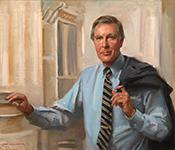
Historical · U.S. House · Arizona · District 2
Morris Udall
Former U.S. Representative · Arizona District 2 · 1961–1991 · Democratic
Morris Udall represented Arizona's District 2 in the United States House of Representatives (1961–1991) for the Democratic party. The page below collects sourced biographical facts, term history, committee roles, and provenance for Udall.
Bioguide ID: U000001
Key facts
- Full name
- Morris Udall
- State
- Arizona
- District
- District 2
- Party
- Democratic
- House service
- 1961–1991
- First House term
- 1961
- Status
- Left office
- Current term ends
- —
- Born
- 1922
- Bioguide ID
- U000001
- Committee assignments
- —
- Dataset version
- 1.20260605
Biographical narrative
1,201 words · sourced from the Wikipedia REST extract
Morris K. Udall was an American attorney and politician who served as a U.S. Representative for Arizona's 2nd congressional district from 1961 until 1991. A member of the Democratic Party, Udall was known for his independent and liberal views, which distinguished him in the political landscape of his time. He gained national prominence as a leading contender for the Democratic presidential nomination in 1976, although he ultimately lost to Jimmy Carter. Throughout his lengthy congressional career, Udall was recognized for his significant contributions to environmental conservation, political reform, and opposition to the Vietnam War. His legacy includes a commitment to public service that was influenced by his upbringing and personal experiences.
Early life and career
Morris King Udall was born on June 15, 1922, in St. Johns, Arizona, as one of six children in the Udall family. His parents were Levi Stewart Udall, a lawyer who later served as Chief Justice of the Arizona Supreme Court, and Louisa (née Lee) Udall, a writer with a deep interest in Native American culture. The values of public service and responsibility were instilled in Udall from an early age, influenced by his father's legal career and his mother's literary pursuits. The family lived in a rural environment, which Udall described as harsh and primitive, where hard work was a necessity for survival.
At the age of six, Udall suffered a significant injury when a friend's pocket knife accidentally cut his right eye, leading to its eventual loss. His family faced financial challenges that prevented them from obtaining timely medical treatment, resulting in Udall wearing a glass eye for the rest of his life. This experience had a profound impact on his personality and political outlook, shaping his empathy for others facing adversity.
Despite the challenges posed by his injury, Udall excelled in sports during his high school years, particularly in basketball and football. He was a standout athlete, serving as quarterback for his high school football team, which went undefeated. In addition to his athletic achievements, he was actively involved in school activities, including writing a political column for the school newspaper and participating in the school band and drama productions.
Following high school, Udall sought to serve in the military during World War II. He initially attempted to enlist in the Army Air Forces but faced rejection due to his glass eye. However, after medical standards changed, he was able to join the Army Air Forces in 1942. Udall served as a private and later received a commission as an officer, commanding an all-black squadron in Louisiana. This experience of confronting local discrimination deeply influenced his perspectives on civil rights and social justice. He later served in the South Pacific and achieved the rank of captain before his discharge in 1946.
After the war, Udall pursued higher education at the University of Arizona, where he earned a bachelor's degree and became a prominent basketball player, co-captaining the team. He was also involved in student government and joined the Sigma Chi fraternity. Following his undergraduate studies, he played professional basketball for the Denver Nuggets during the 1948–49 season while simultaneously attending law school at the University of Denver. He completed his legal education at the University of Arizona, graduating with a Juris Doctor (J.D.) degree in 1949.
Udall began his legal career by co-founding the law firm Udall & Udall in Tucson with his brother, Stewart. He served as the Pima County chief deputy attorney from 1950 to 1952 and later as county attorney from 1953 to 1954. In 1954, he sought a nomination for a Superior Court judgeship but was unsuccessful. He also taught labor law at the University of Arizona law school in 1955 and 1956, further establishing his credentials in the legal field.
House tenure
Morris Udall's political career in the U.S. House of Representatives began in 1961 when he won a special election to succeed his brother, Stewart Udall, who had vacated the seat. He represented Arizona's 2nd congressional district for a total of 16 terms, serving until May 4, 1991. Throughout his tenure, Udall became a well-known figure in Congress, recognized for his independent approach and commitment to various progressive causes.
During his time in the House, Udall was particularly noted for his leadership in environmental conservation and protection. He played a pivotal role in advocating for legislation aimed at preserving natural resources and promoting sustainable practices. His efforts contributed to the establishment of significant environmental policies that shaped the landscape of American conservation efforts.
In addition to his environmental work, Udall was an advocate for political reform, focusing on improving the integrity of political campaigns and the legislative process. He was a vocal opponent of the Vietnam War, aligning himself with the growing anti-war sentiment among many Americans during the 1960s and 1970s. His stance on this issue resonated with constituents who were increasingly disillusioned with U.S. involvement in the conflict.
Udall's political aspirations extended beyond the House of Representatives. In 1976, he sought the Democratic Party nomination for president, positioning himself as a candidate who could bring a fresh perspective to national politics. Despite a strong campaign, he ultimately lost the nomination to Jimmy Carter. Following this, he continued to be active in national politics, supporting Ted Kennedy's challenge to Carter in the 1980 Democratic primary and delivering the keynote address at the 1980 Democratic National Convention.
Legislative focus and committees
Throughout his congressional career, Morris Udall served on several important committees, most notably as chairman of the House Interior Committee from 1977 until his retirement in 1991. In this role, he was instrumental in shaping policies related to public lands, natural resources, and environmental protection. His leadership on the committee allowed him to influence significant legislation that aimed to safeguard the environment and manage the nation's natural resources responsibly.
Udall's commitment to environmental issues was evident in his advocacy for various conservation initiatives, including the protection of national parks and wildlife habitats. He worked to promote legislation that addressed the challenges of urban development, land use, and the preservation of natural landscapes. His efforts contributed to the establishment of policies that prioritized ecological sustainability and conservation.
In addition to his environmental focus, Udall was engaged in broader legislative efforts aimed at improving the political landscape in the United States. He championed reforms designed to enhance transparency and accountability in government, reflecting his belief in the importance of ethical governance. His work in this area included advocating for campaign finance reform and measures to reduce the influence of special interests in politics.
Udall's tenure in Congress was marked by a dedication to public service and a commitment to addressing the pressing issues of his time. His legacy continues to influence contemporary discussions on environmental policy and political reform, and he is remembered as a prominent figure in American politics who championed progressive causes throughout his career. After being diagnosed with Parkinson's disease in 1980, Udall's health declined, leading to his resignation from Congress in 1991. He passed away on December 12, 1998, leaving behind a significant legacy in both environmental advocacy and public service. His family continues his legacy, with his son Mark Udall and nephew Tom Udall also serving in the U.S. Congress.
Notable legislation
Sponsored and co-sponsored legislation for Morris Udall is pending operator curation. The biographical narrative above carries the same provenance trail until per-bill rows are written.
Sources
- [1]https://en.wikipedia.org/wiki/Mo_UdallWikipedia · retrieved 2026-06-05
Notable quotes
Sourced quotes for Morris Udall are pending operator curation. Narrative-scope provenance remains attached below.
Sources
- [1]https://en.wikipedia.org/wiki/Mo_UdallWikipedia · retrieved 2026-06-05
Key positions
Curated policy positions for Morris Udall are pending operator review. The biographical narrative above carries the same provenance trail until per-topic positions are written.
Sources
- [1]https://en.wikipedia.org/wiki/Mo_UdallWikipedia · retrieved 2026-06-05
Terms served
- 1961–1963U.S. House · Term 1 · Democratic
- 1963–1965U.S. House · Term 2 · Democratic
- 1965–1967U.S. House · Term 3 · Democratic
- 1967–1969U.S. House · Term 4 · Democratic
- 1969–1971U.S. House · Term 5 · Democratic
- 1971–1973U.S. House · Term 6 · Democratic
- 1973–1975U.S. House · Term 7 · Democratic
- 1975–1977U.S. House · Term 8 · Democratic
- 1977–1979U.S. House · Term 9 · Democratic
- 1979–1981U.S. House · Term 10 · Democratic
- 1981–1983U.S. House · Term 11 · Democratic
- 1983–1985U.S. House · Term 12 · Democratic
- 1985–1987U.S. House · Term 13 · Democratic
- 1987–1989U.S. House · Term 14 · Democratic
- 1989–1991U.S. House · Term 15 · Democratic
- 1991–1991U.S. House · Term 16 · Democratic
Sources & provenance
Every attributable claim above carries a per-section [N] marker that resolves to the corresponding URL below. Each entry records the upstream provider, the canonical URL, and the timestamp at which the source was retrieved by the ingest pipeline.
Key facts
- https://bioguide.congress.gov/search/bio/U000001bioguide · retrieved 2026-06-05
- https://www.govtrack.us/congress/members/411025govtrack · retrieved 2026-06-05
Biographical narrative
- https://en.wikipedia.org/wiki/Mo_Udallwikipedia · retrieved 2026-06-05
Find your representative
Every U.S. state elects representatives by district. Browse Arizona’s delegation, the full former-representative roster, or explore the role and term length.
Related on The Candidate
- Preceded by Harold PattenEarlier holder of the Arizona District 2 House seat · Democratic.Open
- Succeeded by Ann KirkpatrickLater holder of the Arizona District 2 House seat · Democratic.Open
- John MurdockFormer U.S. Representative · Arizona District 1 · DemocraticOpen
- John RhodesFormer U.S. Representative · Arizona District 1 · RepublicanOpen
- John Rhodes IIIFormer U.S. Representative · Arizona District 1 · RepublicanOpen
- Rick RenziFormer U.S. Representative · Arizona District 1 · RepublicanOpen