
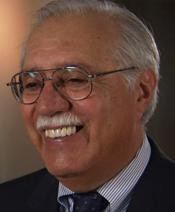
Historical · U.S. House · Arizona · District 7
Ed Pastor
Former U.S. Representative · Arizona District 7 · 1991–2015 · Democratic
Ed Pastor represented Arizona's District 7 in the United States House of Representatives (1991–2015) for the Democratic party. The page below collects sourced biographical facts, term history, committee roles, and provenance for Pastor.
Bioguide ID: P000099
Key facts
- Full name
- Ed Pastor
- State
- Arizona
- District
- District 7
- Party
- Democratic
- House service
- 1991–2015
- First House term
- 1991
- Status
- Left office
- Current term ends
- —
- Born
- 1943
- Bioguide ID
- P000099
- Committee assignments
- —
- Dataset version
- 1.20260605
Biographical narrative
893 words · sourced from the Wikipedia REST extract
Edward Lopez Pastor was an American politician who served as a member of the United States House of Representatives from Arizona for over two decades, from 1991 until 2015. A member of the Democratic Party, he represented three different congressional districts during his tenure: Arizona's 2nd district from 1991 to 2003, the 4th district from 2003 to 2013, and the 7th district from 2013 to 2015. Pastor was notable for being the first Latino to represent Arizona in Congress, and he was recognized for his liberal voting record and commitment to civil rights.
Early life and career
Ed Pastor was born on June 28, 1943, in Claypool, Arizona, as the eldest of three children. He completed his high school education and subsequently pursued higher education at Arizona State University (ASU), where he earned a Bachelor of Arts degree in chemistry. Following his graduation, Pastor began his professional career as a chemistry teacher at North High School in Phoenix. His early involvement in education laid the groundwork for his commitment to public service.
Pastor's career in public service continued when he took on the role of deputy director for the Guadalupe Organization Inc., a community service group. His dedication to community work led him back to ASU, where he obtained a Juris Doctor degree. This legal education facilitated his appointment as an assistant to Arizona Governor Raúl Héctor Castro, further enhancing his political acumen.
In 1976, Pastor was elected to the Maricopa County Board of Supervisors, where he served three terms. His experience in local government provided him with valuable insights into the needs and concerns of his constituents, which would later inform his work in the U.S. Congress.
House tenure
Ed Pastor's congressional career began in 1991 when he entered a special election to succeed retiring long-time incumbent Democrat Mo Udall in Arizona's 2nd congressional district. This district included parts of Tucson and southern Phoenix. Pastor won a competitive Democratic primary, narrowly defeating his closest challenger, Tucson mayor Tom Volgy, by a margin of approximately 1,800 votes. Following this victory, he won the special election with 55 percent of the vote, marking a significant milestone as he became the first Latino to represent Arizona in Congress.
During his time in the House, Pastor was reelected multiple times, initially serving in the 2nd district until it was renumbered as the 7th district after the 2000 census. His home was drawn into the newly established 4th district, which was heavily Democratic and had a majority-Latino population. Rather than relocate, Pastor opted to run in the 4th district, where he continued to secure reelection against nominal Republican opposition.
Throughout his tenure, which lasted for 12 terms, Pastor was recognized for his leadership within the Democratic Caucus, serving as one of the nine Chief Deputy Whips. His voting record was predominantly liberal, and he was often regarded as the most liberal member of Arizona's congressional delegation. His reputation extended beyond party lines, as he was respected by members of both parties for his willingness to engage in bipartisan efforts.
Legislative focus and committees
Pastor's legislative focus encompassed a variety of issues, reflecting his commitment to progressive values and civil rights. He was a founding member of the Congressional Progressive Caucus and was known for his pro-choice stance, consistently supporting the interests of organizations such as Planned Parenthood. His voting record demonstrated a commitment to reproductive rights, as evidenced by his opposition to the 2002 Iraq Resolution that initiated the Iraq War.
In addition to his stance on reproductive rights, Pastor was an advocate for civil rights, particularly concerning sexual orientation and race. He voted against measures that sought to define marriage as exclusively between one man and one woman and opposed a constitutional amendment aimed at banning same-sex marriage. His commitment to civil rights was recognized by the American Civil Liberties Union, which rated him highly for his pro-civil rights voting record.
Pastor's legislative actions also included opposition to the National Right to Carry Reciprocity Act and various trade agreements that he believed did not align with the interests of his constituents. He was supported by a range of advocacy groups, including the National Farmers Union and the Defenders of Wildlife Action Fund, reflecting his diverse legislative priorities.
Throughout his congressional career, Pastor served on several important committees, including the Committee on Appropriations, where he was involved in subcommittees focused on energy and water development, financial services, and transportation. His role as the Ranking Member on the Subcommittee on Transportation, Housing and Urban Development, and Related Agencies highlighted his influence on critical infrastructure and housing issues.
In February 2014, Pastor announced his decision not to seek reelection, opting to retire at the conclusion of his term. His departure marked the end of a significant chapter in Arizona's political history, as he had played a vital role in representing the interests of his constituents for over two decades.
Pastor's legacy is commemorated through various institutions and initiatives established in his honor, including the Ed Pastor Center for Politics and Public Service at Arizona State University, which aims to inspire political engagement and public service among students. His contributions to public service and his impact on the community continue to be recognized and celebrated. Ed Pastor passed away on November 27, 2018, leaving behind a legacy of dedication to public service and advocacy for civil rights.
Notable legislation
Sponsored and co-sponsored legislation for Ed Pastor is pending operator curation. The biographical narrative above carries the same provenance trail until per-bill rows are written.
Sources
- [1]https://en.wikipedia.org/wiki/Ed_PastorWikipedia · retrieved 2026-06-05
Notable quotes
Sourced quotes for Ed Pastor are pending operator curation. Narrative-scope provenance remains attached below.
Sources
- [1]https://en.wikipedia.org/wiki/Ed_PastorWikipedia · retrieved 2026-06-05
Key positions
Curated policy positions for Ed Pastor are pending operator review. The biographical narrative above carries the same provenance trail until per-topic positions are written.
Sources
- [1]https://en.wikipedia.org/wiki/Ed_PastorWikipedia · retrieved 2026-06-05
Terms served
- 1991–1993U.S. House · Term 1 · Democratic
- 1993–1995U.S. House · Term 2 · Democratic
- 1995–1997U.S. House · Term 3 · Democratic
- 1997–1999U.S. House · Term 4 · Democratic
- 1999–2001U.S. House · Term 5 · Democratic
- 2001–2003U.S. House · Term 6 · Democratic
- 2003–2005U.S. House · Term 7 · Democratic
- 2005–2007U.S. House · Term 8 · Democratic
- 2007–2009U.S. House · Term 9 · Democratic
- 2009–2011U.S. House · Term 10 · Democratic
- 2011–2013U.S. House · Term 11 · Democratic
- 2013–2015U.S. House · Term 12 · Democratic
Sources & provenance
Every attributable claim above carries a per-section [N] marker that resolves to the corresponding URL below. Each entry records the upstream provider, the canonical URL, and the timestamp at which the source was retrieved by the ingest pipeline.
Key facts
- https://bioguide.congress.gov/search/bio/P000099bioguide · retrieved 2026-06-05
- http://www.pastor.house.govhouse.gov · retrieved 2026-06-05
Biographical narrative
- https://en.wikipedia.org/wiki/Ed_Pastorwikipedia · retrieved 2026-06-05
Find your representative
Every U.S. state elects representatives by district. Browse Arizona’s delegation, the full former-representative roster, or explore the role and term length.
Related on The Candidate
- John MurdockFormer U.S. Representative · Arizona District 1 · DemocraticOpen
- John RhodesFormer U.S. Representative · Arizona District 1 · RepublicanOpen
- John Rhodes IIIFormer U.S. Representative · Arizona District 1 · RepublicanOpen
- Rick RenziFormer U.S. Representative · Arizona District 1 · RepublicanOpen
- Democratic PartyFederal candidates and office holders on the Democratic line.Open
- Representatives from ArizonaEvery former U.S. Representative who has represented Arizona.Open